What Happened
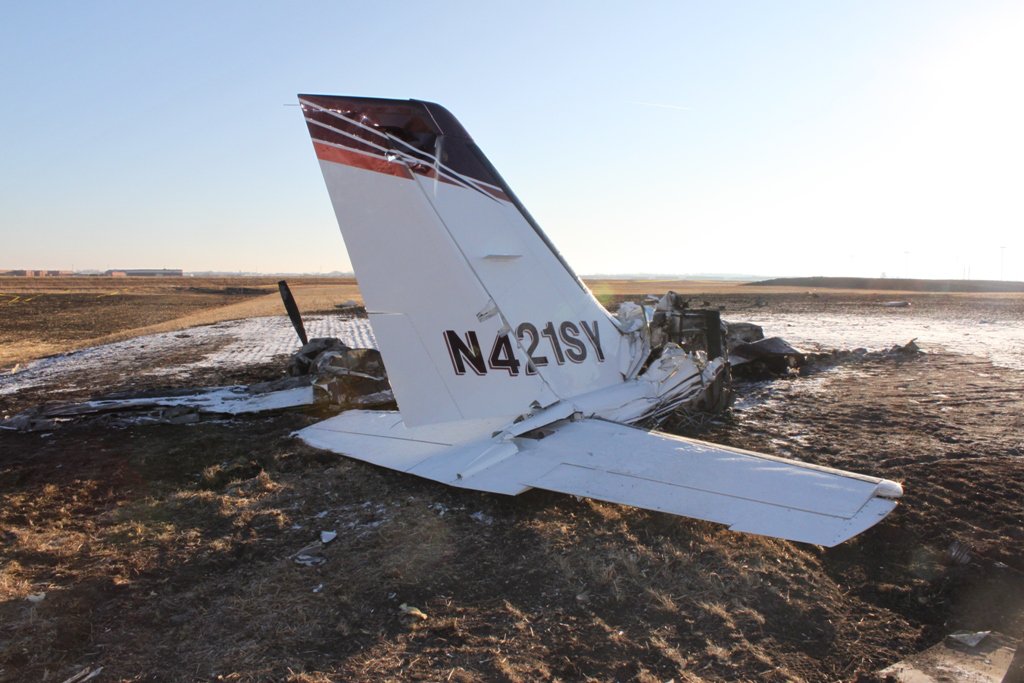
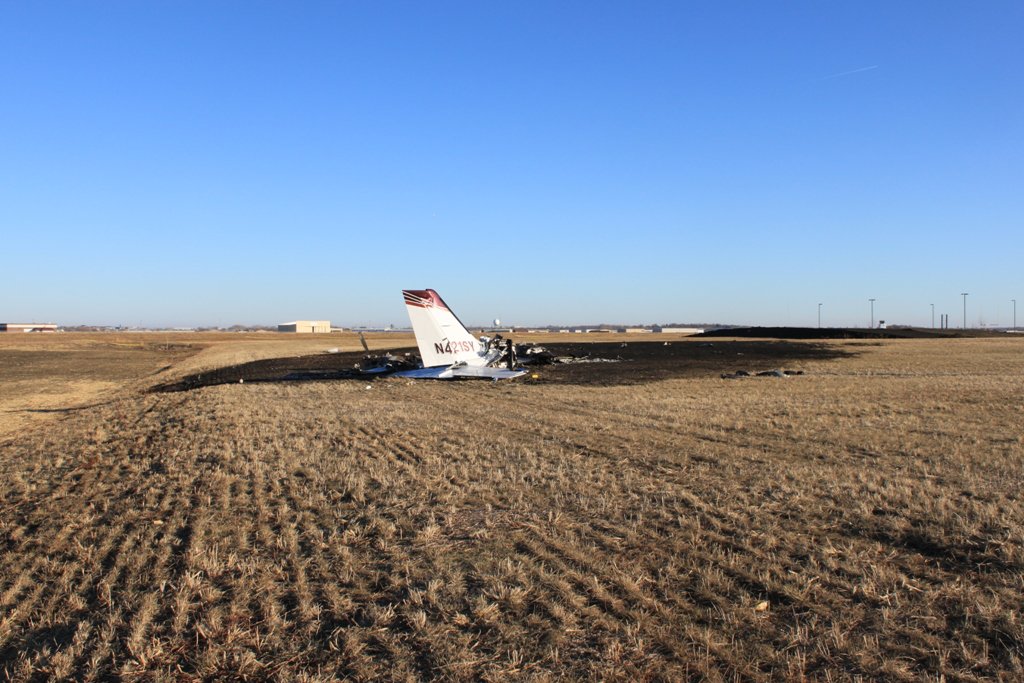
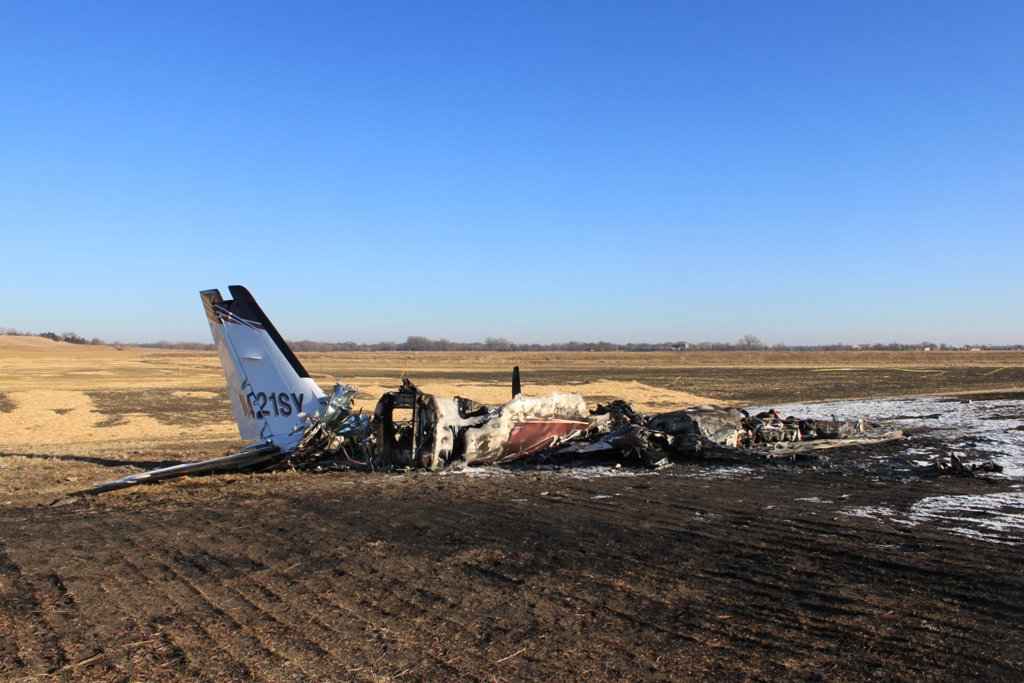
On December 9, 2011, a Cessna 421C registered N421SY lifted off runway 33 at Joe Foss Field Airport in Sioux Falls, South Dakota, and never made it out of the traffic pattern. The airplane was operating as an on-demand air taxi flight under 14 CFR Part 135 for Quest Aviation, Inc., with a destination of Rapid City Regional Airport roughly 350 miles to the west. The pilot and three passengers were fatally injured when the aircraft impacted an open field about three-quarters of a mile northwest of the airport at 1424 central standard time. The day was clear, winds out of 300 degrees at 11 knots, visibility 10 miles. Density altitude was not a factor. What happened in the roughly 90 seconds between brake release and ground impact was a chain of decisions that the airplane’s own pilot operating handbook was specifically designed to prevent.
The tower controller issued the takeoff clearance at 1422:07. About 85 seconds later, at 1423:32, he came back on frequency to tell the crew that a plume was visible behind the airplane. He couldn’t identify the source, and shortly after, he advised that the plume was no longer visible. At 1423:59, he cleared the flight to land. That was the last two-way exchange. No transmissions were received from the pilot after he acknowledged the original takeoff clearance. The crew never declared an emergency. They never called for a return. Whatever decision was being made in that cockpit was being made in silence.
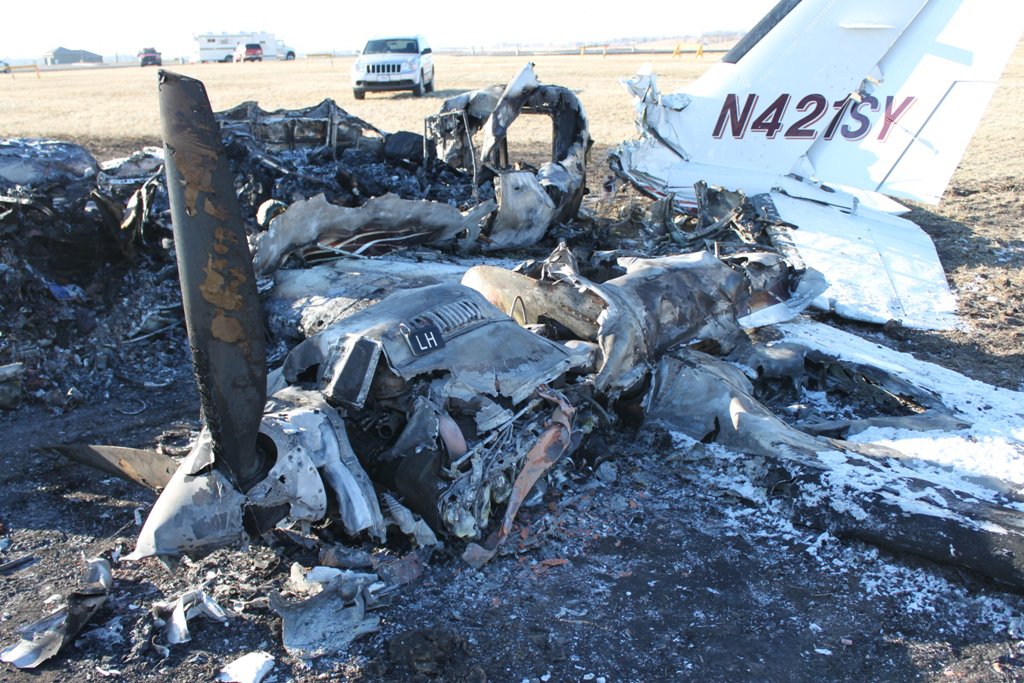
Witnesses on the ground filled in what the radio didn’t. They saw white smoke trailing from the area of the left engine during the takeoff roll and initial climb. Then they saw flames at the inboard side of the left engine. The airplane started a left turn. As the turn continued past northwest and toward south, the flames and the smoke trail disappeared. And then, when the airplane reached a southerly heading, the nose dropped abruptly and it fell from somewhere between 800 and 1,000 feet above the ground. Witnesses said they heard engine sound increase before impact. A post-impact fire consumed much of the fuselage.
Radar data reconstructed the geometry of that final minute. The first radar return tied to the accident flight’s transponder code appeared at 1423:11, positioned about 2,100 feet from the approach end of runway 33. The track drifted left of centerline as the airplane climbed out, consistent with asymmetric thrust pulling toward a struggling left engine. At 1423:38, roughly 27 seconds after the first radar hit, the airplane started a left turn from a position about 0.21 nautical miles northwest of the departure end of runway 33 at 2,000 feet MSL. The field elevation at FSD is 1,429 feet MSL, so the airplane was approximately 570 feet above the airport when it began turning back. The final radar return came at 1424:07, with the airplane at 1,900 feet MSL and positioned 0.41 nautical miles west of the runway. The accident site was 790 feet further east from that last radar hit. The diameter of the full left turn traced by the radar track was approximately 0.31 nautical miles. The airplane had essentially flown a circle.
The pilot at the controls held a commercial certificate with single and multi-engine land and instrument ratings, along with a flight instructor certificate covering the same categories. His total logged time was 3,848.8 hours, including 1,320.8 hours in multi-engine airplanes and 357.4 hours in Cessna 421 aircraft specifically. He had logged 55.6 hours in the 421 in the 90 days preceding the accident, including 4.4 hours in the accident airplane the day before. His most recent regulatory checkride had been completed just 29 days earlier, on November 10, 2011. This was not an inexperienced pilot in an unfamiliar airplane.
Investigation Findings
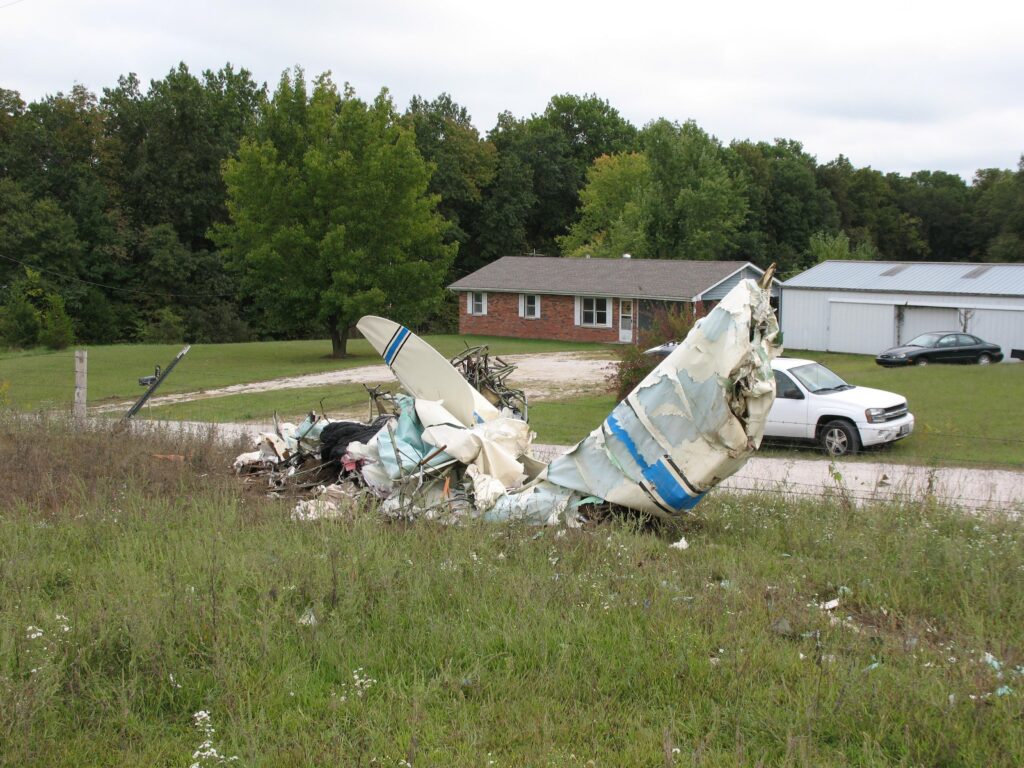
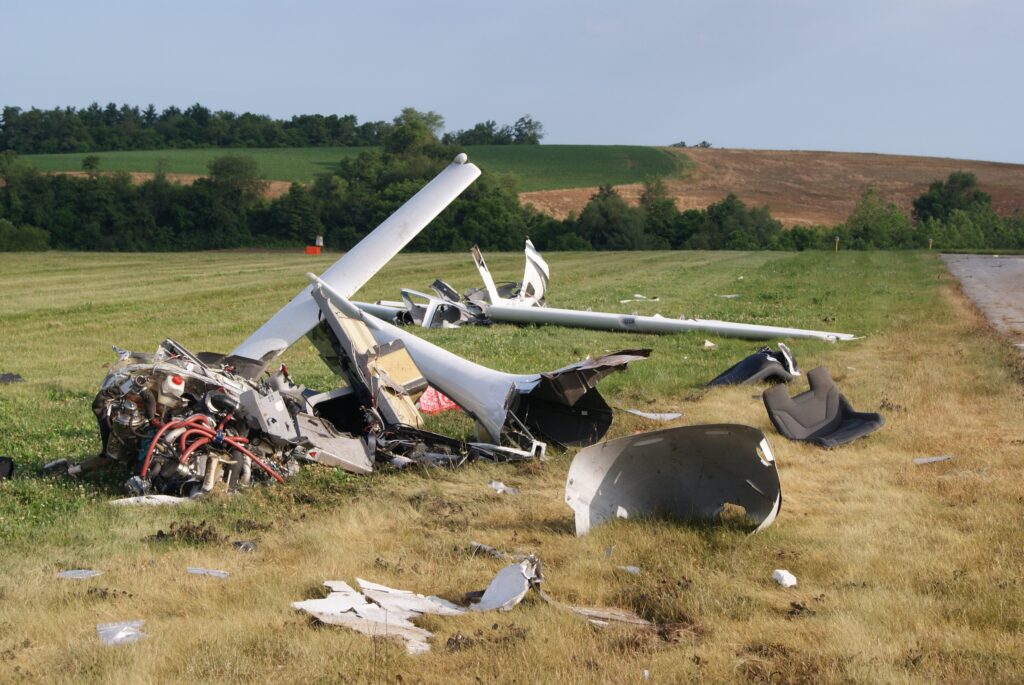
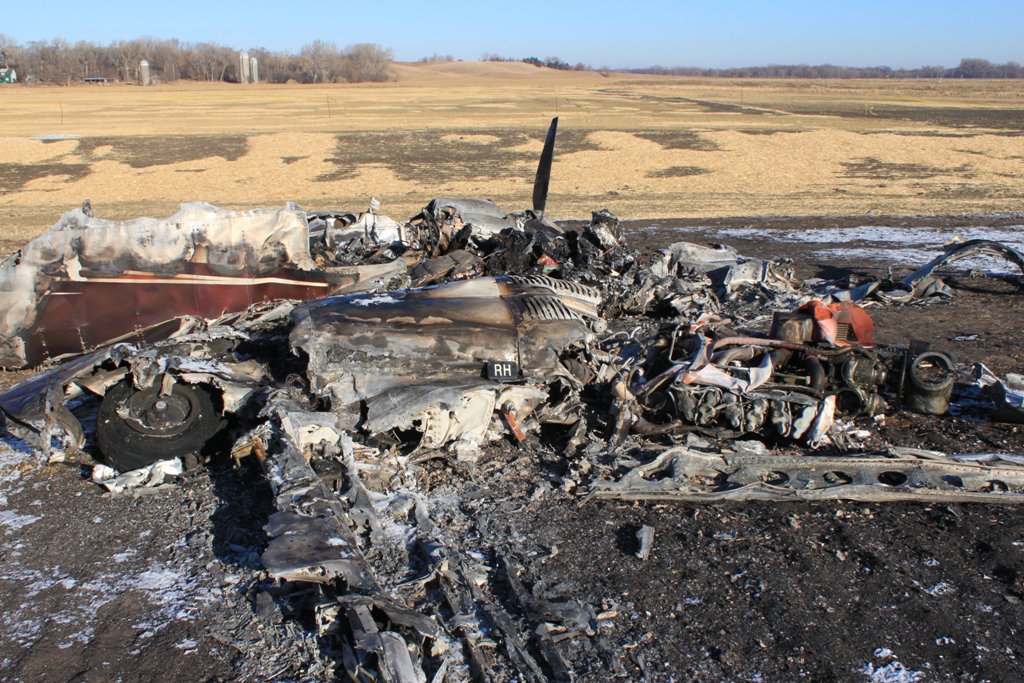
Post-accident examination of the wreckage told a clear story about what configuration the airplane was in when it hit the ground. The flap drive chain was consistent with 40 degrees of flap deflection. Both main landing gear assemblies had collapsed aft in a manner consistent with the gear being extended at impact. The left engine fuel selector and fuel valve were both found in the OFF position, which confirmed the pilot had shut down the left engine after takeoff. But the left propeller was not feathered. The blade angles and counterweight witness marks on the hub were consistent with low pitch at impact, meaning the left propeller was windmilling. The right engine propeller showed the kind of blade bending, twisting, and chordwise scratching consistent with that engine producing power when the airplane hit the ground. The tachometer needles, recovered from the wreckage, indicated approximately 1,000 RPM on the left and 2,250 RPM on the right.
Teardown examinations of both engines found no anomalies consistent with a pre-impact loss of power. The left engine oil cap was found unsecured at the accident site, and investigators noted distortion of that cap disproportionate to the right engine’s cap, though they attributed that distortion to the post-impact fire and made no determination about whether the cap was loose before the accident. The white smoke seen by witnesses trailing from the left engine area during takeoff is consistent with an oil leak and combustion, but the exact initiating event was not definitively determined. What was clear was that the pilot had made the decision to shut down the left engine in flight, and that the airplane was in a configuration that made single-engine flight significantly more difficult than it needed to be.
The Cessna 421C POH was explicit about what to do when securing an engine. The Engine Securing Procedure in the Emergency Procedures section called for closing the throttle, feathering the propeller, setting the mixture to idle cutoff, and positioning the fuel selector to OFF. The pilot got the last two steps right. He did not feather the propeller. Beyond the securing procedure itself, the POH single-engine climb performance data was predicated on three things: flaps retracted, gear retracted, and the inoperative engine’s propeller feathered. With those three conditions met, the airplane was capable of approximately 480 feet per minute of single-engine climb on the day of the accident based on the prevailing weather. None of those three conditions were met. The gear was down. The flaps were at 40 degrees. The left propeller was windmilling. A windmilling propeller on a reciprocating twin creates significant drag, and that drag combined with extended gear and full flaps effectively turned a manageable single-engine situation into one the airplane could not sustain.
NTSB Probable Cause
The pilot’s failure to maintain adequate airspeed after shutting down one engine, which resulted in an inadvertent aerodynamic stall and impact with terrain. Contributing to the accident was the pilot’s failure to follow the guidance contained in the pilot’s operating handbook, which advised feathering the propeller of the secured engine and retracting the flaps and landing gear.
Safety Lessons
Four people died on a clear day, three-quarters of a mile from the runway, in an airplane capable of climbing on one engine. The gap between what the airplane could do and what it actually did comes down to three items the pilot did not configure. There are real, actionable things to take from this.
- A windmilling propeller is not a feathered propeller. Shutting off the fuel to a failed engine stops combustion, but it does not stop drag. A windmilling propeller on a GTSIO-520 creates enormous aerodynamic resistance, effectively acting as a large speed brake mounted to the wing. The POH single-engine climb numbers assume that propeller is feathered, meaning the blades are rotated edge-into-the-wind to minimize drag. Feathering is not optional during the engine securing procedure. It is the step that makes the performance data in the book achievable. Without it, those numbers are meaningless.
- Configuration matters as much as power. The Cessna 421C’s single-engine climb performance of approximately 480 feet per minute assumes gear up and flaps retracted. At 40 degrees of flap and gear extended, the airplane was dragging enough to eliminate that margin entirely. In a low-altitude emergency, the instinct is often to leave the gear and flaps where they are because the workload is already high. But those two items, combined with the windmilling propeller, changed a survivable situation into one the airplane could not climb through. The memory items after recognizing an engine failure exist precisely so that configuration gets addressed before airspeed bleeds away.
- Checklist discipline does not degrade with experience. This pilot had 357 hours in type, a current checkride, and a flight instructor certificate. He was qualified. He also did not complete the engine securing procedure as published. Experience can create a false sense of procedural flexibility, a belief that the sequence can be abbreviated or reordered under pressure. Emergency checklists for multi-engine airplanes are built around the aerodynamics of that specific airframe. The Cessna 421C’s procedure exists because the engineers who built the performance charts knew what would happen without it. The checklist is the airplane talking.
Frequently Asked Questions
Q: What is the danger of a windmilling propeller on a twin-engine airplane?
A: A windmilling propeller creates significantly more drag than a feathered one. On a reciprocating twin like the Cessna 421C, a propeller rotating freely in the airstream at low pitch can generate drag comparable to a large barn door mounted to the wing. The published single-engine climb performance figures in the POH assume the failed engine’s propeller is feathered. Without feathering, the actual climb performance can be dramatically lower than the book number, and at low altitude after takeoff, the difference can be fatal.
Q: Why didn’t the Cessna 421C climb on one engine with the gear and flaps extended?
A: The 421C’s single-engine climb rate of approximately 480 feet per minute under the accident conditions was predicated on gear retracted, flaps retracted, and the dead engine’s propeller feathered. With all three of those items in the wrong configuration, the airplane’s total drag load far exceeded what a single GTSIO-520-L could overcome. The airplane was not able to maintain altitude, let alone climb, which left no margin for the low-altitude turn the pilot attempted to execute back toward the airport.
Q: What caused the smoke and fire from the left engine of N421SY?
A: Witnesses reported white smoke trailing from the left engine area during takeoff, followed by visible flames at the inboard side of the engine. The left engine oil cap was found unsecured at the accident site, and the cap showed distortion not present on the right engine cap. While investigators could not definitively rule out post-impact fire as the cause of the cap distortion, an oil leak leading to oil contacting hot exhaust components is consistent with the white smoke and fire observed. The teardown of both engines found no pre-impact mechanical anomalies. The NTSB did not make a final determination on the initiating event.
Q: Why did the pilot turn back toward the airport after the engine problem?
A: The radar track shows the airplane beginning a left turn about 27 seconds after the first radar return, from approximately 570 feet above the airport. The pilot never communicated his intentions to the controller after acknowledging the takeoff clearance, so his exact reasoning is unknown. However, the direction of the turn, to the left, is consistent with the direction of the left engine failure pulling the airplane. Whether the pilot was attempting a return to the airport or was simply unable to maintain directional control in the degraded configuration is not determinable from the available evidence.
Q: How experienced was the pilot in the Cessna 421 before the accident?
A: The pilot had 357.4 total hours in Cessna 421 aircraft, including 55.6 hours in the preceding 90 days and 4.4 hours in the accident airplane the day before the crash. He held a commercial certificate with multi-engine and instrument ratings, plus a flight instructor certificate covering the same categories. His most recent regulatory checkride was completed 29 days before the accident on November 10, 2011. He was current, qualified, and had recent experience in type.