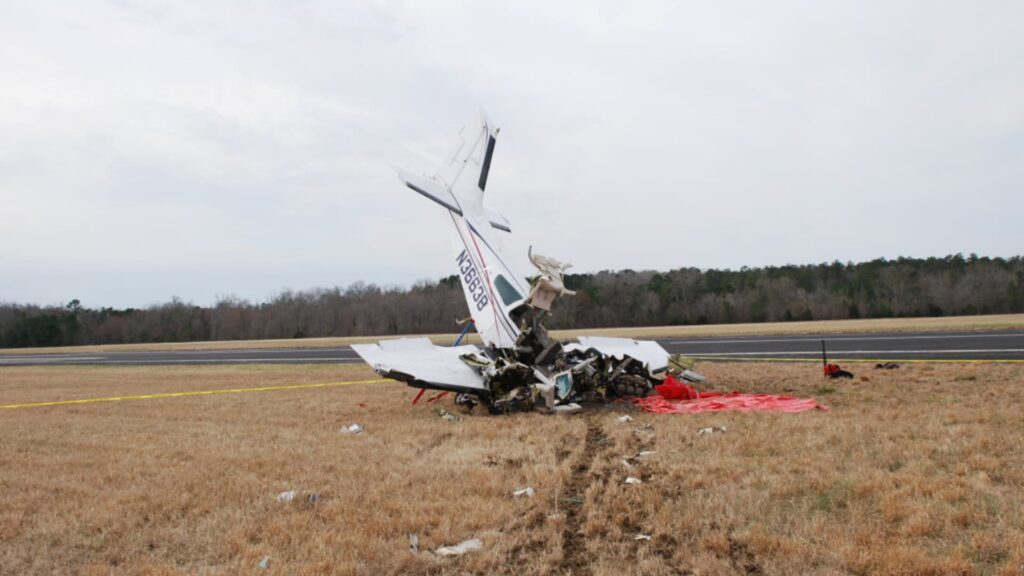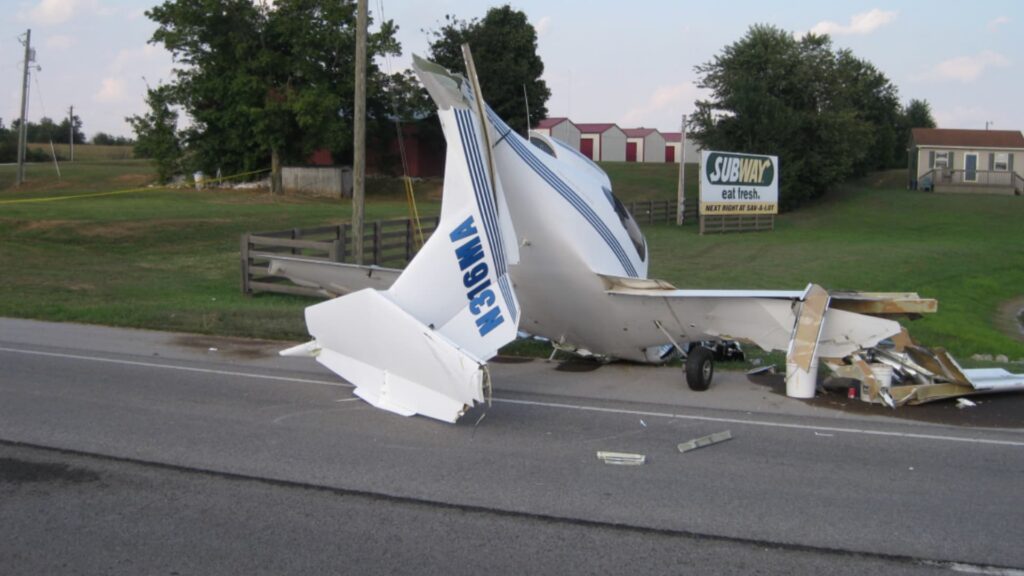
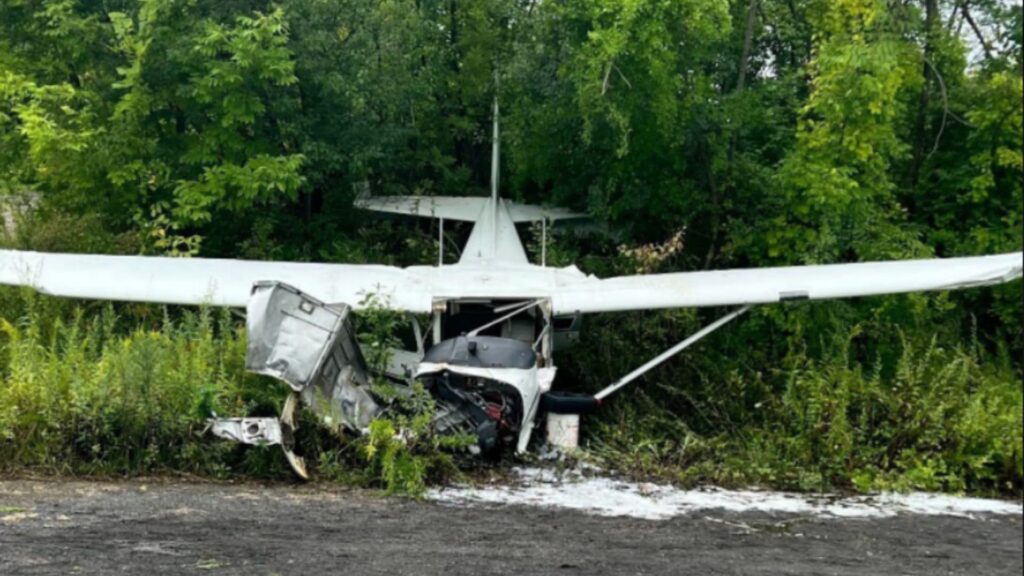
On August 30, 2022, a routine instructional flight in a Cessna 172N turned into an off-airport emergency landing that left one person seriously injured and the airplane substantially damaged. The flight departed Richmond Heights, Ohio, with Youngstown as the intended destination. What followed was not the result of weather, mechanical failure, or fuel exhaustion, but a sequence of human decisions and a small cockpit action that carried outsized consequences. This event serves as a clear reminder that even familiar procedures can become hazardous when timing, environment, and risk assessment are overlooked.
The Pilots and the Airplane
The pilot flying was a 27-year-old private pilot holding a single-engine land certificate. At the time of the accident, she had accumulated 303 total flight hours, with 59 hours in the Cessna 172 make and model. She had flown regularly, logging more than 75 hours in the previous 90 days, and had completed her most recent FAA medical exam just five days before the accident. She was seated in the left seat and was manipulating the controls when the defining event occurred.
Seated in the right seat was a 79-year-old flight instructor. He held a commercial pilot certificate with single-engine and multi-engine ratings, along with flight instructor and instrument instructor privileges. This was an instructional flight conducted under Part 91, and while the pilot flying was not an instructor herself, she was receiving instruction during the en route portion of the flight.
The airplane was a 1978 Cessna 172N, registration N204BE, powered by a Lycoming O-320 engine producing 160 horsepower. The aircraft had completed a 100-hour inspection just one day before the accident and had accumulated more than 13,000 hours on the airframe. There were no reported mechanical discrepancies prior to the flight.
Setting the Stage
Weather conditions that morning were not a factor. Visual meteorological conditions prevailed, with scattered clouds at 2,300 feet and broken layers well above that. Visibility was five miles, winds were light, and there was no reported turbulence. In other words, this was a day most pilots would consider benign and well suited for training.
Shortly after departure, the airplane climbed out and proceeded en route. At some point during the flight, the instructor asked the pilot to perform a magneto check while airborne. While inflight magneto checks are not standard practice for most training operations, the request was made and accepted, setting the stage for what would come next.
The Magneto Check
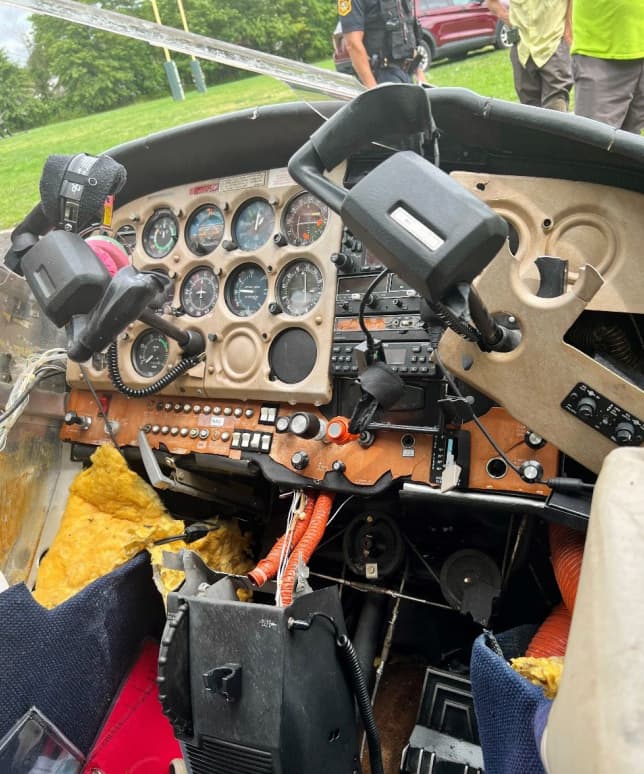
During the inflight magneto check, the pilot began manipulating the ignition switch. Instead of selecting an individual magneto position, she inadvertently turned the key all the way to the “off” position. That single movement resulted in a total loss of engine power.
In most piston aircraft, an engine stoppage caused by ignition selection is easily reversible. The natural reaction is to rotate the key back to “both” and allow the engine to restart. That is exactly what the pilot attempted to do. However, as she turned the key, the head of the ignition key broke off in her hand.
With the engine now silent and the ignition switch unable to be rotated, the situation escalated rapidly. The instructor attempted to manipulate what remained of the ignition switch but was unsuccessful. The loss of engine power was now effectively unrecoverable.
Decision Time
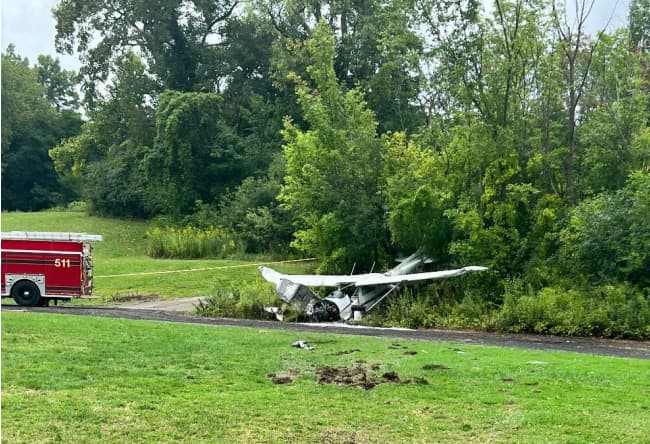
With no engine power and limited options below, the instructor took control of the airplane. The surrounding area did not offer an ideal emergency landing site, but a school football field came into view. The instructor committed to the field and flew the airplane to the best of his ability given the circumstances.
The airplane touched down hard on the field. The impact resulted in substantial damage, including deformation of the firewall, damage to both wings, the engine mount, and the fuselage. There was no post-impact fire, and the emergency locator transmitter activated as designed, aiding in the location of the wreckage.
Three occupants were on board. One person sustained serious injuries, while the other two suffered minor injuries. Despite the severity of the landing and damage to the airplane, the outcome could have been worse given the total loss of power and the limited landing options available.
What the Investigation Found
The NTSB’s investigation found no evidence of pre-accident mechanical malfunction or failure that would have prevented normal operation of the airplane. The ignition key failure occurred only after the engine was shut down in flight, not before. In other words, the airplane was functioning as designed until the magneto check was initiated.
The probable cause identified by the NTSB centered on the instructor pilot’s decision to conduct an inflight magneto check without a suitable area available for landing. Contributing to the accident was the pilot flying’s failure to correctly perform the magneto check, which resulted in the engine being shut off entirely.
This was not a case of a broken airplane or deteriorating weather. It was a human-factors event rooted in decision-making, procedural discipline, and risk management.
Lessons for Pilots and Instructors
One of the most important lessons from this accident is that not all checklist items belong in all phases of flight. Magneto checks are designed to be performed on the ground, at low power settings, with the airplane stopped and the risks minimized. Performing them in flight introduces unnecessary hazards, especially in single-engine aircraft.
This accident also highlights the instructor’s role in managing risk during training. Instructors often push students slightly outside their comfort zones to build competence, but that push must always be bounded by safety margins. Asking a pilot to perform a non-standard procedure in flight, without clear benefit and without suitable landing options, erodes those margins quickly.
From the student pilot’s perspective, this event reinforces the importance of precise switch handling and understanding system design. Ignition switches in many general aviation airplanes are mechanically simple and, in some cases, worn from decades of use. Treating them gently and deliberately is critical, particularly when the engine is running.
Finally, this accident underscores how quickly a seemingly minor mistake can cascade. A turned key led to a stopped engine. A broken key removed the possibility of a restart. A decision made minutes earlier eliminated safe landing options. None of these elements alone guaranteed an accident, but together they formed an unbroken chain.
Conclusion
The Gates Mills accident serves as a clear, real-world example of why conservative decision-making matters, especially in instructional environments. The airplane was airworthy, the weather was good, and the pilots were qualified. Yet a non-essential maneuver, conducted at the wrong time and in the wrong place, resulted in serious injuries and a destroyed aircraft.
For pilots and instructors alike, the takeaway is simple. Standard procedures exist for a reason. Deviating from them should be done only with a clear purpose, an understanding of the risks, and a plan for when things do not go as expected. In aviation, small choices often carry big consequences, and this flight was a reminder of just how fast those consequences can arrive.