


This accident started out like countless personal flights out of Sunriver Airport in central Oregon. The pilot, a 63-year-old ATP with a deep aviation résumé, wasn’t a weekend novice. He held ratings in airplanes, helicopters, gliders, and was an instructor in all of them. With over 7,000 total hours and 73 hours in the Maule M7-235B he was flying that day, he was a very experienced aviator. Beside him was a 69-year-old commercial pilot who also held instructor ratings and had 155 hours in type. They weren’t just going flying for fun—they wanted to evaluate how the amphibious Maule performed with two people onboard.
The aircraft was a 1996 Maule M7-235B on amphibious floats, powered by a Lycoming IO-540 engine. The airplane had just over 950 hours on the airframe during its last inspection, and maintenance logs didn’t reflect any open issues that would have raised eyebrows. Weather was benign: clear skies, light winds, and good visibility. This wasn’t a scenario shaped by bad decisions in poor conditions. On paper, it should have been a straightforward local flight.
But once the power came in and the airplane started its takeoff roll down Runway 18, things didn’t develop the way either pilot expected.
A Slow Climb and an Urgent Problem
The takeoff itself appeared normal at first. The passenger recalled the engine sounding healthy during the run-up, and nothing seemed out of place as they accelerated. Rotation happened at about 65 knots with roughly 1,000 feet of runway remaining, and the Maule lifted into ground effect. But the airplane didn’t climb the way it should have.
Once they climbed out of ground effect, the rate of climb degraded noticeably. The passenger described it as “slow.” Witnesses on the ground saw the airplane low and struggling, with one describing the engine as “bogging” despite being at full throttle. Another witness mentioned a “definite power loss,” though no sputtering or misfiring was heard.
At this point, the pilots were in a tough spot. Ahead of them were 50-foot trees on the far side of the Deschutes River, and the airplane was simply not climbing well enough to clear them. The left seat pilot began maneuvering, turning slightly left toward the river—one of the only available areas that might support a survivable forced landing.
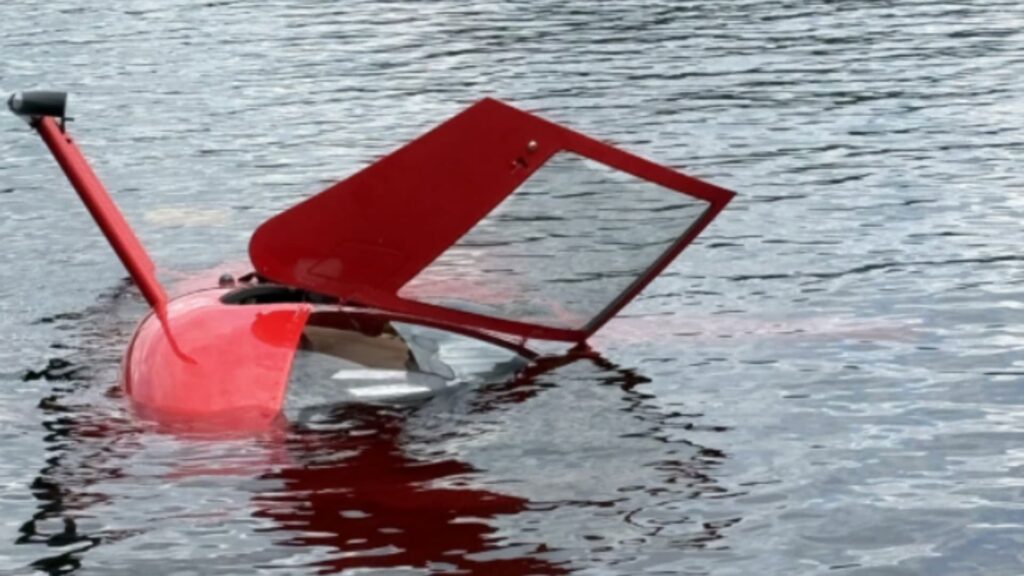
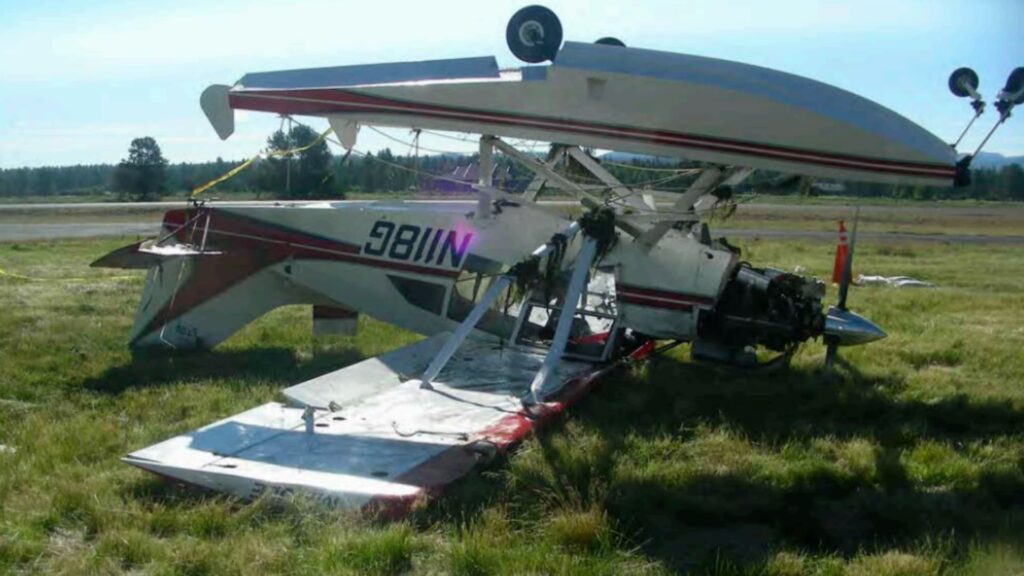
Seconds later, they touched down on the river. The Maule immediately dug in, nosed over, and began filling with water.
This wasn’t just about poor performance. Something more fundamental was wrong, and the forced landing introduced its own complications.
A Forced Landing Complicated by the Wrong Landing Gear Configuration
When amphibious aircraft land on water, the most critical configuration item is the landing gear. Floats demand their wheels be fully retracted, or the gear will catch the water and cause a rapid nose-over.
In this case, the landing gear was found fully extended.
Each float had a visual position indicator, and all four showed the gear in the down position. The water rudders, meanwhile, were retracted—further supporting that a water landing was not originally intended until the forced landing became unavoidable.
In a calm, deliberate water landing with the gear down, a nose-over is almost guaranteed. In a high-stress, last-second forced landing, the outcome is even more unforgiving. The Maule flipped violently, trapping the pilot and allowing water to rush into the cabin. The pilot-rated passenger escaped with minor injuries. Tragically, the pilot drowned.
What Went Wrong Under the Cowling
The NTSB didn’t have to look far to uncover why the Maule couldn’t climb. The problem was buried inside the mufflers.
Both mufflers showed severely degraded baffling. The left baffling had broken free and could float inside the muffler body, while the right baffle had rotated 180 degrees and obstructed the exhaust outlet entirely. When investigators tried to run the engine with the mufflers installed, it wouldn’t produce full power. But once the mufflers were removed, the engine ran normally, reaching 2,400 rpm with no issues.
This disruption of airflow in the exhaust system created a partial power loss—enough to allow the airplane to lift off but not enough to sustain a climb out of ground effect. In piston engines, exhaust blockage can dramatically cut available horsepower, and in this case, it set the stage for the forced landing that followed.
Notably, neither the Maule maintenance manual nor FAA annual inspection requirements mandate inspecting the interior of a muffler for baffle integrity. There was no clear way for a mechanic—or a pilot—to detect the impending failure without removing and opening the mufflers.
The Final Moments on the River
With partial power, a low climb rate, and rising terrain ahead, the pilot made the choice available to him: put the airplane on the river. The decision itself was sound. The complication was the configuration. With the amphibious gear extended, the floats became anchors the moment they touched water.
The airplane flipped immediately.
Rescue crews arrived quickly, but the sequence was unforgiving. The pilot’s cause of death was determined to be drowning. The passenger, though shaken, survived.
This was a situation where the pilot made almost every decision available to him correctly but was constrained by an unseen mechanical problem and a gear configuration that added risk in an already high-stress moment.
What We Can Learn From the Accident
There are several important lessons that come out of this accident, and they’re worth reflecting on regardless of the aircraft we fly.
First, partial-power takeoff accidents can be some of the most dangerous because they often unfold subtly. The airplane may behave well enough to rotate and climb into ground effect, masking the problem until the opportunity to abort has passed. Recognizing a degrading climb early—and being willing to chop the power and land straight ahead—remains one of the hardest judgment calls in flying.
Second, amphibious gear configuration during emergency procedures matters. In forced landing situations, pilots must rapidly evaluate whether the landing surface is land or water and configure accordingly. That’s easier said than done, especially when the landing site is chosen seconds before touchdown.
Third, maintenance practices sometimes lag behind what aging components require. Exhaust baffles are known failure points in many engine installations, but if inspection guidance doesn’t mandate internal checks, mechanics may never see the signs of degradation until after a failure. This accident highlights a gap between regulatory inspection minimums and what aging aircraft sometimes actually need.
Finally, even highly experienced pilots are still vulnerable to the combination of mechanical failure and time pressure. Experience helps shape good decisions, but it doesn’t change the physics or the limits of the machine.
A Sobering Reminder of the Low-Altitude Environment
This accident wasn’t about weather, pilot inexperience, careless flying, or poor planning. It was the collision of a hidden mechanical defect, a slow and insidious partial power loss, and the unforgiving realities of low-altitude flight.
Sunriver sits at over 4,000 feet elevation, and while density altitude wasn’t extreme, any reduction in engine output at that field height becomes magnified. Once the Maule committed to the takeoff, the pilots had only seconds to recognize the degrading climb and decide how to handle it.
A river landing with the gear down was a survivable scenario for one of the occupants. With the gear retracted, it might have been survivable for both.