What Happened
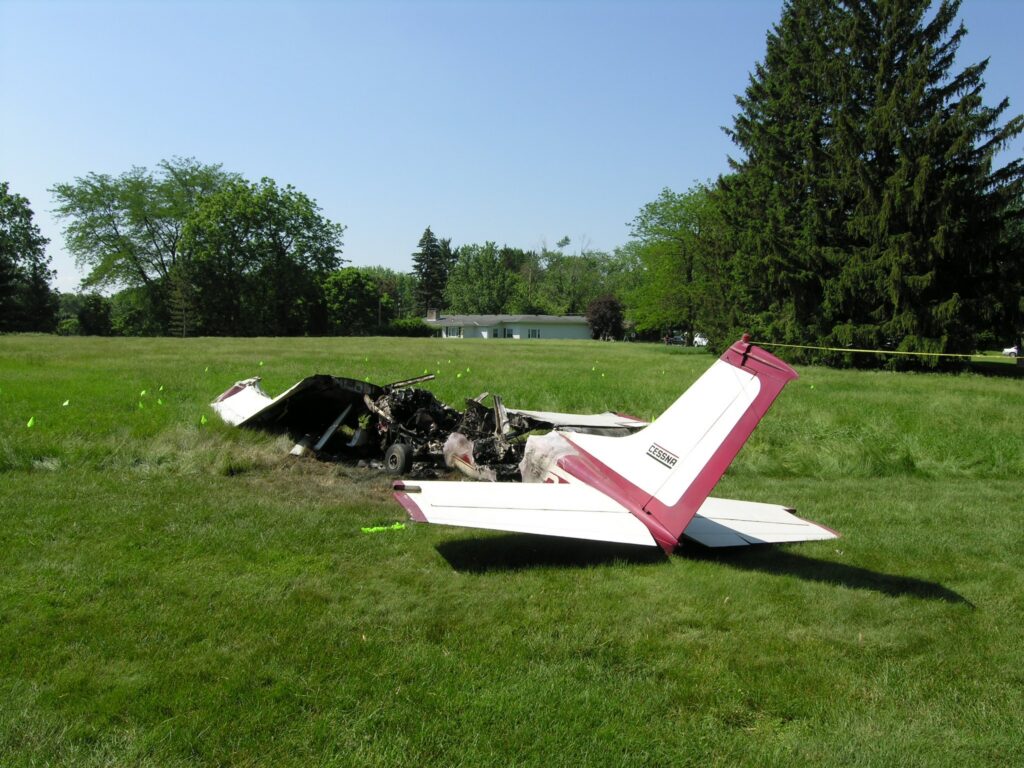
On June 8, 2008, around 12:56 in the afternoon, a 1968 Cessna U206C, registered N29122, was on its fifth or sixth short sightseeing loop of the day at Fremont Airport (14G) in Fremont, Ohio, when witnesses watched it bank, stall, and come down in a grass field behind a residential neighborhood about 0.75 miles east of the runway 27 threshold. The 86-year-old commercial pilot and all five of his passengers were killed. It was a clear day. Visual meteorological conditions. Nothing about the weather explained what happened.
The airport was owned by the pilot. Had been for about 50 years. He was also a Lions Club member, and the club held its annual fly-in breakfast at his airport that morning. For the last decade, that event had also included something else: air rides, charged at $20 a head for adults and $10 for children weighing 50 pounds or less. The money went into the pilot’s pocket, not to the Lions Club. Tickets were orange, the kind you’d see at a county fair, and the pilot had collected about 40 to 50 of them by the time of the accident flight. Nobody was weighing passengers. Nobody had contacted the FAA ahead of the event to obtain the Letter of Authorization required by 14 CFR 91.147 for paid passenger-carrying flights. The FAA knew nothing about it.
The pilot had started the morning in a different airplane, a Cessna 172, but switched to the U206C after the radio on the first airplane malfunctioned. He flew approximately 8 to 10 flights in the U206C that day, with 2 to 3 more planned after the accident flight. The airplane’s engine had started normally on every flight except the last one before the accident, where it took three attempts to turn over. By mid-morning, a fuel check showed about 30 gallons in the left tank and 20 in the right. Around 12:26 p.m., the pilot loaded five passengers and departed runway 27.
Witnesses near the airport had already noticed something unusual about the way this pilot flew. A pilot who had flown in that morning described nearly having a midair collision with the U206C during his own approach. He said the accident pilot routinely used what he called a “buttonhook turn” to get onto final approach. Instead of a standard pattern, the pilot would fly downwind lower than normal, continue through where final approach would normally begin, and then execute a 270-degree turn back onto final at about 300 feet above ground level. The same pilot said it took every bit of his skill to land that morning because the winds had picked up by 0930, and he had considered going around. Another pilot who had flown in reported that the accident pilot was not transmitting position reports on the radio, and ground personnel were heard telling him to turn his radio on. There had also been a near-midair between the U206C and a Van’s RV homebuilt when the Cessna entered a low right base as the RV was already on final from a left base.
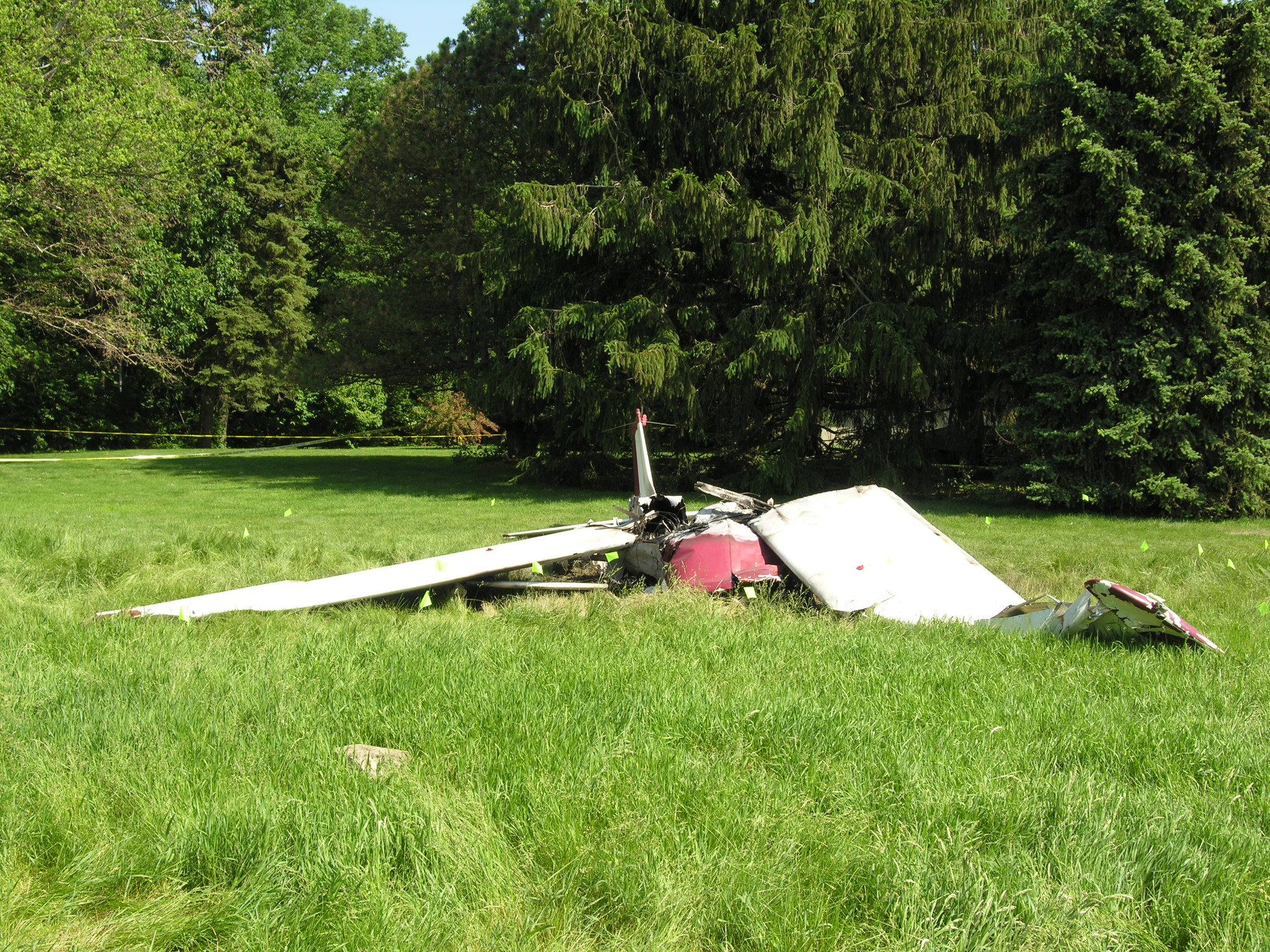
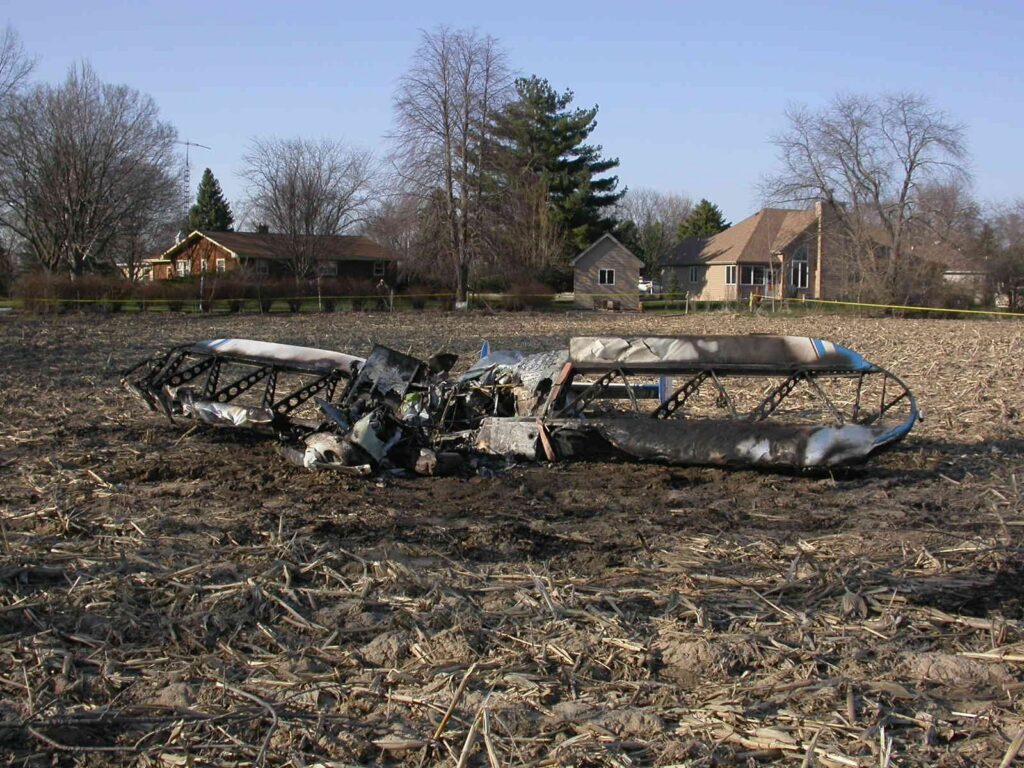
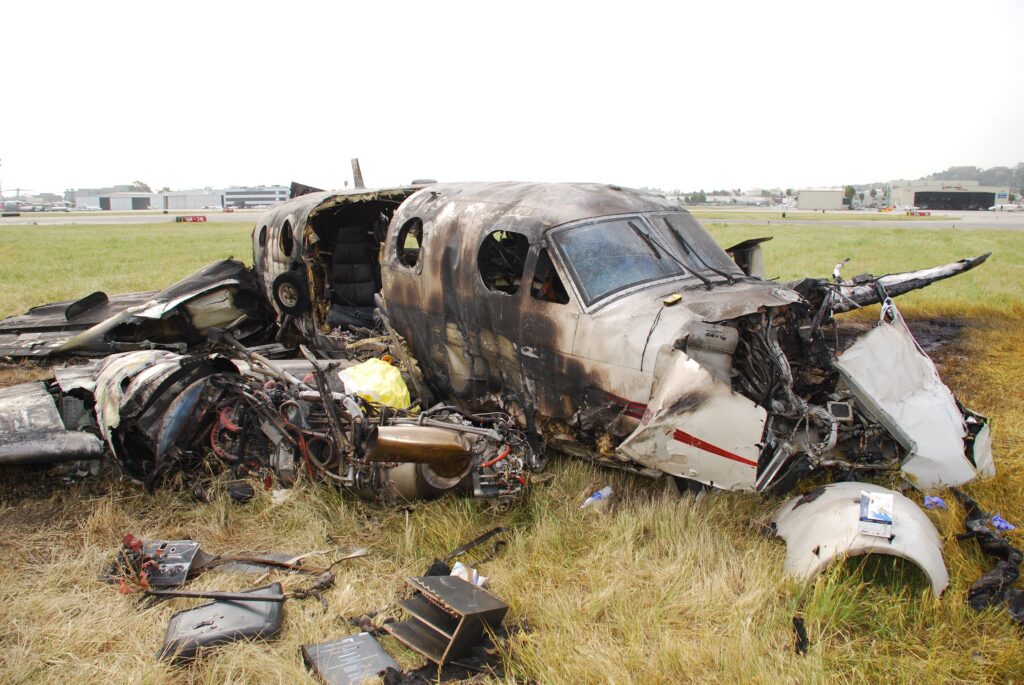
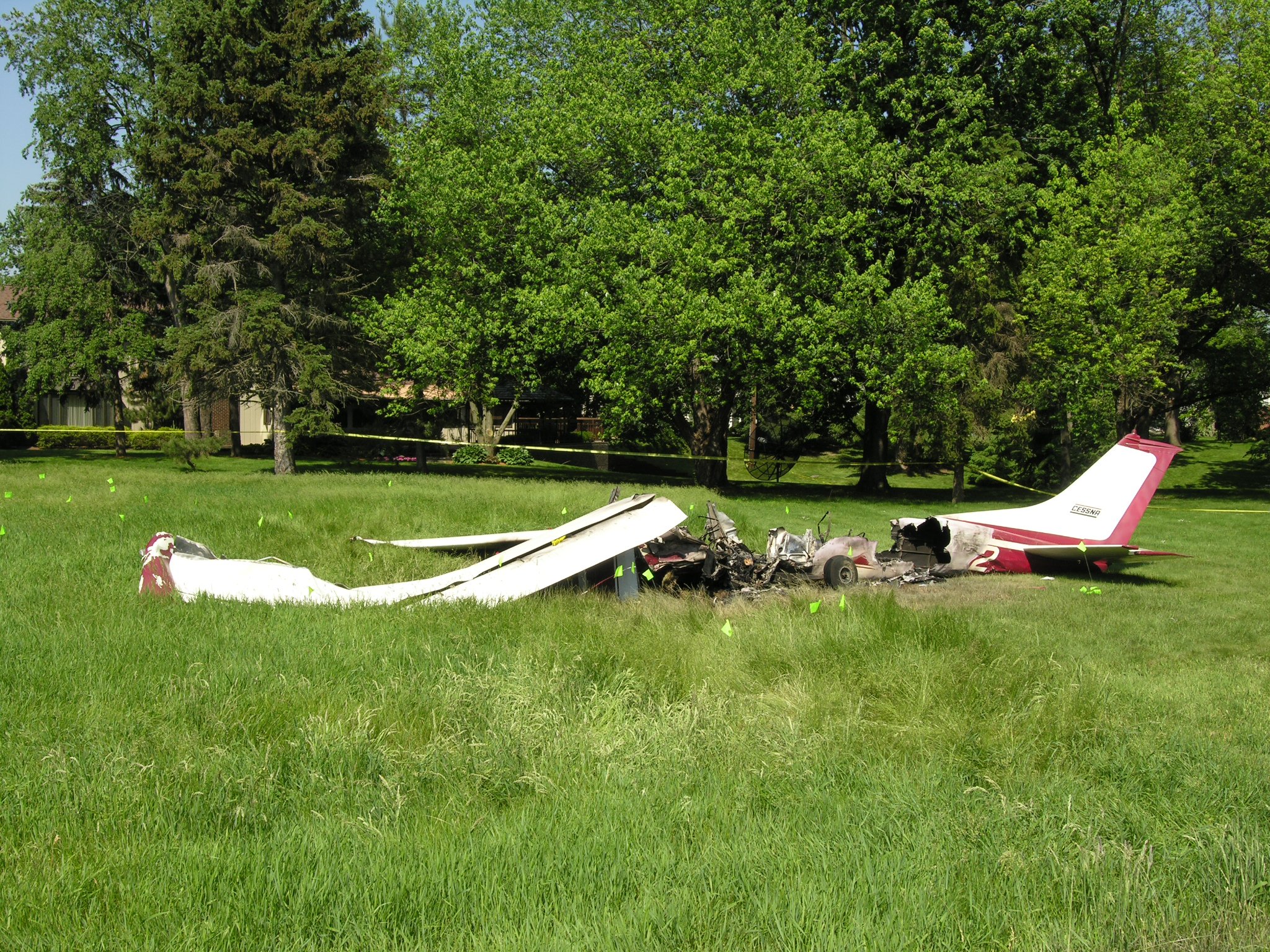
About 30 minutes after the last flight departed, the U206C was spotted on its way back toward the airport. Witnesses described it flying at low altitude, heading west-southwest toward the runway. Then it banked. One witness said the airplane looked like it was flying very slowly, almost on the edge of a stall. He heard the engine throttle up. Then the left wing dipped. The airplane descended below the tree line and impacted the field. The fuselage from the firewall to the empennage was consumed by fire. The propeller blades showed S-shaped bending and chordwise scratching, consistent with engine power at impact. The flaps were set to 30 degrees. Ground scarring covered only a small area around the airplane’s footprint, consistent with a near-vertical impact from an aerodynamic stall.
Investigation Findings
NTSB investigators confirmed flight control and engine control continuity throughout the airframe. The engine was removed and shipped to Teledyne Continental Motors for a test cell run under NTSB supervision. It started on the first attempt. Investigators ran it to 1,350 rpm, 1,600 rpm, and 2,100 rpm, holding at each step for five minutes, and then advanced it to full throttle six times. The engine performed within the manufacturer’s specifications at every step. Both fuel tanks still contained fuel consistent with 100LL aviation gasoline, and no mechanical anomalies were found that would have precluded normal flight. The wreckage told a story of an airplane that was flying under power when it stopped flying.
What the investigation uncovered about the pilot’s medical history was another matter entirely. His personal medical records showed that he had been treated for age-related macular degeneration in both eyes since at least April 2006, about two years before the accident. His left eye had received 11 injections of bevacizumab, two laser photocoagulation treatments, and one round of combined photodynamic therapy, the last of which occurred on May 20, 2008, just 19 days before the crash. His right eye received laser photocoagulation on May 6, 2008. On May 20, 2008, his uncorrected distant visual acuity was recorded as 20/200 in each eye. With correction, it was just worse than 20/100 in each eye as of April 8, 2008. His retinal specialist had advised him not to drive on at least two occasions, once in October 2007 and again in January 2008. He continued driving anyway. On May 30, 2008, nine days before the accident, he turned left into oncoming traffic near the airport entrance, telling the Ohio State Highway Patrol that the sun was glaring into his vehicle and he assumed he had enough room. Witnesses said he turned in front of the other vehicle with 20 to 30 feet to spare.
On his most recent airman medical certificate application, dated May 4, 2007, the pilot checked boxes specifically denying any eye or vision trouble and denied any visits to a health professional within the last three years. His AME recorded uncorrected distant vision as 20/20 in each eye and issued a second-class medical certificate. The same AME had signed every one of the pilot’s medical applications since 1998. The FAA decertified that AME on January 28, 2009, seven months after the accident, for improper issuance of medical certificates. The pilot’s autopsy also revealed severe coronary artery disease, with what the pathologist described as only a pinpoint lumen remaining in the left anterior descending coronary artery. There was no conclusive evidence that a cardiac event caused the loss of control, but the NTSB noted that such evidence would not necessarily be present if incapacitation occurred within minutes of death. His personal medical records had shown no indication of heart disease.
A family member of two of the passengers provided video footage of flights during the fly-in, including the accident flight’s takeoff. The video showed a nonstandard departure profile: rather than a normal climbout after liftoff, the pilot held the airplane just above treetop level until reaching the departure end of the runway, then pulled up steeply before pushing the nose back down. Investigators also confirmed that the pilot was operating without the required FAA authorization for paid passenger-carrying flights. The engine had also exceeded its published time between overhaul of 1,700 hours or 12 years, as established in Teledyne Continental Motors Service Information Letter SIL98-9A, though the engine performed normally during testing.
NTSB Probable Cause
The pilot’s failure to maintain airplane control for an undetermined reason, which resulted in an inadvertent stall. Contributing to the accident was the pilot’s poor judgment in continuing to fly with his severe visual deficiency. Also contributing to the accident was the aviation medical examiner’s failure to accurately assess and report the pilot’s visual deficiency.
Safety Lessons
Six people boarded an airplane that morning without any way to know the full picture. What this accident leaves behind isn’t a single failure point. It’s a chain of decisions, some made years before the flight, that converged in a field 0.75 miles east of a runway in northwest Ohio.
- Medical honesty is not optional. The pilot’s distant visual acuity was 20/200 uncorrected in each eye on May 20, 2008, and he had been advised not to drive by his own specialist. The FAA third-class medical standard requires at least 20/40 corrected distance vision. The pilot had not been near that threshold in years. He denied the condition entirely on his application. Any pilot carrying a medical condition that would disqualify them from certification, and choosing to fly anyway, is making a decision that affects every person who climbs into that airplane.
- The AME examination is a checkpoint, not a guarantee. The same AME signed off on 20/20 uncorrected vision for a pilot whose retinal specialist was documenting 20/200 the same year. The FAA eventually decertified that AME, but not before another certificate was issued. Pilots should treat their own medical self-assessment as the first and most important filter. The examination confirms what the pilot already knows. It does not substitute for that knowledge.
- Nonstandard flying in a high-traffic, uncontrolled environment compounds every other risk. Low-altitude 270-degree turns to final at 300 feet AGL, no position reports on the radio, near-midairs with other aircraft in the pattern. Any one of those behaviors invites a bad outcome. All of them together, repeated over 8 to 10 flights in a single morning with paying passengers, created conditions where a stall at low altitude left no margin for recovery. Passenger-carrying operations demand more conservative technique, not less.
Frequently Asked Questions
Q: What caused the Cessna U206C crash in Fremont, Ohio in 2008?
A: The NTSB determined the probable cause was the pilot’s failure to maintain airplane control for an undetermined reason, resulting in an inadvertent stall. Contributing factors included the pilot’s continuation of flight with severe macular degeneration that left him with 20/200 uncorrected vision in both eyes, and his aviation medical examiner’s failure to detect and report that visual deficiency.
Q: How did the pilot pass his medical exam with such poor vision?
A: The pilot falsified his airman medical certificate application dated May 4, 2007, denying any eye or vision trouble and denying visits to any health professional within the prior three years, despite receiving ongoing treatment for age-related macular degeneration since at least April 2006. His aviation medical examiner recorded uncorrected distant vision as 20/20 in each eye, directly contradicting contemporaneous records from the pilot’s own retinal specialist. The FAA decertified that AME on January 28, 2009, for improper issuance of medical certificates.
Q: Was the pilot legally authorized to charge passengers for airplane rides?
A: No. Passenger-carrying flights for compensation or hire require either a Letter of Authorization under 14 CFR 91.147 or compliance with the charitable event exemption under 14 CFR 91.146, which requires advance written notification to the local FSDO. The pilot had neither. The FAA’s Cleveland FSDO had no record of any contact from the pilot prior to the event and was unaware the flights were taking place.
Q: Did a mechanical failure cause the Cessna 206 to crash?
A: No. Post-accident examination confirmed flight and engine control continuity throughout the airframe. The engine was shipped to Teledyne Continental Motors and tested in a test cell under NTSB supervision. It started on the first attempt and performed within manufacturer specifications at every power setting tested. Both fuel tanks still contained fuel. No mechanical anomalies were found that would have precluded normal operation.
Q: What is a “buttonhook turn” in aviation, and why is it dangerous?
A: As described by witnesses, the accident pilot’s buttonhook turn involved flying the airplane at approximately 300 feet AGL perpendicular to the final approach course, then executing a 270-degree turn to roll out on final. This maneuver compresses the safety margins significantly at low altitude. A stall during a steep, low-altitude turning maneuver leaves almost no altitude for recovery, and at 300 feet AGL the airplane is already below the minimum altitude where most stall recoveries can be completed before ground impact.