What Happened
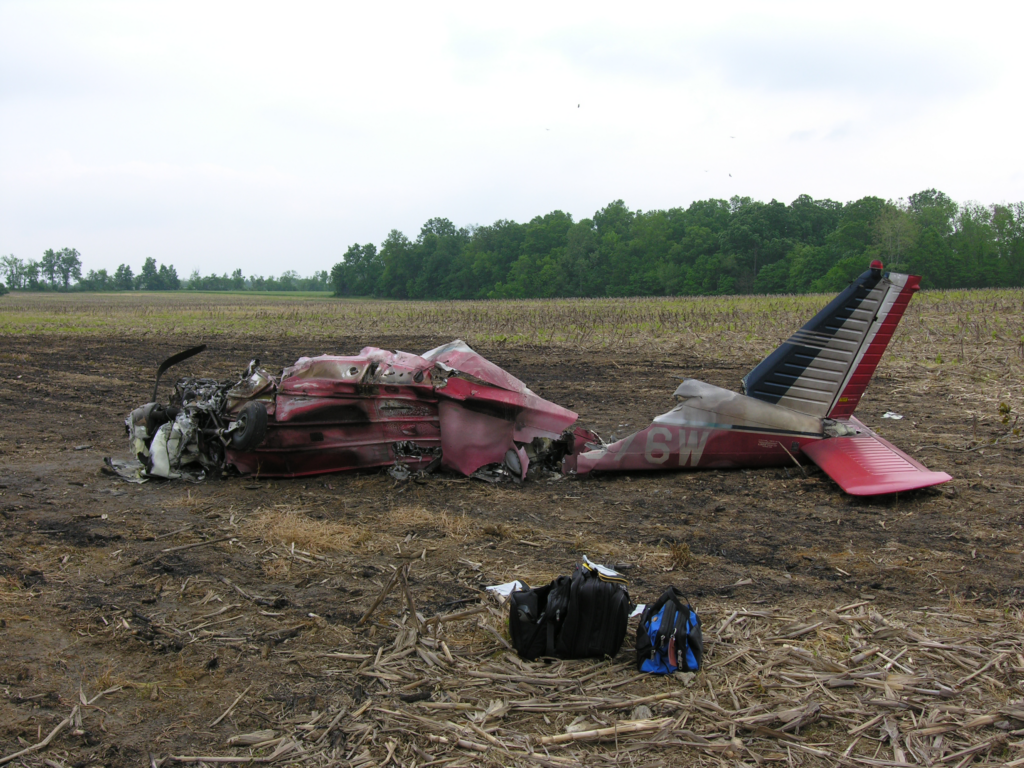
On the morning of May 30, 2008, two pilots from the Flying Angels club at Andy Barnhart Memorial Airport in New Carlisle, Ohio, flew their 1968 Piper PA-28-235, registration N9376W, to Highland County Airport in Hillsboro for autopilot maintenance. The left-seat pilot held a private certificate with instrument rating and about 1,000 hours total time. His companion in the right seat was a U.S. Air Force Reserve Lieutenant Colonel and commercial pilot with over 3,500 hours, serving as a C-5 Aircraft Commander and holding current flight instructor certificates.
The autopilot work was completed around 9 AM, and the pilots prepared to return home. But their first departure from runway 23 lasted only minutes. They circled back to Highland County Airport, reporting smoke in the cockpit. An avionics technician checked the cockpit and autopilot system thoroughly but found no discrepancies. Whatever was causing the smoke, it wasn’t the freshly serviced autopilot.
At 11:58 AM, they tried again. The Cherokee lifted off runway 23 and climbed to 300-400 feet. Then witnesses on the ground saw gray smoke streaming from the right front of the airplane. The smoke quickly darkened to black, coming in what one witness described as “individual clouds.” The airplane veered left, out of control, and disappeared from the witness’s sight.
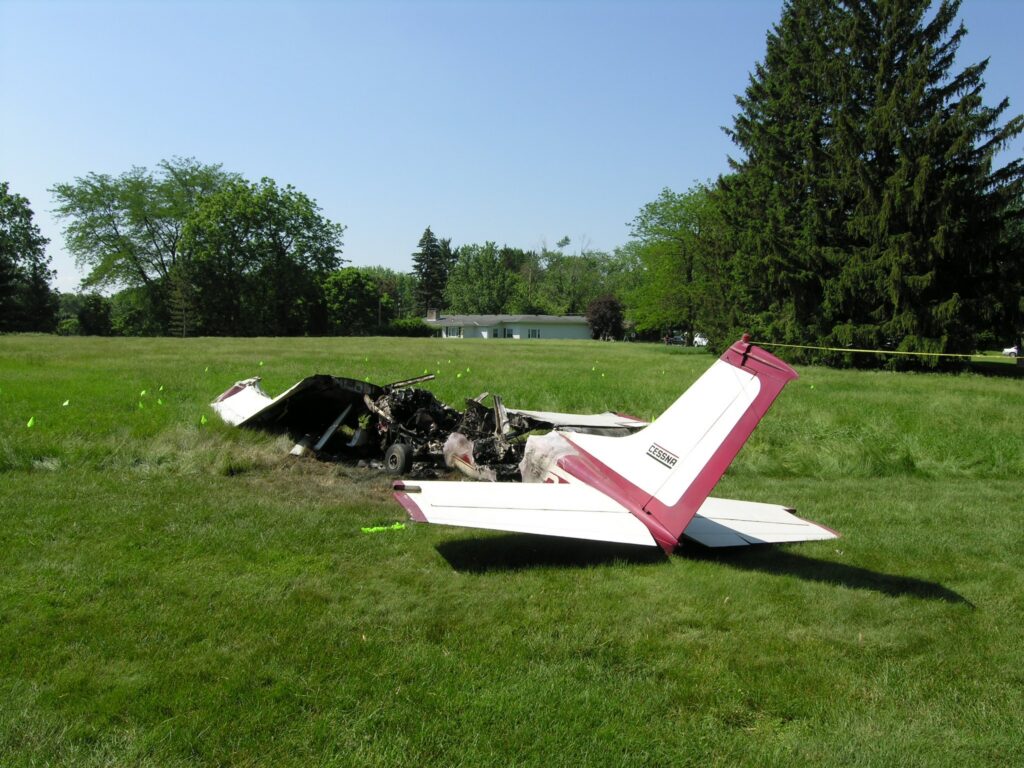
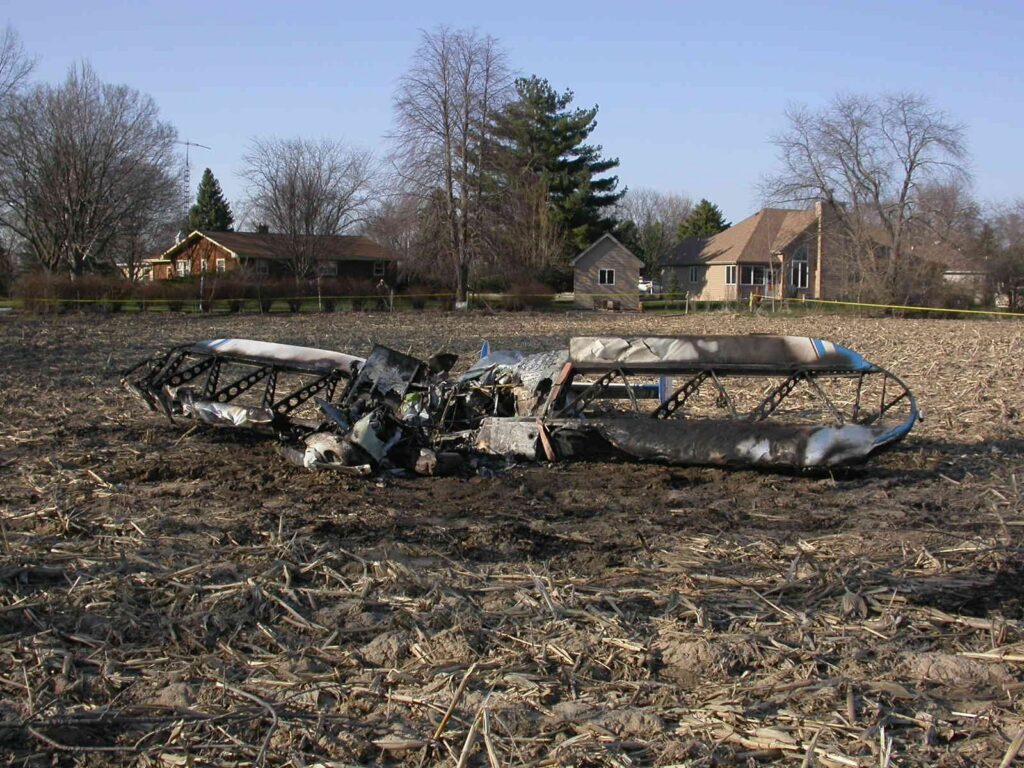
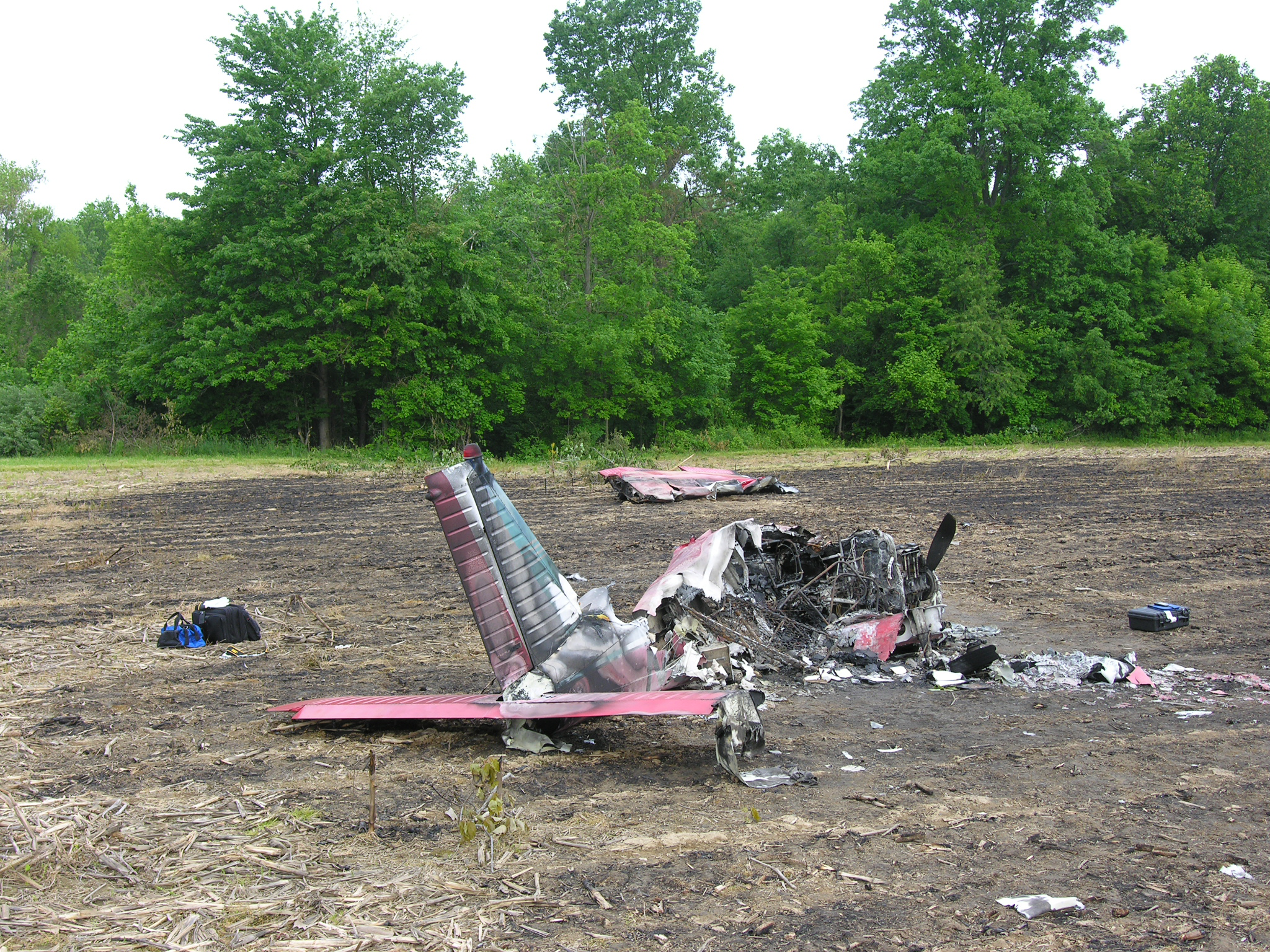
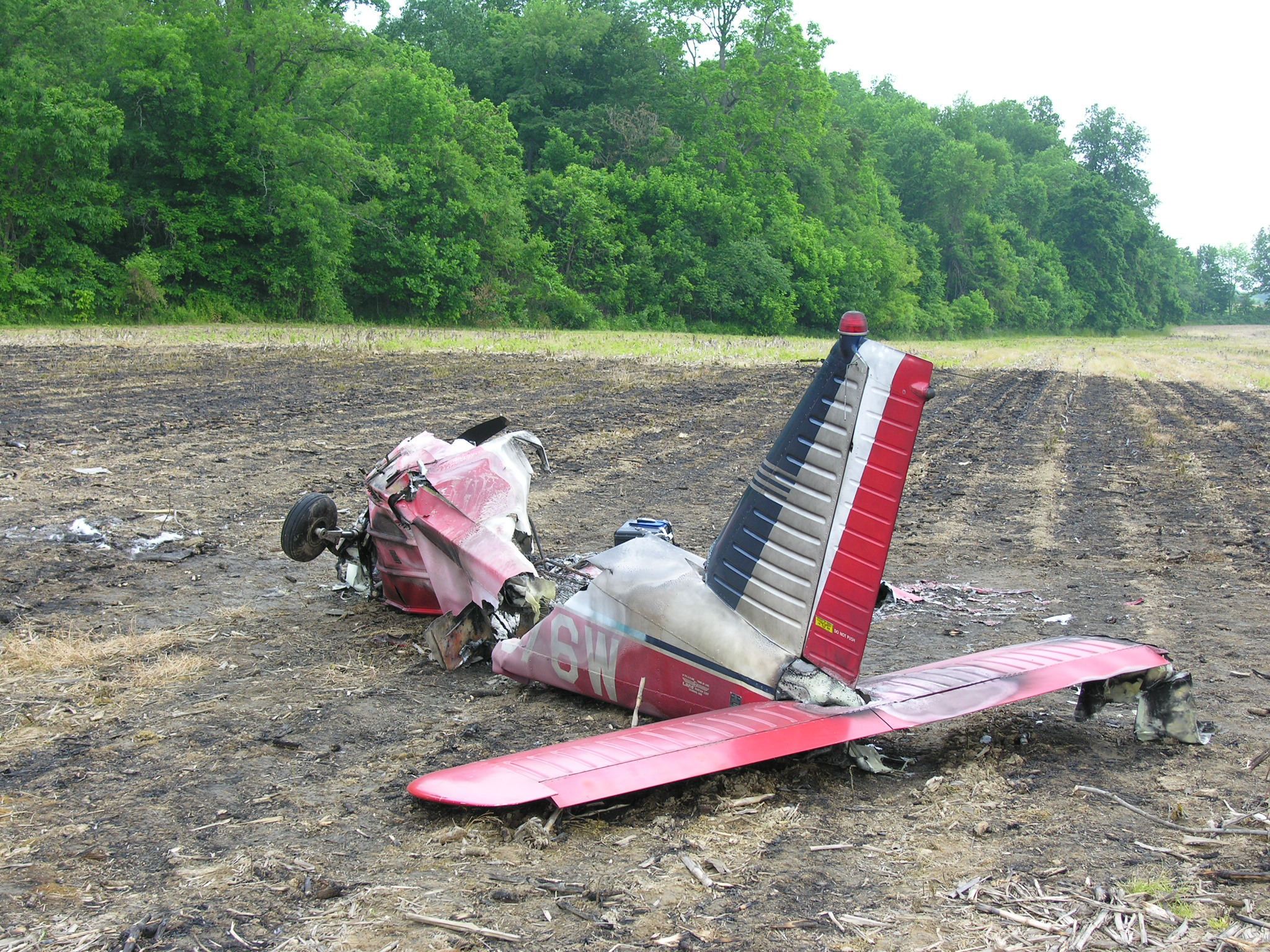
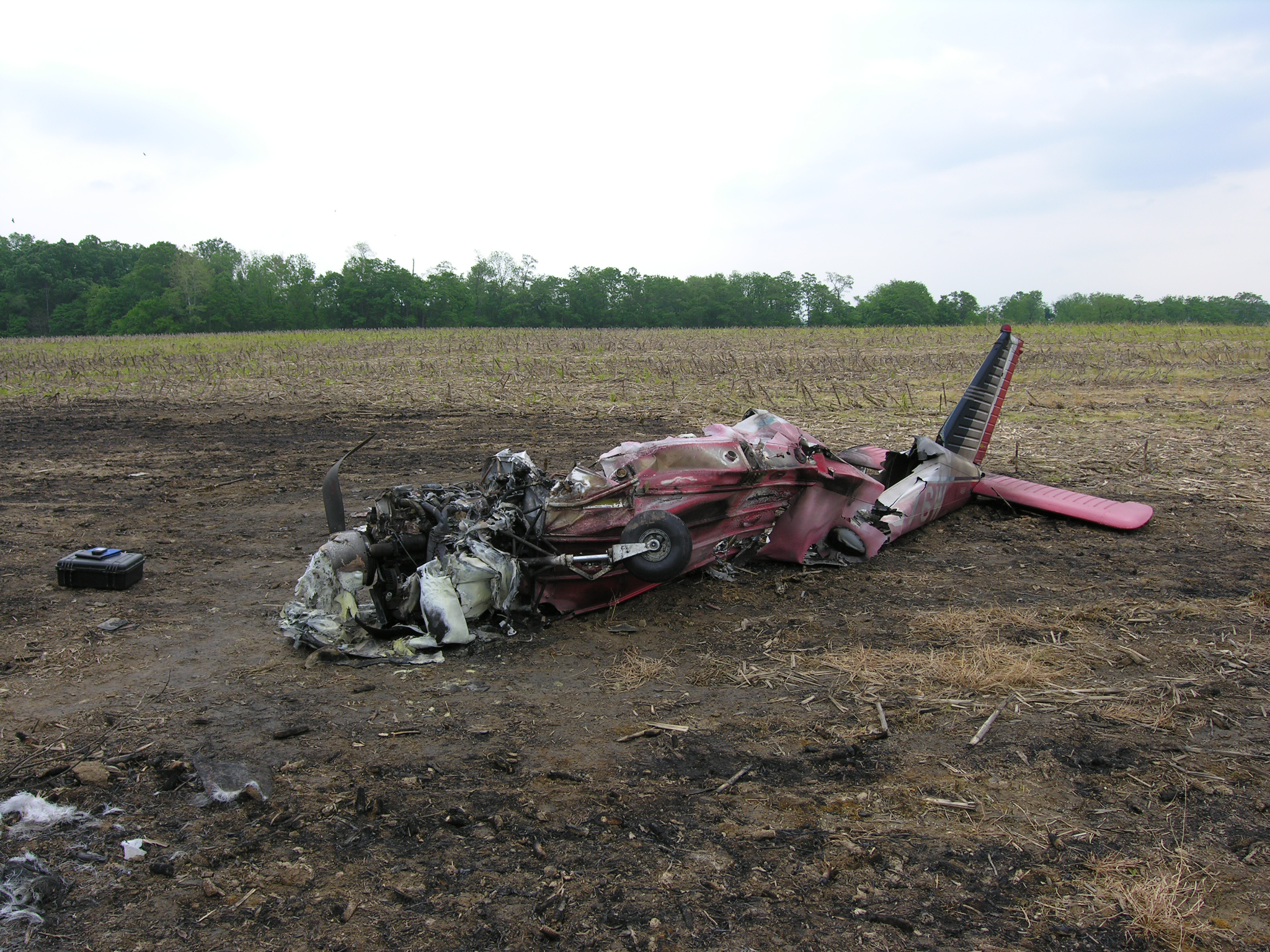
The Cherokee struck a tree with its left wing about half a mile south of the airport, then crashed into a fallow cornfield. The impact and subsequent fire killed both pilots instantly. The wreckage path stretched 180 feet along a heading of about 030 degrees. Fire consumed the engine cowling, cockpit, cabin, and right wing. When investigators arrived, they found the mixture control in the idle cutoff position, but the fuel selector was still in the right tip-tank position. The flaps remained fully retracted.
Investigation Findings
The engine examination revealed no mechanical anomalies that would have prevented normal operation. When investigators hand-propped the engine, all cylinders produced compression, the valves operated normally, and both magnetos sparked when rotated. Oil was present throughout the engine with no metallic debris in the filter or screen. The fuel and oil lines remained intact.
The answer lay in the exhaust system. NTSB materials specialists found a hole in the muffler’s lower housing, adjacent to its left end. The hole’s edges were ragged with radially oriented cracks, and the surrounding area showed extensive internal corrosion. When they measured the metal thickness, the corroded areas averaged only 0.020 inches compared to 0.032 inches in undamaged sections. The original specification called for 0.032-inch stainless steel.
The corrosion was so severe that investigators could separate pieces of the muffler edge with just three bending cycles. Brown patches on the inner surface flaked off when touched, revealing the characteristic undulating surface of advanced corrosion deterioration. The right exhaust stack showed corresponding damage, with the middle pipe section deformed from round to oval and tapered from its original 2.5-inch diameter down to 2.35 inches at the damaged end.
The maintenance records told a troubling story. The same mechanic had performed the airplane’s previous five annual inspections, most recently just four days before the accident on May 26, 2008. His inspection checklist was a single page with 16 items, compared to the manufacturer’s 12-page checklist with 54 engine-related items. For the exhaust system, his checklist simply listed “Muffler” with a check mark. He worked out of his hangar without calibrated tools and served dual roles as both mechanic and airport manager.
NTSB Probable Cause
The pilot’s failure to maintain control of the airplane due to an in-flight fire as a result of a corrosion hole in the muffler that was not identified by the mechanic. Contributing to the accident was the improper emergency procedure performed for an in-flight fire.
Safety Lessons
This accident illustrates how a cascading failure can overwhelm even experienced pilots when mechanical problems combine with incomplete emergency procedures. The corrosion hole that started this chain of events should have been caught during routine maintenance, but inadequate inspection procedures allowed it to reach a critical failure point.
- Annual inspections must follow manufacturer specifications, not abbreviated checklists. The mechanic’s single-line “Muffler” item missed corrosion so severe that investigators could break off pieces by hand. Piper’s exhaust system inspection requires checking stacks, connections, gaskets, mufflers, heat exchangers, and baffles according to detailed procedures. Owner-pilots should verify their mechanic follows the complete manufacturer checklist, not a shortened version.
- In-flight fire demands immediate fuel shutoff, regardless of landing considerations. The fuel selector remained in the “on” position throughout the emergency, feeding the fire that ultimately consumed the aircraft. The emergency procedure clearly states fuel selector “off” as the first action, before throttle or mixture controls. The pilots likely prioritized maintaining engine power for an emergency landing, but this decision allowed the fire to intensify beyond control.
- Multiple smoke events require grounding until the source is definitively identified. After the first smoke incident, an avionics technician checked only the recently serviced autopilot system. The exhaust system—which had nothing to do with the autopilot work—went uninspected. Any smoke in the cockpit, especially recurring smoke, demands a comprehensive inspection of all potential sources before the next flight.
Frequently Asked Questions
Q: How could corrosion this severe go undetected during annual inspections?
A: The mechanic used an inadequate inspection checklist with only 16 items instead of following Piper’s detailed procedures. His single-line “Muffler” checklist item provided no guidance for checking internal corrosion, which requires removing components and measuring metal thickness in critical areas.
Q: Why didn’t the pilots shut off the fuel selector during the emergency?
A: The fuel selector was found in the “on” position after impact, though investigators couldn’t determine if this was the pilots’ decision or the result of impact forces. The emergency checklist clearly requires fuel shutoff as the first step, but pilots facing an in-flight fire often prioritize maintaining power for an emergency landing.
Q: What should pilots do when smoke appears in the cockpit during flight?
A: Follow the manufacturer’s emergency checklist immediately: fuel selector off, throttle closed, mixture to idle cutoff, heater and defroster off. Land at the nearest suitable airport regardless of terrain. The key is stopping the fire’s fuel source first, then focusing on the forced landing.
Q: How can owners ensure proper exhaust system inspections during annuals?
A: Verify your mechanic follows the complete manufacturer checklist for exhaust system inspection, including removal and internal examination of mufflers and heat exchangers. Internal corrosion often isn’t visible from external inspection alone, especially in areas where moisture accumulates.
Q: Should the flight have continued after the first smoke incident?
A: No. Any smoke in the cockpit requires grounding until the source is definitively identified and corrected. The avionics technician only checked the autopilot system, not the exhaust system where the actual problem existed. A comprehensive inspection should have examined all potential smoke sources before the next departure.