What Happened
On September 27, 2008, Maryland State Police Trooper 2, an Aerospatiale SA365N-1 helicopter with registration N92MD, lifted off from a landing zone at Wade Elementary School in Waldorf, Maryland, at 11:37 PM. The commercial pilot and crew were transporting two automobile accident victims to Prince George’s Hospital Center in Cheverly. The flight should have taken about 20 minutes under normal conditions, but what started as a routine medical evacuation was about to turn into a deadly encounter with weather that the pilot hadn’t fully anticipated.
Visual conditions were clear at departure, and the pilot initially flew northeast toward the hospital, but somewhere en route, Trooper 2 encountered instrument meteorological conditions. The pilot found himself flying in clouds or reduced visibility at night, a situation that transformed a straightforward EMS flight into an instrument approach challenge. Rather than continue to the hospital, he made the right decision to divert to Andrews Air Force Base, about 10 miles southeast of the original destination.
The pilot contacted Potomac Consolidated Terminal Radar Approach Control at 11:51 PM and requested vectors for an ILS approach to runway 19R at Andrews. The controller began providing radar vectors, but didn’t give the pilot the current Andrews weather observation, which showed deteriorating conditions with a 400-foot ceiling and 3/4-mile visibility in mist. The pilot was cleared for the ILS 19R approach at 11:54 PM, beginning his descent from 2,000 feet toward the runway that was still more than 10 miles away.
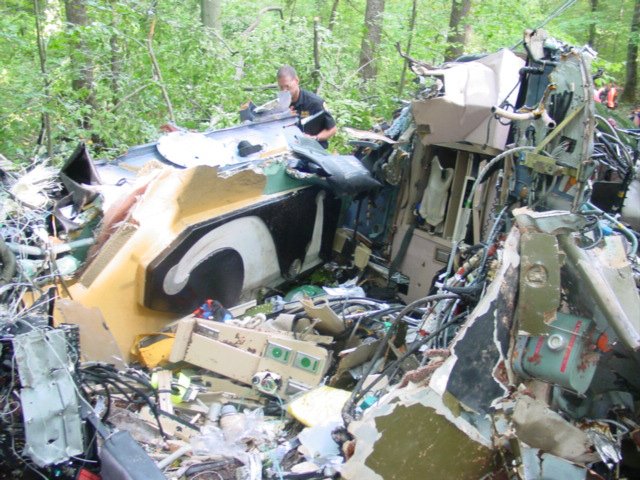
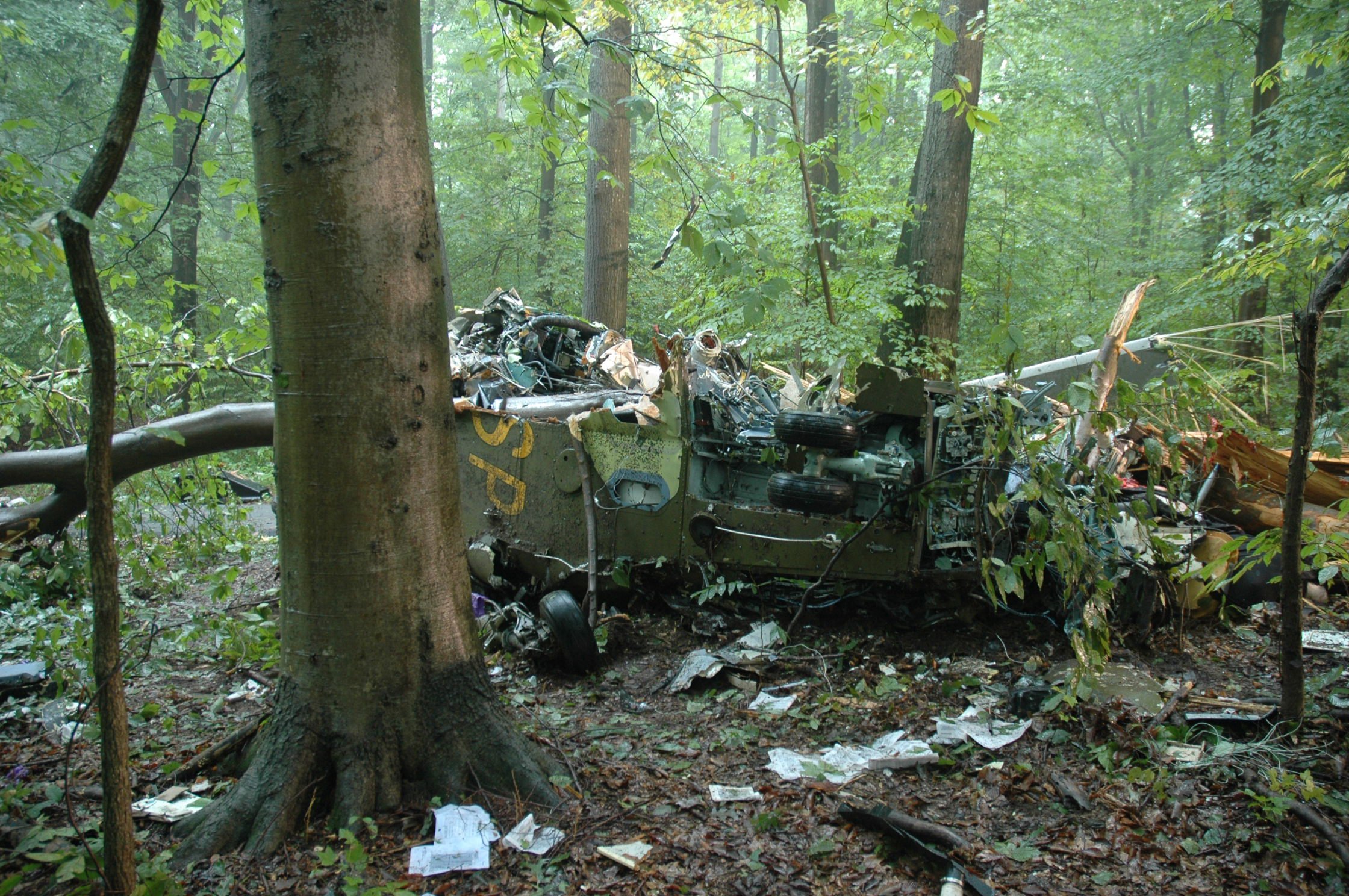
At 11:58 PM, four minutes into the approach, Trooper 2 crashed into trees in Walker Mill Regional Park, about 3.2 miles north of the runway threshold. The helicopter struck the ground at a steep angle, killing the pilot, flight paramedic, field provider, and one of the two patients. The surviving patient was critically injured but alive when rescuers reached the wreckage. The impact occurred well above the minimum descent altitude for the approach, suggesting the pilot had descended too rapidly and too far while trying to break out of the clouds.
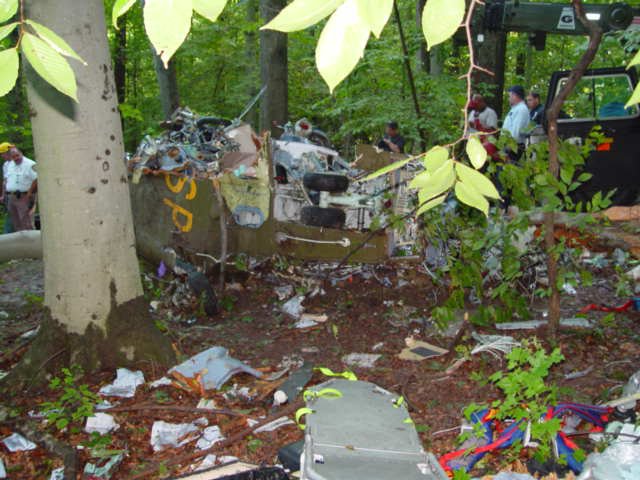
Investigation Findings
The NTSB’s investigation revealed a pilot with limited recent instrument flight experience attempting to manage a complex situation with multiple contributing factors. The pilot held a commercial certificate with helicopter and instrument ratings, but his logbook showed only 6.4 hours of actual instrument time in the preceding six months. For a helicopter pilot facing unexpected IMC at night, that represented a significant experience deficit. The SA365N-1 was equipped for instrument flight, including an autopilot system, but managing a precision approach in a helicopter requires skills that deteriorate quickly without regular practice.
Weather conditions at Andrews had been steadily deteriorating throughout the evening. At the time of the accident, the automated weather station reported a 400-foot ceiling with 3/4-mile visibility in mist. The approach controller never provided this crucial information to the pilot, who was making decisions about the approach without current weather data. Meanwhile, the pilot was managing not only the approach but also coordination between multiple air traffic control facilities. Reagan National Airport tower initially provided approach control services, then handed the flight off to PCT, creating additional workload during a critical phase of flight.
The investigation found that Maryland State Police aviation operations lacked effective risk management procedures for weather assessment and flight authorization. The pilot made the decision to accept the flight without a comprehensive evaluation of en route and destination weather conditions. The flight was conducted under visual flight rules with no formal flight plan, despite the potential for encountering instrument conditions along the route. GPS tracking data showed the helicopter’s final descent was far steeper than normal approach parameters, indicating the pilot was likely trying to get below the clouds and establish visual contact with the ground.
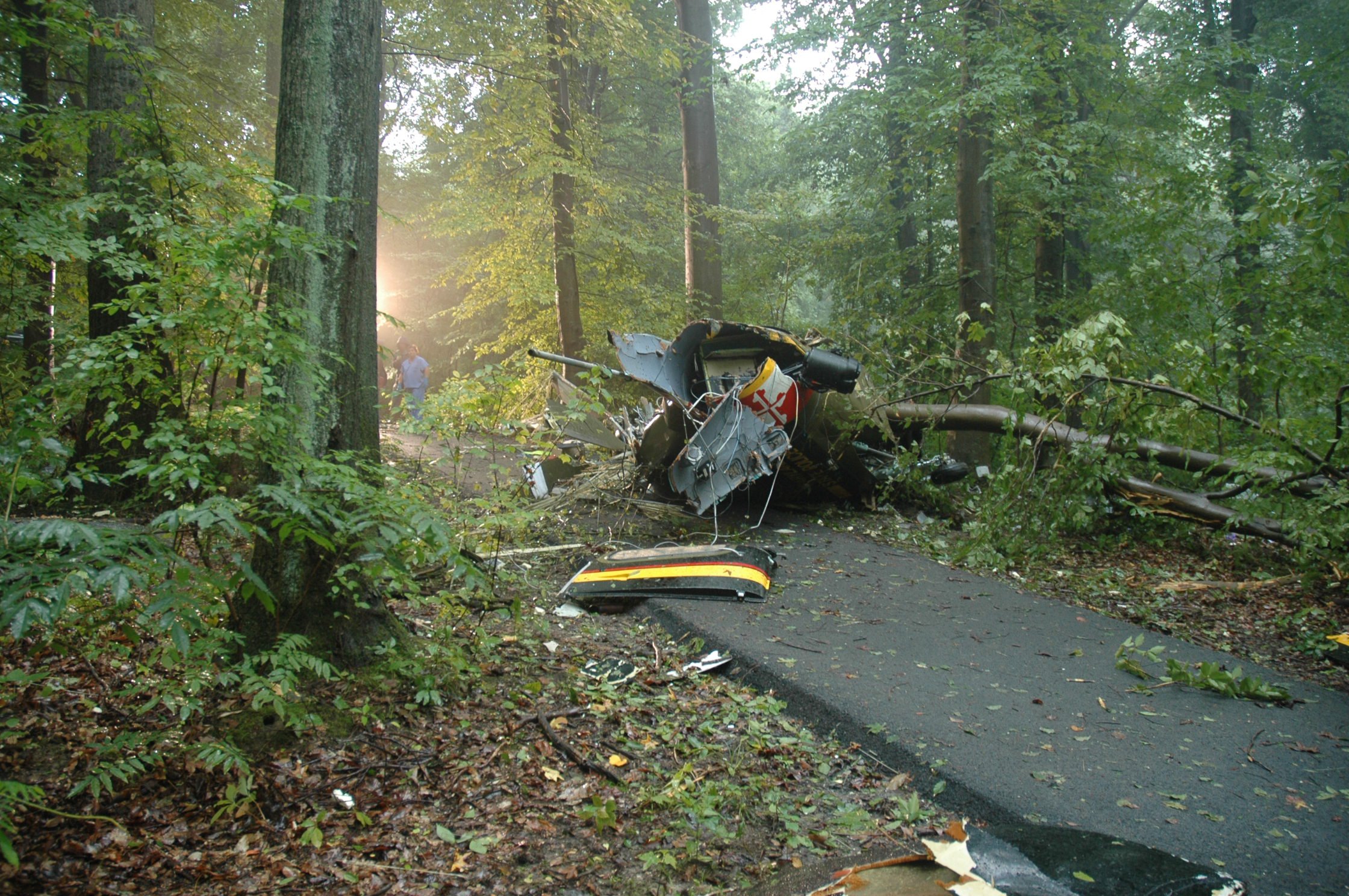
NTSB Probable Cause
The pilot’s attempt to regain visual conditions by performing a rapid descent and his failure to arrest the descent at the minimum descent altitude during a nonprecision approach. Contributing to the accident were (1) the pilot’s limited recent instrument flight experience, (2) the lack of adherence to effective risk management procedures by the Maryland State Police, (3) the pilot’s inadequate assessment of the weather, which led to his decision to accept the flight, (4) the failure of the Potomac Consolidated Terminal Radar Approach Control (PCT) controller to provide the current Andrews Air Force Base weather observation to the pilot, and (5) the increased workload on the pilot due to inadequate Federal Aviation Administration air traffic control handling by the Ronald Reagan National Airport Tower and PCT controllers.
Safety Lessons
This accident illustrates how multiple small failures can combine into a fatal chain of events, especially when instrument currency and risk management procedures aren’t adequate for the operational environment.
- Instrument currency is not optional for helicopter EMS operations. The pilot’s 6.4 hours of actual instrument time in six months fell well short of what’s needed to safely manage unexpected IMC. Helicopter instrument flying requires constant practice because the aircraft’s inherent instability makes attitude control more demanding than in fixed-wing aircraft. EMS operators should establish instrument currency requirements that exceed regulatory minimums, particularly for pilots who regularly fly at night or in marginal weather conditions.
- Weather assessment must be comprehensive before accepting any flight. The decision to launch should include not just departure conditions but forecasted conditions for the entire route and destination area. Even VFR flights need instrument escape plans when flying at night or in areas prone to rapid weather changes. Organizations should implement formal weather briefing requirements and provide pilots with access to real-time weather updates throughout the flight.
- Controllers must provide current weather information when pilots request approaches in IMC. The PCT controller’s failure to give the pilot Andrews’ current weather observation eliminated crucial decision-making information. Pilots should also proactively request weather updates, especially when diverting to an unfamiliar airport. Understanding the ceiling and visibility before beginning an approach helps determine whether the approach is likely to be successful and what alternatives might be necessary.
Frequently Asked Questions
Q: What instrument currency requirements apply to helicopter EMS pilots?
A: The same basic currency requirements as other pilots apply – six approaches, holding procedures, and intercepting/tracking courses within the preceding six months. However, many EMS operators establish higher standards because helicopter instrument flying is more demanding and the operational environment often involves unexpected IMC encounters. Regular simulator training and actual instrument flight time are essential for maintaining proficiency.
Q: Why didn’t the pilot use the autopilot during the approach?
A: The investigation found that while the helicopter was equipped with an autopilot, the pilot was hand-flying the approach. Helicopter autopilots can be valuable for reducing workload during approaches, but they require proper training and familiarity to use effectively. Some pilots prefer to hand-fly approaches to maintain better aircraft control, especially in challenging conditions. However, proper use of automation can significantly reduce pilot workload during high-stress situations.
Q: What is the minimum descent altitude on an ILS approach, and why is it critical?
A: The minimum descent altitude (MDA) on a nonprecision approach, or decision height (DH) on a precision approach like an ILS, represents the lowest altitude a pilot can descend without visual contact with the runway environment. For the ILS 19R approach at Andrews, this would have been around 200-300 feet above ground level. Descending below this altitude without visual contact with the runway is extremely dangerous and often leads to controlled flight into terrain, as happened in this accident.
Q: How do helicopter EMS operations balance mission urgency with safety?
A: Professional EMS operations use structured risk assessment tools to evaluate factors like weather, pilot experience, aircraft capabilities, and mission criticality before launching. The urgency of a medical mission never justifies accepting unmanageable risk. Many operators have implemented formal “risk scores” that consider multiple factors and require higher approval levels for flights that exceed certain risk thresholds. The goal is to complete as many missions as possible while maintaining an acceptable safety margin.
Q: What should a pilot do when encountering unexpected IMC conditions?
A: The immediate priority is aircraft control and transitioning to instrument flight. Declare an emergency if necessary and request vectors or an approach to the nearest suitable airport. Don’t attempt to continue VFR or “scud run” below the clouds. If instrument current and capable, execute a proper instrument approach. If not instrument current, request priority handling and assistance from ATC. The key is making decisions based on actual capabilities rather than hoping conditions will improve.