What Happened
On April 11, 2009, a Piper PA-24-250 Comanche, N7690P, broke apart in flight during a descent through clouds near San Diego, California, killing both the 51-year-old private pilot and his passenger. The pilot had filed an IFR flight plan for the one-hour flight from Whiteman Airport in Los Angeles to Brown Field Municipal Airport in San Diego.
The flight started normally at 1004 in visual conditions. The pilot cruised at 7,000 feet for most of the route, maintaining routine communications with air traffic control. As he approached the San Diego area, the weather changed. A marine layer had moved in, creating multiple cloud layers with bases between 2,500 and 4,800 feet.
At 1050, when the pilot was about 29 miles north of his destination, he told Southern California Approach that he was descending from 6,200 to 4,000 feet. The controller acknowledged. Two and a quarter minutes later, at 1053, the controller cleared him to descend further: “descend and maintain two thousand six hundred keep your speed up.” The pilot began to respond “two thous…” but his transmission cut off mid-word.
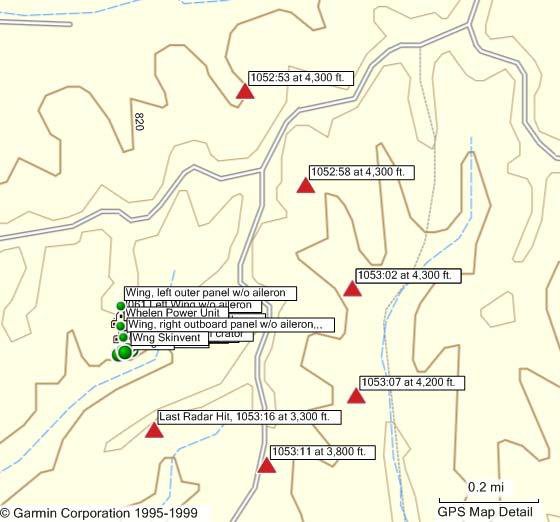
That partial transmission was the last anyone heard from N7690P. Radar data tells the rest of the story. At 1053:07, two seconds before the pilot’s final radio call, the airplane was at 4,200 feet. Four seconds later it had dropped to 3,800 feet. By 1053:16, just nine seconds after the controller’s clearance, the Comanche was at 3,300 feet and turning clockwise from its southbound course to a westerly heading. The airplane was descending at 6,000 feet per minute. Then the radar returns stopped.
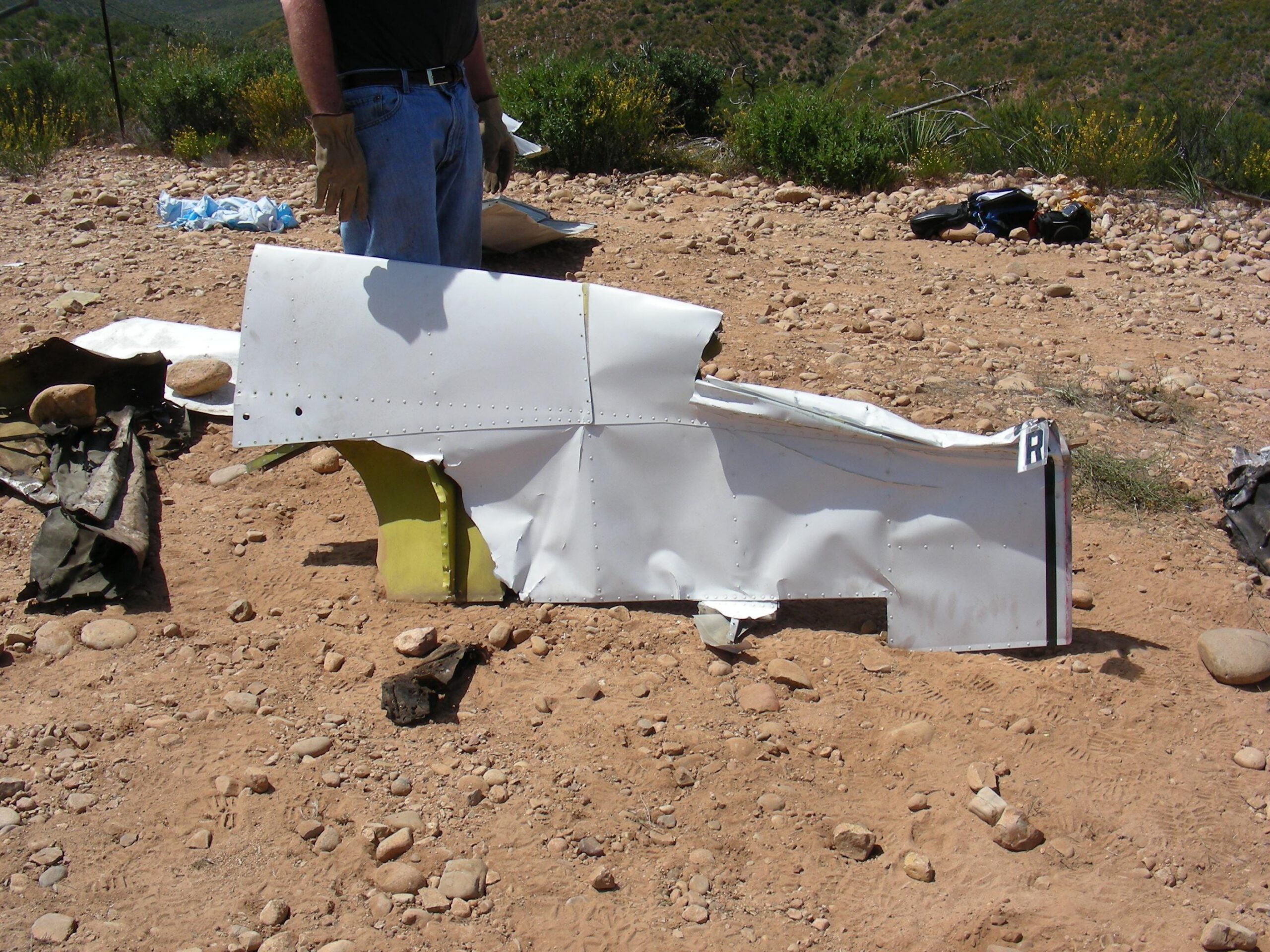
Two witnesses on the ground heard what happened next. The first described the sound of an airplane diving with the engine at high RPM, getting louder and louder for five or six seconds. The second witness, about half a mile from where the airplane hit, heard a high-pitched sound “like that of an incoming missile” that got very loud, then ended with a boom. Seconds later, he saw a fireball on a nearby hillside. Irregular pieces of wreckage floated down through the overcast sky.
Investigation Findings
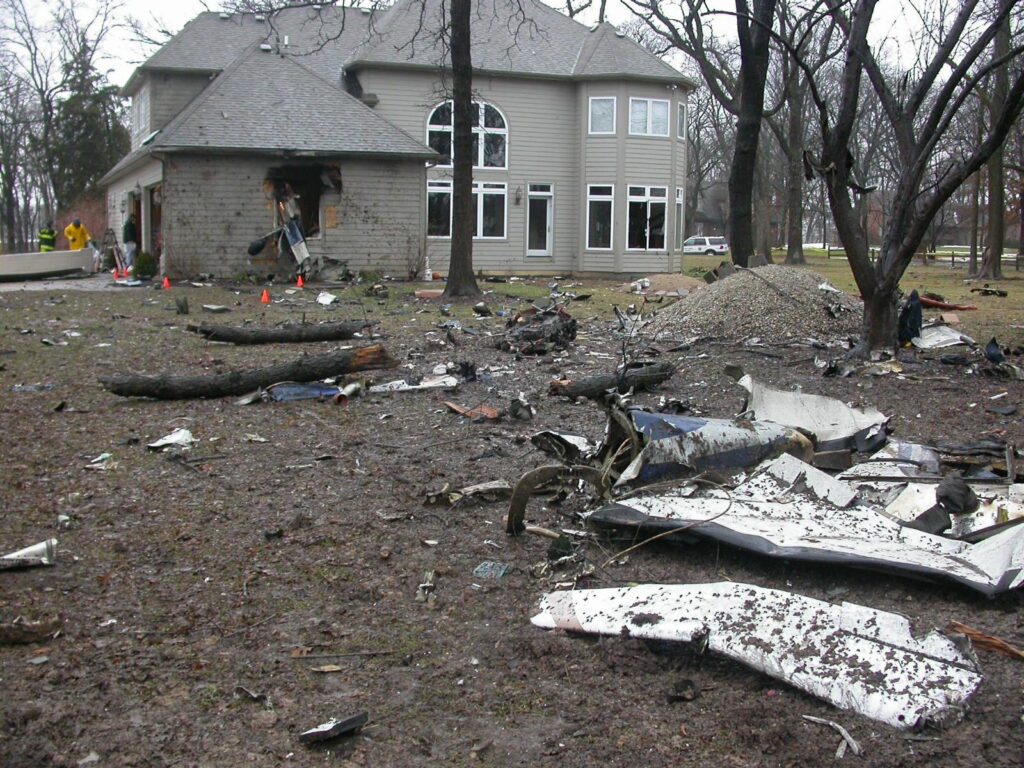
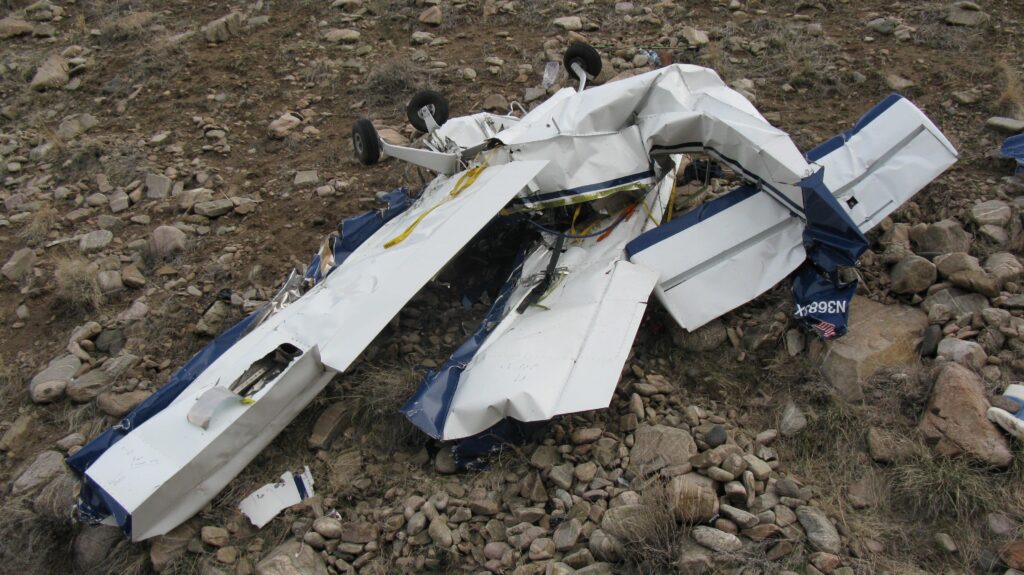
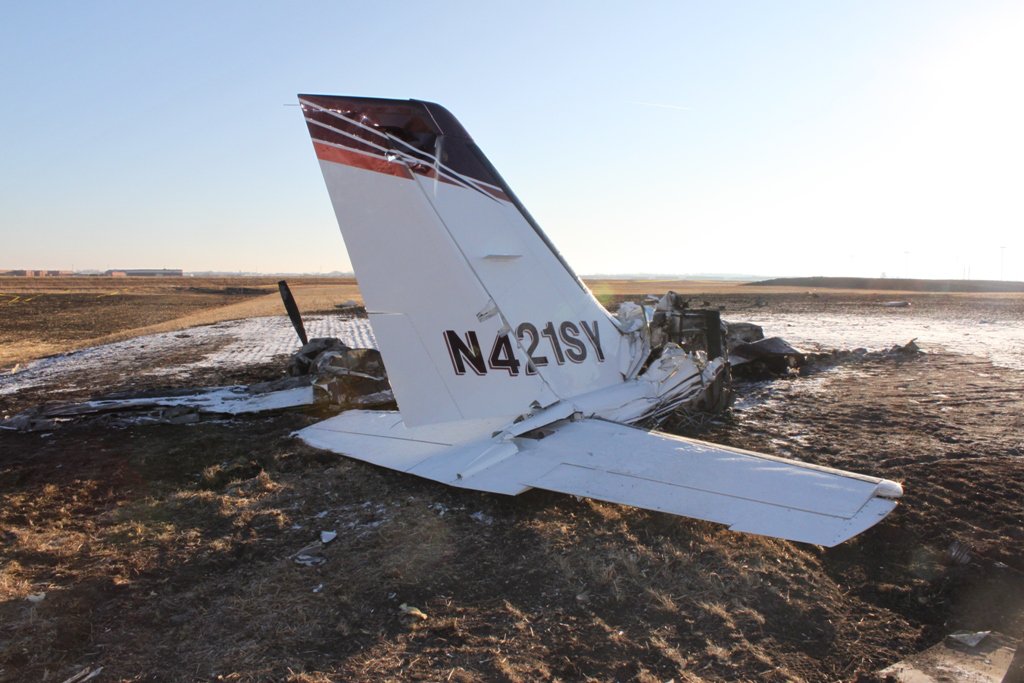
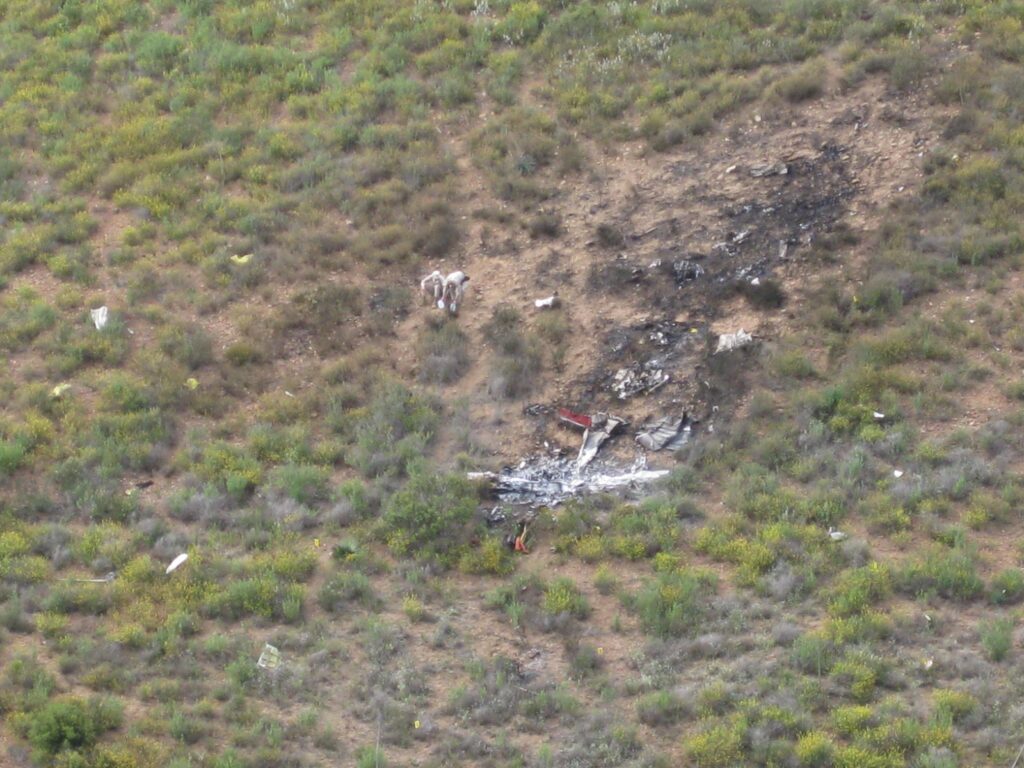
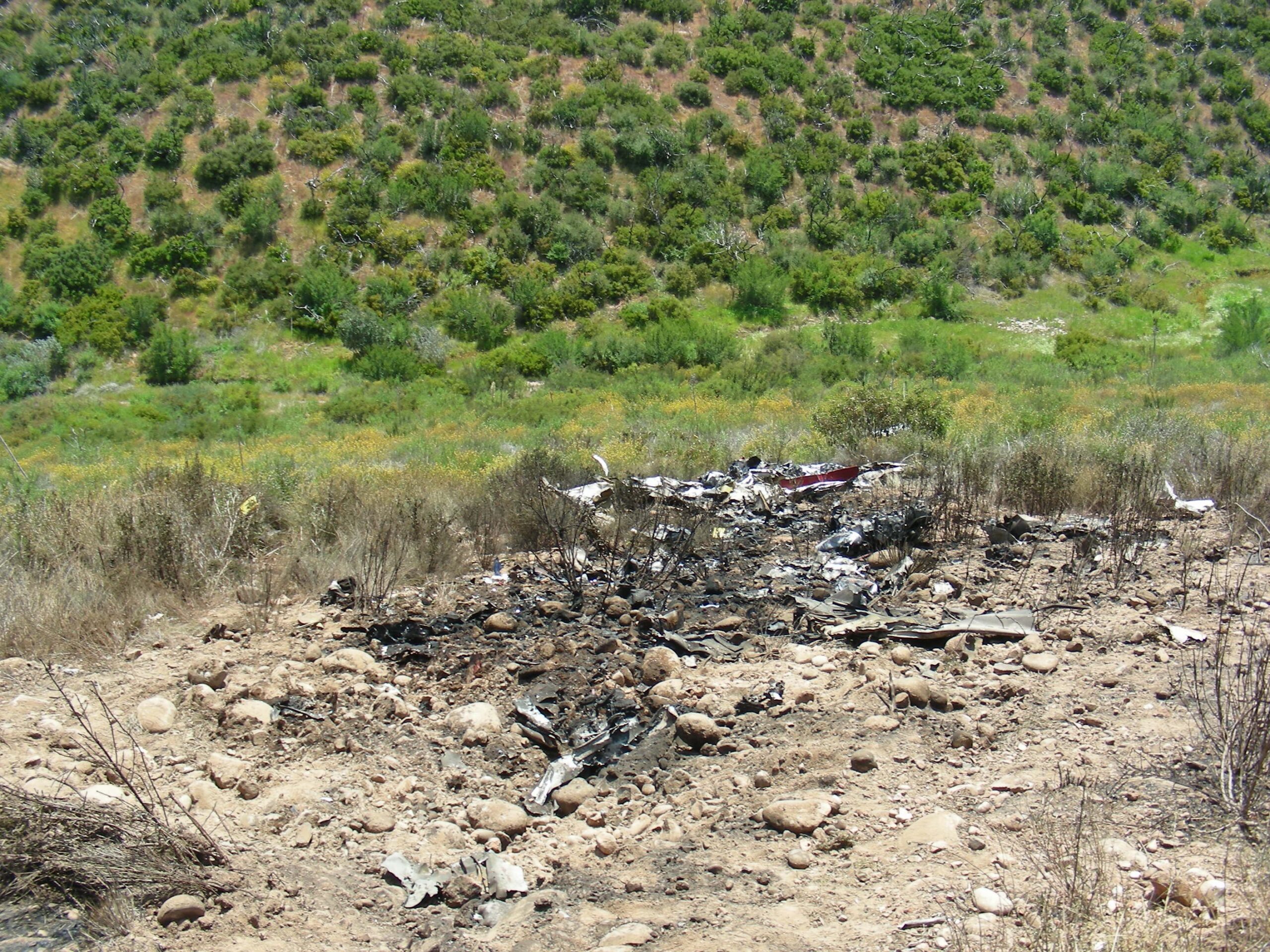
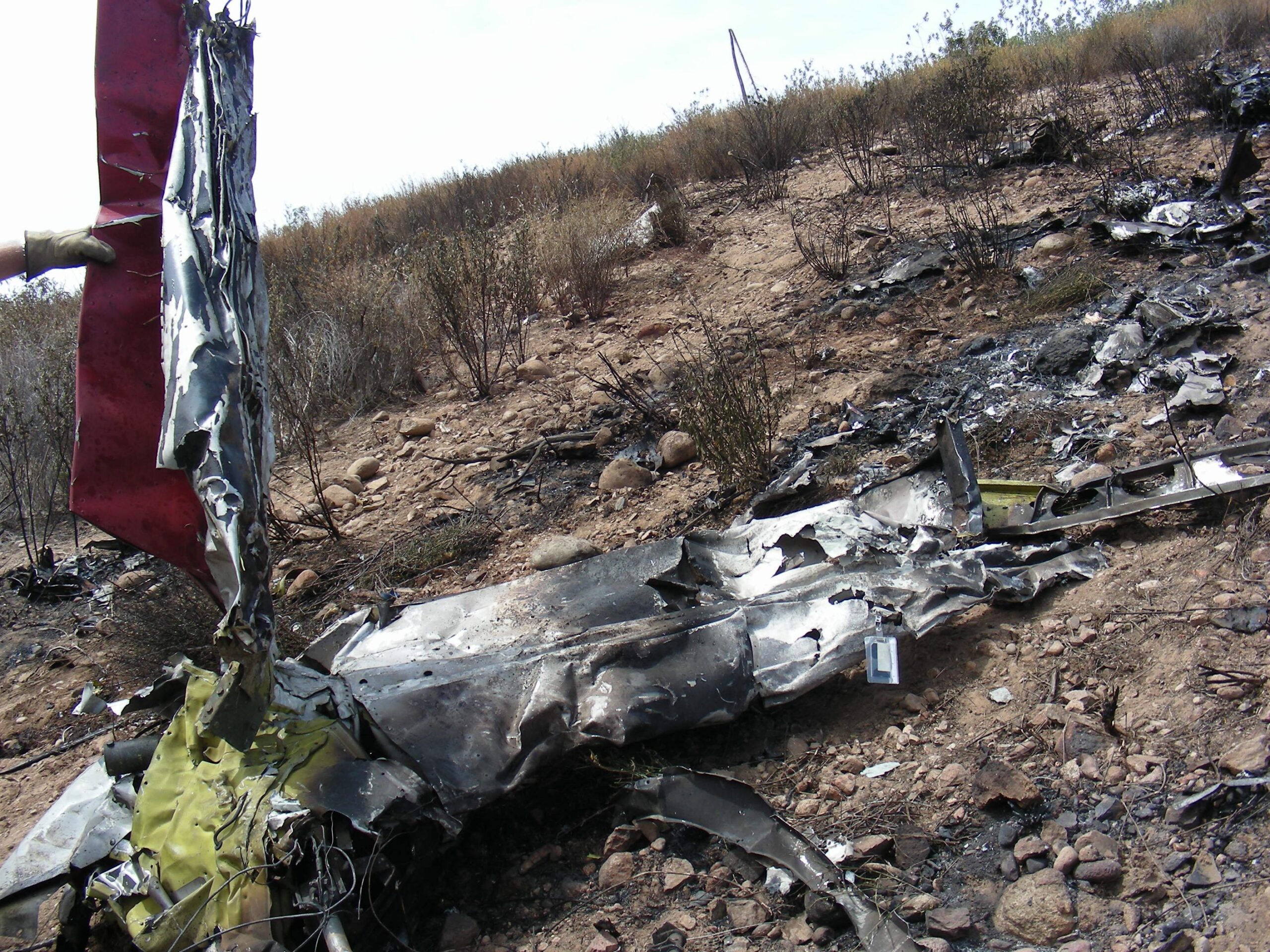
The wreckage told investigators exactly what had happened in those final seconds. The Comanche had broken apart in flight during the uncontrolled descent. Pieces were scattered over a 530-foot path on a hillside about 5.5 miles east-northeast of Miramar Marine Corps Air Station, at elevations between 850 and 1,000 feet.
The wing spars were bent and fractured upward, indicating positive G forces had torn the airplane apart. Both wings failed in what investigators called a “pilot-induced structural overload.” After the wings separated, a piece of the right wing struck the right stabilator, causing it to break off as well. The engine separated from its mounts and split open when it hit the ground. A post-impact fire consumed the cockpit and cabin area.
Investigators found no evidence of mechanical failure. The engine showed no signs of pre-impact problems. The propeller blades showed impact damage consistent with the engine producing power when the airplane hit the ground. Toxicology tests on the pilot came back negative for alcohol, carbon monoxide, and drugs.
The pilot held a private certificate with instrument rating and had 820 total hours, including 370 hours in the PA-24. He had completed a flight review in August 2008 and had practiced instrument approaches in December 2008. During his pre-flight weather briefing, the pilot was told he might need to fly IFR approaching San Diego due to the marine layer, with cloud tops at 5,500 feet. He told the briefer he could fly in instrument conditions.
Weather observations from Miramar, about six miles from the accident site, showed broken layers at 2,500 and 3,100 feet with an overcast at 4,800 feet at the time of the accident. Just 13 minutes later, conditions had deteriorated to 200 feet broken and 3,000 feet overcast. The pilot was descending through multiple cloud layers when he lost control.
NTSB Probable Cause
The pilot’s failure to maintain control during an en route cruise descent through multiple cloud layers, resulting in an in-flight breakup.
Safety Lessons
This accident highlights critical risks that every instrument-rated pilot faces when transitioning from VMC to IMC. The pilot was qualified and current, the airplane was mechanically sound, and the weather wasn’t extreme. Yet the flight ended in an in-flight breakup caused by loss of control in clouds.
- Cloud layers demand extra vigilance during descent. Multiple cloud decks create complex visual cues as you transition in and out of clouds. The broken layers reported at Miramar meant the pilot would have experienced repeated transitions between visual and instrument conditions during his descent from 7,000 feet. Each transition requires immediate and complete commitment to instrument references.
- Rapid descent rates increase spatial disorientation risk. The controller’s instruction to “keep your speed up” while descending may have contributed to the pilot’s workload. Maintaining 6,000 feet per minute descent in IMC requires precise instrument control. If spatial disorientation sets in during a rapid descent, the natural tendency is to pull back on the yoke, which can quickly lead to a high-speed stall and loss of control.
- Practice instrument flying in your own airplane regularly. The pilot had practiced approaches in December, four months before the accident. But approaches are only part of instrument flying. Practice basic attitude instrument flying, including descents through cloud layers, unusual attitude recovery, and transitions between VMC and IMC. The skills deteriorate quickly without regular practice.
Frequently Asked Questions
Q: How fast was the Comanche descending when it broke apart?
A: Radar data showed the airplane descended from 4,200 feet to 3,300 feet in just 9 seconds, which equals about 6,000 feet per minute. This is far beyond normal descent rates and indicates the pilot had completely lost control of the aircraft.
Q: Could the pilot have recovered from the loss of control?
A: Once the airplane entered the uncontrolled descent at 6,000 feet per minute, recovery would have been extremely difficult. The pilot would have needed to recognize the unusual attitude immediately, reduce power, level the wings, and carefully apply back pressure without overstressing the aircraft. At that descent rate and in IMC, there wasn’t much time or altitude to work with.
Q: What causes spatial disorientation in cloud layers?
A: Multiple cloud layers create repeated transitions between visual and instrument flight conditions. Your inner ear and visual system can become confused by these rapid changes. When you can see the ground one moment and are in solid clouds the next, your brain struggles to process the conflicting sensory inputs, making it easy to lose track of the aircraft’s actual attitude.
Q: How can pilots prevent VFR into IMC accidents?
A: Stay proficient with instrument flying through regular practice, not just biennial flight reviews. Get comfortable with your aircraft’s autopilot if it has one. Plan conservatively when weather is marginal. If you’re not instrument current or comfortable flying in clouds, don’t launch into questionable conditions. When you do encounter IMC, commit fully to your instruments and avoid the temptation to look outside for visual references.
Q: What is the typical G-force limit for a Piper Comanche?
A: The PA-24 Comanche is certified for +3.8 G’s and -1.52 G’s in the normal category. The upward wing spar failures found in this accident indicate the pilot pulled hard enough during the loss of control to exceed the aircraft’s structural limits, causing in-flight breakup.