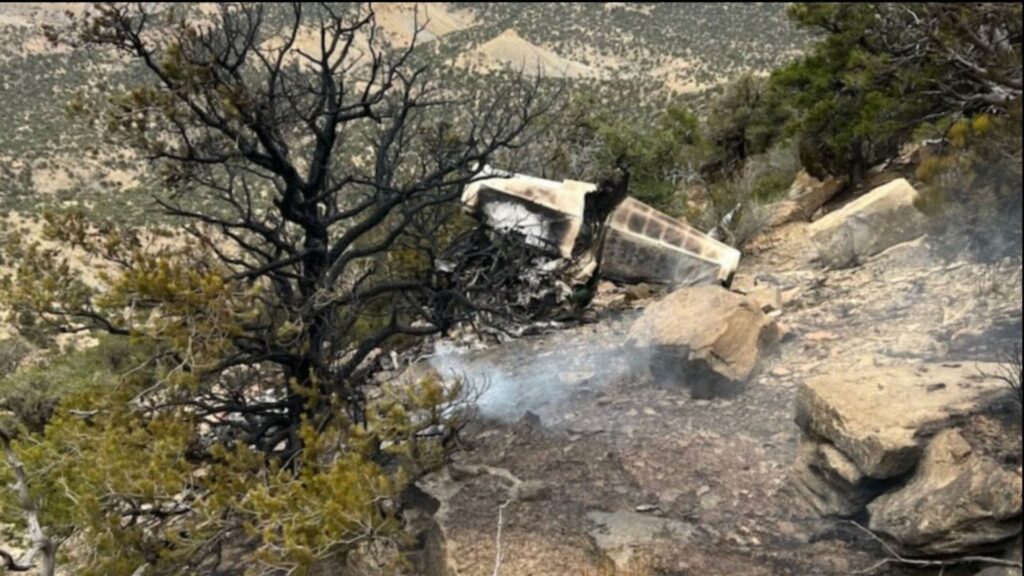



On October 27, 2023, a Cessna T206H, registration N915DV, departed Vernal, Utah, on what was intended to be a routine personal flight to Cedar City, Utah. The pilot was a 47-year-old commercial pilot with an instrument rating, holding a second-class medical issued just two months earlier. He had accumulated approximately 830 total flight hours across all aircraft, flying as a single pilot under Part 91. While the report did not specify his exact time in the Cessna T206H, the aircraft itself was a capable, high-performance single-engine airplane well suited for cross-country flying, including operations in mountainous terrain when properly planned and executed .
This accident would ultimately be classified as controlled flight into terrain, or CFIT, a category that remains one of the most unforgiving in general aviation. What makes CFIT accidents especially sobering is that, by definition, the airplane is mechanically capable and under control right up until the moment it isn’t.
The Day Begins Normally
Earlier that morning, the pilot had flown from his home base in Craig, Colorado, to Vernal, Utah. After spending about two hours on the ground, he departed again around 1300 local time, heading southwest toward Cedar City. ADS-B data later showed the airplane tracking west toward Bottle Hollow Reservoir before settling on a southwest course. As the flight progressed, the airplane climbed first to about 8,300 feet mean sea level and then to 8,800 feet, where it remained for the remainder of the recorded data.
On the surface, nothing about this flight stood out as unusual. Weather in the area was visual meteorological conditions, with clear skies, good visibility, and light winds. There was no precipitation, no reported turbulence, and no environmental factor that would have forced the pilot into deteriorating conditions. This was a daytime VFR flight in seemingly benign weather, which makes the outcome all the more difficult to understand .
Planning and the Role of Technology
Investigators reviewed the pilot’s ForeFlight account to better understand how the flight may have been planned. While no formal flight briefing was generated for the accident flight, multiple routes were entered into the app earlier that day between airports in Idaho, Colorado, and Utah. Entering routes can provide fuel calculations, estimated flight times, and access to weather data, but without creating a full flight, an official briefing is not generated.
Notably, the data showed that no weather information was viewed in ForeFlight before departure. While conditions were VMC, this detail highlights an important point for pilots: good weather does not eliminate the need for thorough preflight planning. Terrain awareness, minimum safe altitudes, and route selection become especially critical when flying across mountainous regions, even on clear days .
Cruise Flight Into Rising Terrain
After leveling off at approximately 8,800 feet, the airplane continued on a steady southwest heading. ADS-B data showed no significant altitude changes, no course deviations, and no signs of maneuvering to avoid terrain. The final data point occurred at about 1345 local time, adjacent to where the wreckage was later found near the peak of a hill in mountainous terrain near Orangeville, Utah.
The accident site elevation was approximately 9,000 feet mean sea level. This means the airplane, while flying steadily at 8,800 feet, was actually below the surrounding terrain as the ground gradually rose to meet it. With no recorded climb, turn, or descent in the final moments, the airplane impacted terrain while still under control.
This is the classic CFIT profile. No stall. No loss of control. No mechanical failure forcing the airplane down. Just a steady flight path intersecting with terrain that was higher than the aircraft’s cruising altitude .
Wreckage Examination and Aircraft Performance
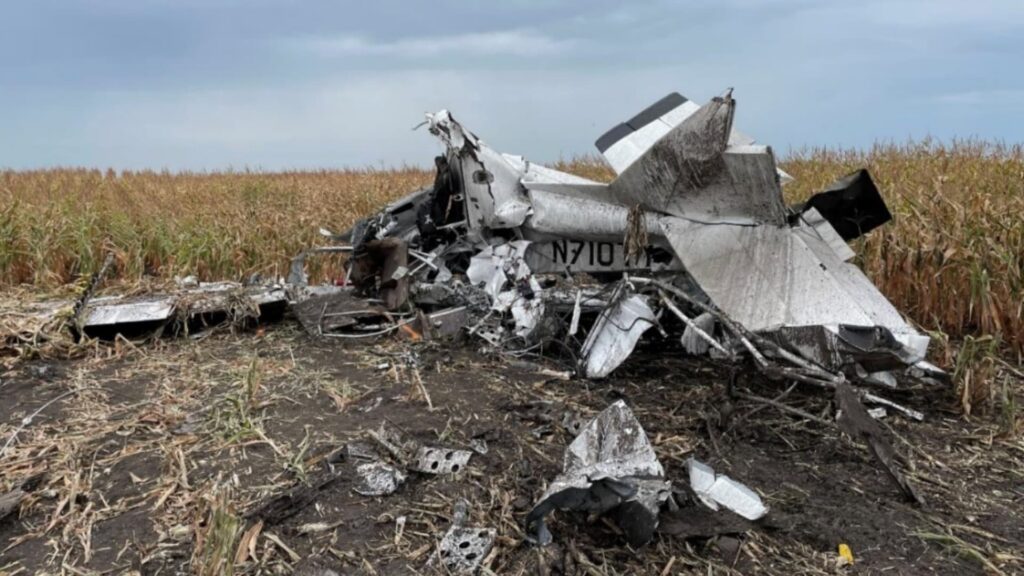
The post-accident examination of the wreckage revealed extensive impact and fire damage. The left wing had separated from the fuselage, and the right wing showed significant crush damage near the fuel tank. The fuselage and cabin were heavily damaged by both impact forces and post-impact fire.
Despite the severity of the damage, investigators were able to determine several important facts. The flaps were fully retracted at impact, consistent with cruise flight. The trim tab was found in a nose-up position, though its significance could not be fully assessed due to damage. The propeller blades exhibited twisting, gouging, and bending consistent with the engine producing power at the time of impact.
The engine examination showed no evidence of a pre-impact mechanical malfunction. Internal components were intact, and damage signatures were consistent with normal operation before the crash. Fuel system components, ignition systems, and accessories were all either destroyed by fire or damaged by impact, but nothing indicated a failure that would have prevented the engine from producing power .
In short, the airplane was flyable. The engine was making power. The flight controls, to the extent they could be examined, showed no anomalies that would explain a loss of control.
Medical Findings and Human Factors
The pilot’s autopsy determined the cause of death to be blunt force injuries, with the manner of death classified as an accident. Due to the severity of the injuries, the medical evaluation was limited. Toxicology testing detected cetirizine, an over-the-counter antihistamine, as well as norchlorcyclizine, a metabolite associated with similar medications.
Cetirizine is generally considered non-sedating, but mild drowsiness can occur in some individuals. Investigators could not determine whether the pilot was experiencing any sedative effects at the time of the accident. There was no evidence of alcohol or illicit substances. As with many accidents, the human factors component remains inconclusive, leaving more questions than answers .
Why the Cause Could Not Be Determined
Ultimately, the NTSB concluded that the probable cause of the accident was the pilot’s controlled flight into mountainous terrain for reasons that could not be determined. This conclusion reflects the reality that, despite extensive investigation, there was no definitive explanation for why the airplane remained at an altitude insufficient to clear the terrain.
Was the pilot distracted? Did he misjudge terrain clearance? Was there a breakdown in situational awareness? Did automation or cockpit workload play a role? The available evidence could not support any one theory conclusively. In many CFIT accidents, the absence of clear answers is itself a lesson .
Safety Takeaways for Pilots
This accident reinforces several critical safety principles. First, terrain awareness is paramount when flying in mountainous regions. Clear skies do not reduce the height of the terrain. Minimum safe altitudes exist for a reason, and relying solely on visual cues can be misleading, especially when terrain rises gradually.
Second, preflight planning matters, even on “easy” days. Reviewing terrain along the route, selecting altitudes with generous margins, and using available tools such as terrain overlays and alerts can provide additional layers of protection.
Finally, CFIT accidents often involve experienced pilots flying capable aircraft in good weather. That’s what makes them so dangerous. They don’t announce themselves with alarms or obvious failures. They develop quietly, one decision or one missed cue at a time, until there is no room left to recover.