


A Backyard Landing That Went Wrong
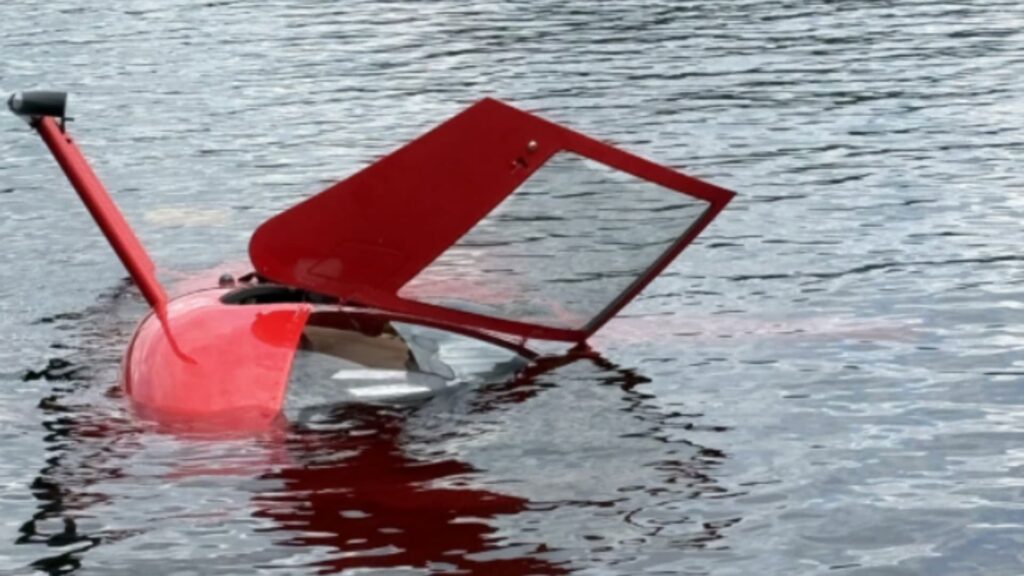
On July 9, 2025, a privately operated helicopter was involved in an accident near Inlet, New York, during what was intended to be a routine arrival at the pilot’s home. The flight was conducted under Part 91, in day visual conditions, with no weather concerns and no mechanical issues reported. By the end of the sequence, the aircraft was substantially damaged after settling into the water, though everyone on board escaped without injury.
This accident serves as a useful case study in helicopter energy management and how small control inputs, particularly during landing, can have outsized consequences.
Pilot Background and Experience
The pilot was a 73-year-old private pilot with a rotorcraft-helicopter rating. He did not hold an instrument rating and was not a flight instructor. His total flight experience was reported as 802 hours, with 421 of those hours in this make and model. All of that time was logged as pilot in command.
Recent experience was solid. The pilot had flown 62 hours in the previous 90 days and 32 hours in the previous 30 days, with his most recent flight review completed in May 2024. He held a third-class medical certificate with waivers or limitations, issued in March 2025.
From a qualifications standpoint, this was an experienced, current pilot flying an aircraft he knew well.
The Aircraft and Operating Conditions
The helicopter was manufactured in 2008 and configured with skid landing gear and four seats. It was powered by a Lycoming IO-540 engine rated at 235 horsepower and held a normal airworthiness certificate. At its last annual inspection in July 2024, the airframe had accumulated just over 1,635 hours, with approximately 92 hours flown since that inspection.
Weather conditions were benign. Visual meteorological conditions prevailed, visibility was good, and there was no reported turbulence or precipitation. The flight departed from and returned to the same area in Inlet, New York, with no flight plan filed.
The Approach Setup
As the pilot maneuvered toward his yard for landing, the final portion of the approach required flying over water. During the deceleration phase, he initiated a flare to reduce forward speed. While doing so, he became concerned about an increase in altitude and lowered the collective to prevent the helicopter from climbing.
Lowering the collective during a flare reduces lift and rotor thrust. While this can be appropriate in some situations, it requires precise coordination and awareness of rotor energy, especially when operating close to the surface.
As the aircraft continued to decelerate, it began to settle.
Loss of Lift During the Flare
Recognizing the descent, the pilot attempted to recover by raising the collective. At that moment, his hand position on the collective grip became a critical factor. According to the pilot, his hand was positioned too high on the grip, and his grip interfered with the governor’s ability to automatically increase throttle as collective was applied.
In normal operation, the governor adds throttle when collective is raised to maintain rotor RPM. When that process is interrupted, rotor RPM can decay rapidly. With insufficient RPM, the helicopter was unable to generate enough lift to arrest the descent.
The aircraft subsequently impacted the water, resulting in substantial damage to the tail boom.
The pilot reported no pre-accident mechanical malfunctions or failures that would have prevented normal operation. The issue was not a failure of the governor system, but rather its inability to function as designed due to pilot input.
Impact and Outcome
The helicopter came to rest in the water. Despite the damage, the outcome was relatively benign from an injury standpoint. The pilot and two passengers were not injured. There was no fire, no explosion, and no post-impact injuries reported.
An emergency locator transmitter activated but did not assist in locating the aircraft. The NTSB classified the event as a loss of control during landing and conducted the investigation without traveling to the accident site.
Probable Cause
The National Transportation Safety Board determined the probable cause of the accident to be the pilot’s failure to maintain control of the helicopter during the landing.
While concise, that finding aligns closely with the sequence described by the pilot, particularly the loss of rotor RPM during the flare and the inability to arrest the descent at low altitude.
Human Factors and Technique
This accident highlights a subtle but important human factors issue in helicopters equipped with governors. While pilots are trained to rely on automated throttle coordination, that reliance assumes nothing interferes with the system’s ability to function.
Hand placement on the collective may seem minor, but in this case it directly affected rotor RPM at a critical moment. At low altitude, over water, there was no margin for recovery once lift was lost.
The decision to reduce collective during the flare also deserves attention. Helicopter landings require careful energy management. Removing lift to avoid a climb can leave the aircraft with insufficient rotor energy moments later, especially if collective must be reapplied quickly.
Why This Accident Is Instructive
What makes this mishap particularly useful from a safety standpoint is how routine it was. There were no external pressures, no weather challenges, and no system failures. The pilot was experienced and current, flying an aircraft he knew well.
Yet a small breakdown in control coordination during a normal landing sequence was enough to result in substantial damage.
Safety Takeaways
First, pilots should remain vigilant about hand placement and ensure the throttle can move freely at all times, especially during approaches and landings.
Second, rotor RPM awareness is critical during flare and touchdown. Allowing RPM to decay at low altitude leaves very few recovery options.
Third, landing over water or confined areas reduces margins further. Any unexpected settling can quickly lead to impact.
Finally, experience does not eliminate risk. Consistent attention to fundamentals is what prevents routine flights from turning into accident reports.