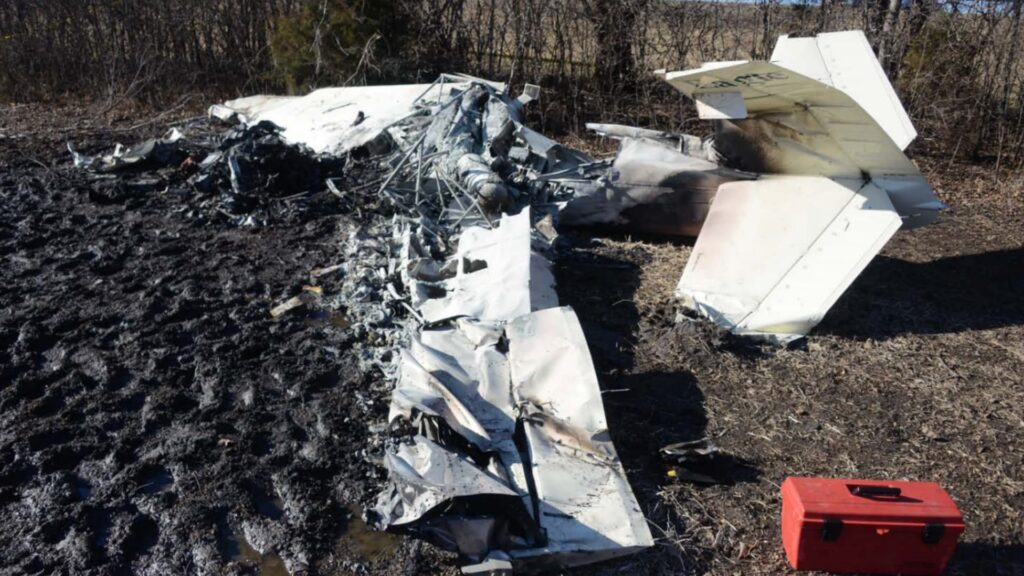



On the last day of 2019, a Mooney M20S, N602TF, lined up on runway 18 at Johnson County Executive Airport in Olathe, Kansas. The plan was simple: the pilot and his passenger were heading home to North Little Rock after flying up earlier that afternoon to look at another airplane for sale. The weather was clear, the winds were manageable, and daylight was fading but still more than enough for a clean VFR departure.
What happened over the next handful of seconds would end in a fully developed aerodynamic stall, a steep nose-down impact, and a post-crash fire that claimed the lives of both occupants. The NTSB report later made clear that nothing was wrong with the airplane mechanically. Instead, this accident came down to a detail most pilots handle almost without thinking: making sure the airplane’s pitch trim is set properly before takeoff. In this case, the trim was found at a full nose-up position—far from the normal takeoff setting—and the airplane behaved exactly as a mis-trimmed Mooney would.
The Pilot Behind the Controls
The pilot was a 48-year-old private pilot with about 180 total flight hours. He held single-engine land and instrument airplane ratings, a current second-class medical, and was not an occupational pilot. He appeared to be a motivated and serious student. A flight instructor who trained him in the Mooney reported giving him 6.8 hours of instruction, including work in the pattern, cross-country procedures, go-arounds, and the aircraft’s checklists. The instructor described him as a quick learner and an excellent student. Nothing in his record suggested he was anything but conscientious and committed to operating the airplane safely.
But one detail stood out: the pilot had purchased the Mooney just a month before the accident. Despite being a capable airplane, the M20S is a complex, high-performance aircraft with systems that demand respect—especially the pitch trim system. On this model, the entire empennage pivots around a hinge line as a single moving surface. It’s a powerful design, and when set incorrectly, it can produce dramatic pitch effects. With limited time in type, even a sharp pilot may not yet develop the deep aircraft-specific muscle memory that catches the small setup errors before they become big handling problems.
A Clean Setup—Until the Rotation
Witnesses at Johnson County Executive Airport reported that the initial takeoff roll looked normal. Engine sound, acceleration, and the airplane’s tracking down the centerline did not raise any alarms. But as the Mooney neared its rotation point, things changed.
Instead of lifting off briskly and pitching for the familiar attitude Mooney drivers know well, N602TF rotated much slower than expected. When the airplane did break ground, it immediately pitched up into an unusually steep climb—far steeper than a normal Vy or even Vx attitude. One witness was clear about what he saw: the pitch up was excessive, almost startling.
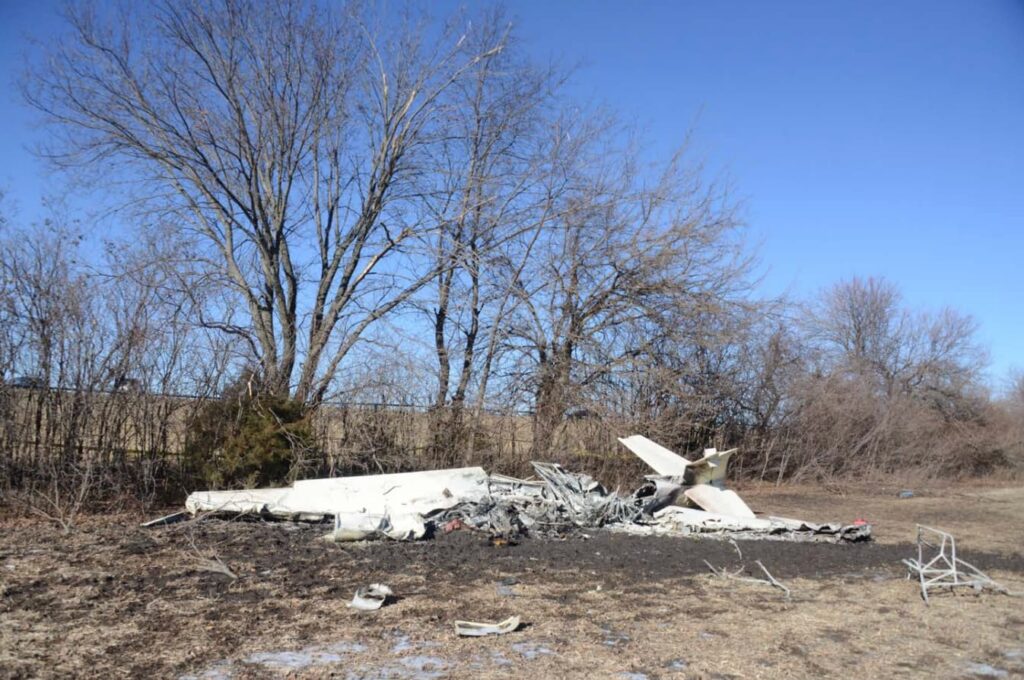
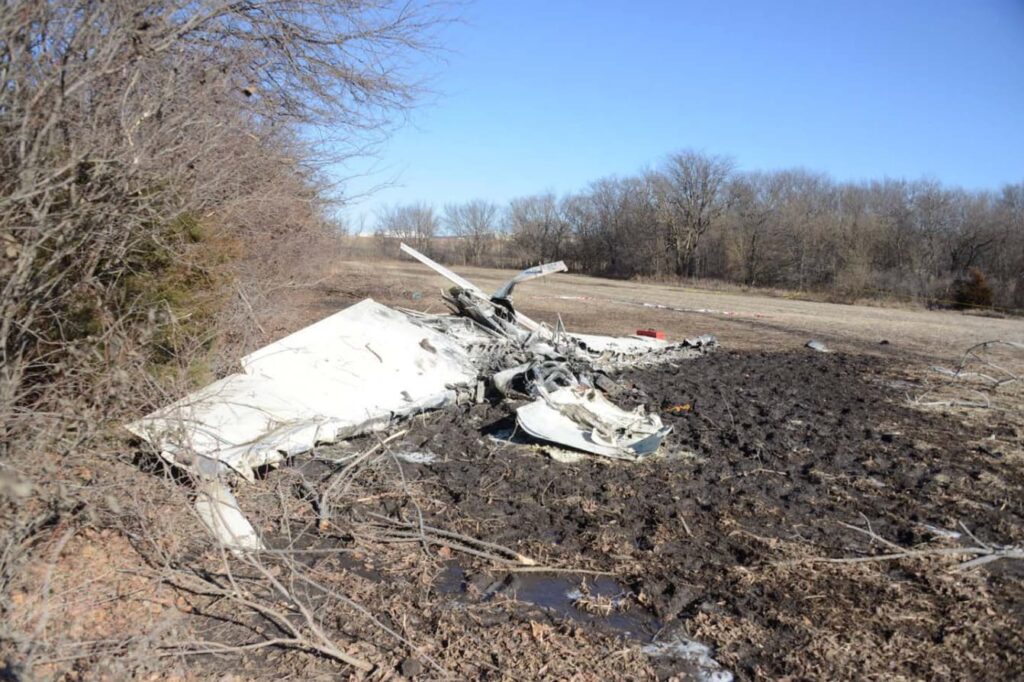
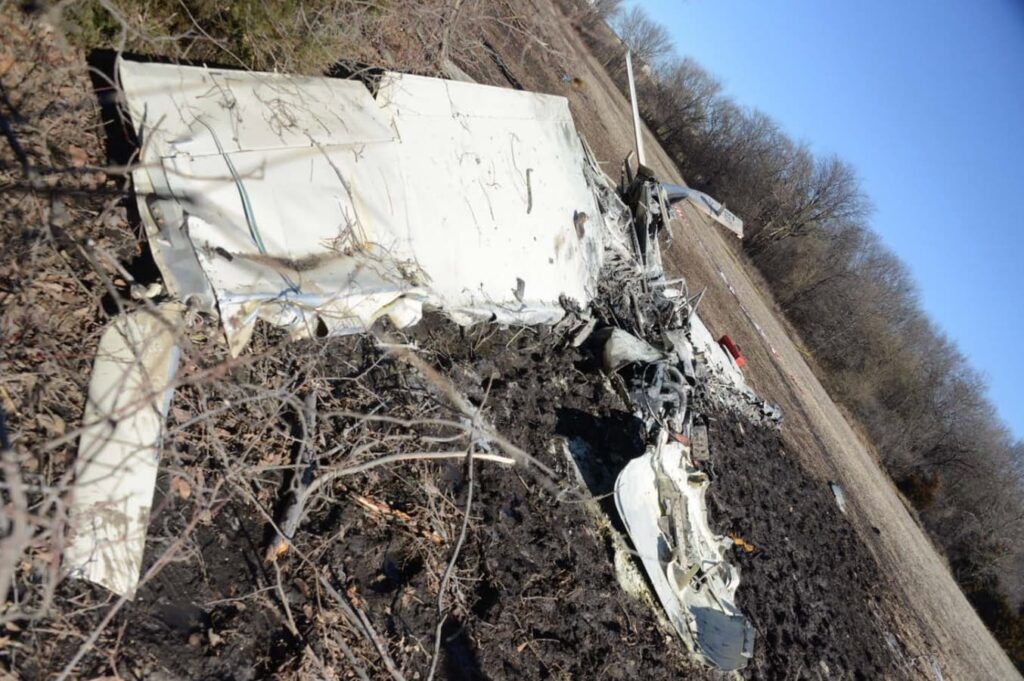
As the airplane clawed for altitude, it looked slower and slower. Then the left wing stalled. The airplane rolled, the nose dropped sharply, and in just moments, it struck the ground east of the runway and erupted in a post-impact fire. The engine, according to both witnesses and data pulled from the airplane’s JPI EDM 800 engine monitor, was producing full power the entire time. This was not an engine failure. This was an aerodynamic loss of control.
The Mooney Trim System and Why It Matters
Mooney’s M20 series uses a stabilizer that pivots as a whole assembly for pitch trim, adjusted through a jack screw mounted at the aft tailcone bulkhead. A trim wheel between the seats lets the pilot command the stabilizer angle. A trim position indicator on the panel visually shows where the stabilizer is set.
In this accident, the jack screw was photographed in a position consistent with full nose-up trim—its full extension. When the stabilizer is set that far nose-up, the airplane tries hard to rotate and continue pitching up. In some airplanes, an incorrect trim setting is inconvenient. In a Mooney, it can be overwhelming.
During a normal takeoff, the trim should be set to the takeoff position as specified in the checklist. This neutralizes the stabilizer and allows the pilot to smoothly rotate and establish the appropriate pitch. With full nose-up trim, the control forces are heavily biased toward pitching upward. Unless the pilot recognizes the mis-trim immediately and pushes forward aggressively while trimming back toward neutral, the airplane will pitch into an excessive climb with decreasing airspeed.
A Brief Climb, a Slow Airspeed, and an Unrecoverable Stall
With full nose-up trim, the airplane pitched aggressively upward after rotation. The witness observed the airplane slow to the point of aerodynamic stall. Once the left wing stalled, the airplane rolled left and the nose dropped. At such a low altitude, there was no room to recover.
The JPI data confirmed the engine never lost power. There was no indication of smoke, fire, or control failure before impact. This was a handling problem caused by a mis-set trim condition that led the airplane beyond its critical angle of attack.
Human Factors in a High-Performance Airplane
It’s worth looking closely at the human side of this accident. The pilot was experienced enough to be competent in a variety of flight conditions and had taken the right steps after purchasing the Mooney by seeking transition training. But with just 6.8 hours of dual instruction in the aircraft, he was still early in the ownership learning curve.
Managing checklists, trim settings, power transitions, and the aircraft’s complex gear and systems under pressure takes time to internalize. On a routine VFR departure, it’s easy to feel relaxed and confident. But a mis-trimmed airplane—even one as familiar as a Mooney—can create immediate workload spikes. Once the airplane pitched sharply up, the pilot had only a couple seconds to recognize the mis-trim, adjust the control forces, and correct it. At low altitude with a strong pitch-up moment, there is very little time for diagnosis.
As for possible impairment, toxicology found a muscle relaxant and an anti-nausea medication in the pilot’s system. The NTSB could not determine whether these substances contributed to the accident, and witnesses who interacted with the pilot before takeoff saw nothing unusual. There were no red flags in behavior or judgment. While those medications can have side effects, the report did not establish any clear link between them and the mishap sequence.
Mechanical Condition and Maintenance Background
The airplane itself showed no mechanical issues. The engine disassembly revealed no anomalies. The trim system components were intact and operating as designed, with the only issue being their pre-impact position. Even the control surfaces displayed full continuity from the cabin to the aerodynamic surfaces.
There was no evidence of pre-impact failure of the trim system or airframe. The Mooney’s service bulletins and an applicable airworthiness directive relating to the trim assembly were discussed in the report, but nothing suggested a mechanical malfunction had occurred on this flight. The likely scenario was simply that the trim wheel had been left in the full nose-up position from a previous operation or after landing, and the before-takeoff checklist missed catching it.
Lessons We Can All Take Away
This accident is a powerful reminder that even experienced and well-trained pilots can be caught off guard by a mis-set trim condition—especially in a high-performance airplane where trim authority is strong. Several key lessons stand out:
A takeoff trim check is not a formality. It’s a critical control setting that determines how the airplane behaves in the first few seconds of flight. Treat it with the same respect you treat flap position or fuel selector placement.
Transition training is only the beginning. New airplane owners need time to build instinctive familiarity. A Mooney is a wonderful traveling machine, but mastering its systems and handling characteristics takes more than a handful of hours.
Pitch trim errors can escalate quickly. If something feels off during rotation—control forces are too light, too heavy, or the nose rises sharply—immediate correction is needed. In some aircraft, a mis-trim can be managed. In others, it can put the airplane behind the power curve almost instantly.
Low altitude gives no buffer. A stall on climb-out leaves no room for recovery. If the airplane is not climbing as expected, trading pitch for airspeed is the only way out.

Closing Thoughts
The accident involving N602TF wasn’t caused by weather, mechanical failure, or poor maintenance. It was a trim setting—something small that makes a big difference, especially in a Mooney. The airplane did what it was trimmed to do: pitch up strongly. And in those first few seconds after takeoff, small errors can become unrecoverable ones.
For all of us flying today, it’s a reminder to respect the basics. Slow down, run the checklist completely, confirm the trim, and verify the airplane is configured the way you expect. The simplest items on the list are often the most important.



One Comment
Failing to preflight trim setting is scary and is probably overlooked by a lot of pilots. Excellent debrief by Hoover.