



Setting the Scene
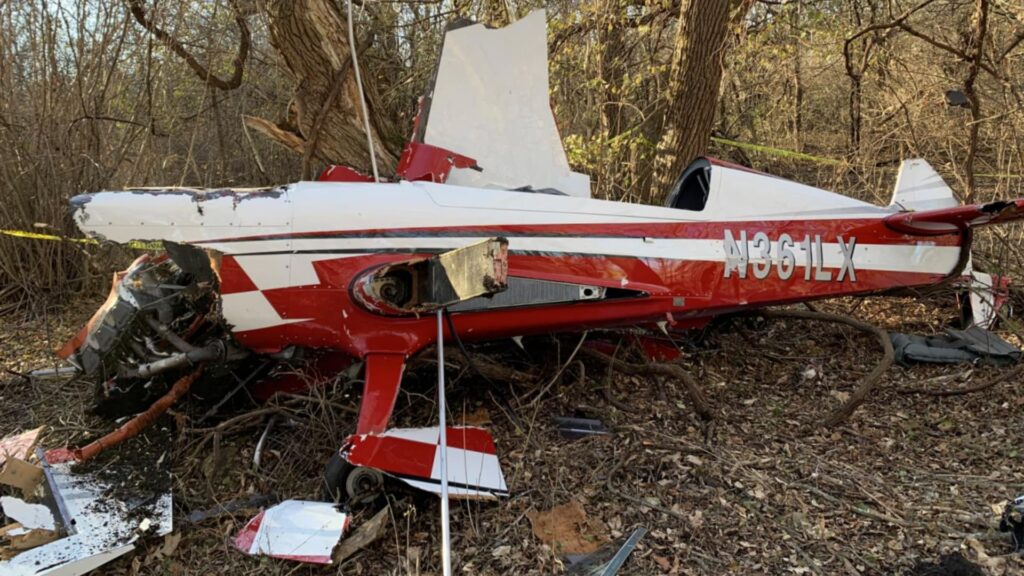
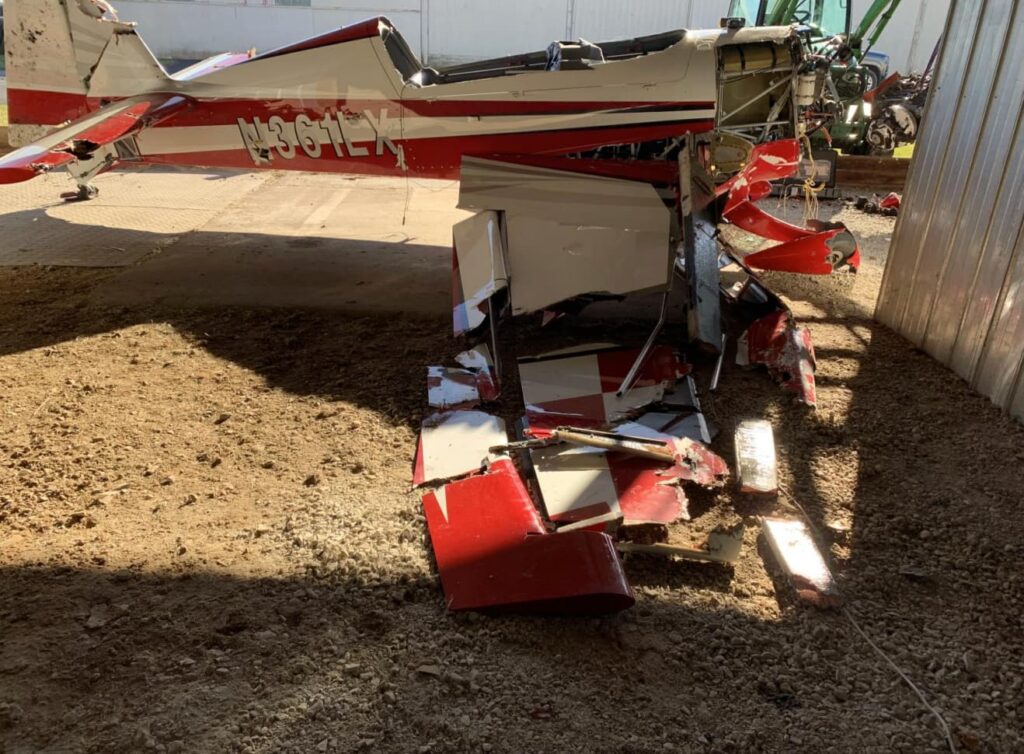
This one took place at Galt Field (10C) in Wonder Lake, Illinois, late on a clear November afternoon. A 2017 Extra EA300/LC, registration N361LX, returned to the pattern after a short local hop. The airplane was on its way back to runway 27 when it descended nearly wings-level into trees about a quarter mile short of the threshold. The engine was running; there was no distress call. The accident happened at 4:15 p.m.—just nine minutes before official sunset—with the sun hanging low and slightly left of the runway centerline. The NTSB ultimately pointed to disorientation from sun glare on final as the key factor.
Pilot and Airplane
The pilot, 75, held a private pilot certificate with airplane single-engine land and sea ratings and an instrument rating. He was not a flight instructor and was seated in the rear seat, as is common in aerobatic two-seat Extras. On his most recent FAA medical application, he reported about 6,200 hours total time, including 50 hours in the prior six months. Investigators could not locate a logbook, so time in type wasn’t available. Toxicology was clean for impairing substances; detected medications (losartan and atorvastatin) are acceptable for pilots. The airplane was an Extra EA300/LC—a high-performance aerobatic tailwheel with a Lycoming AEIO-580 producing 315 horsepower—last inspected in March 2022 and showing about 461 hours total time at that visit.
The Flight
ADS-B data showed the Extra departed runway 27 at 3:58 p.m., climbed to around 3,000 feet MSL, and performed at least two aerobatic maneuvers north-northwest of the field. From there it cruised east toward Antioch, made a 360 over a residential area about 1,250 feet AGL, then turned back toward Galt. Nothing in the track suggested a mechanical issue—just a local outing with some light aerobatics before returning to the pattern.
Into the Pattern
At 4:13:12, the Extra entered the left traffic pattern for runway 27 on the crosswind leg, decelerating through roughly 160 knots calibrated airspeed. Another airplane—a Piper PA-28-181—was already in the pattern. The Piper pilot saw the Extra behind and faster, called him on CTAF, and the Extra confirmed he had the Piper in sight. Between 4:13:45 and 4:14:30, abeam the threshold, the Extra made a 360-degree left turn at about 950 feet AGL—likely for spacing—and then rolled into a descending left base.
The Turn to Final
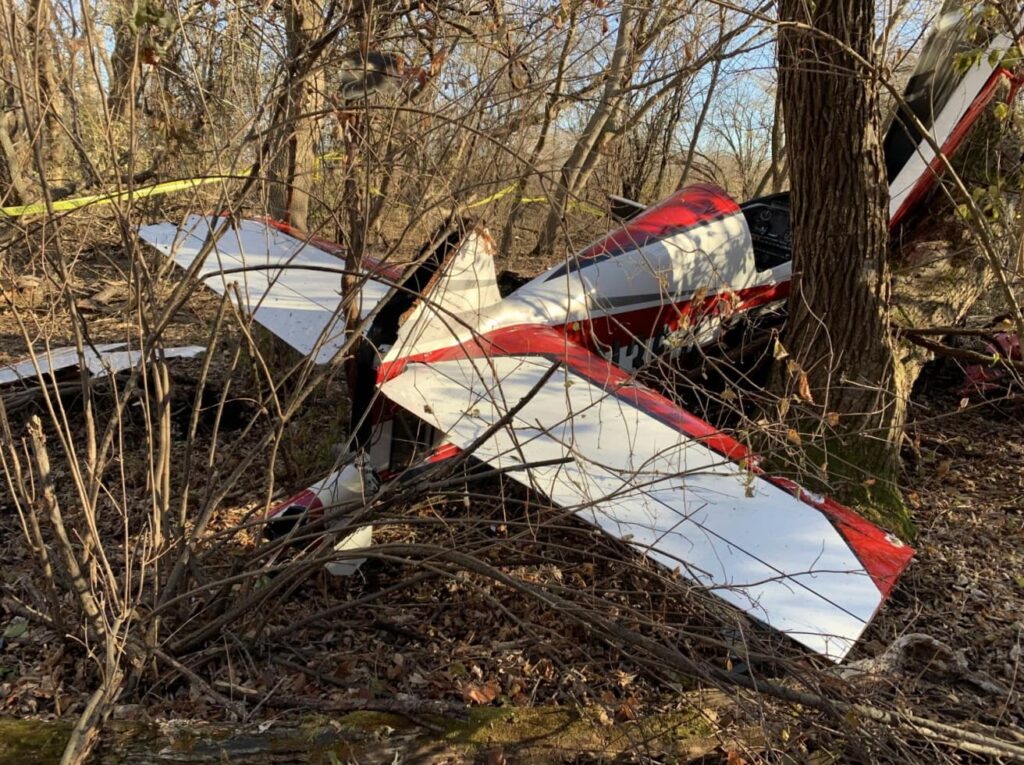
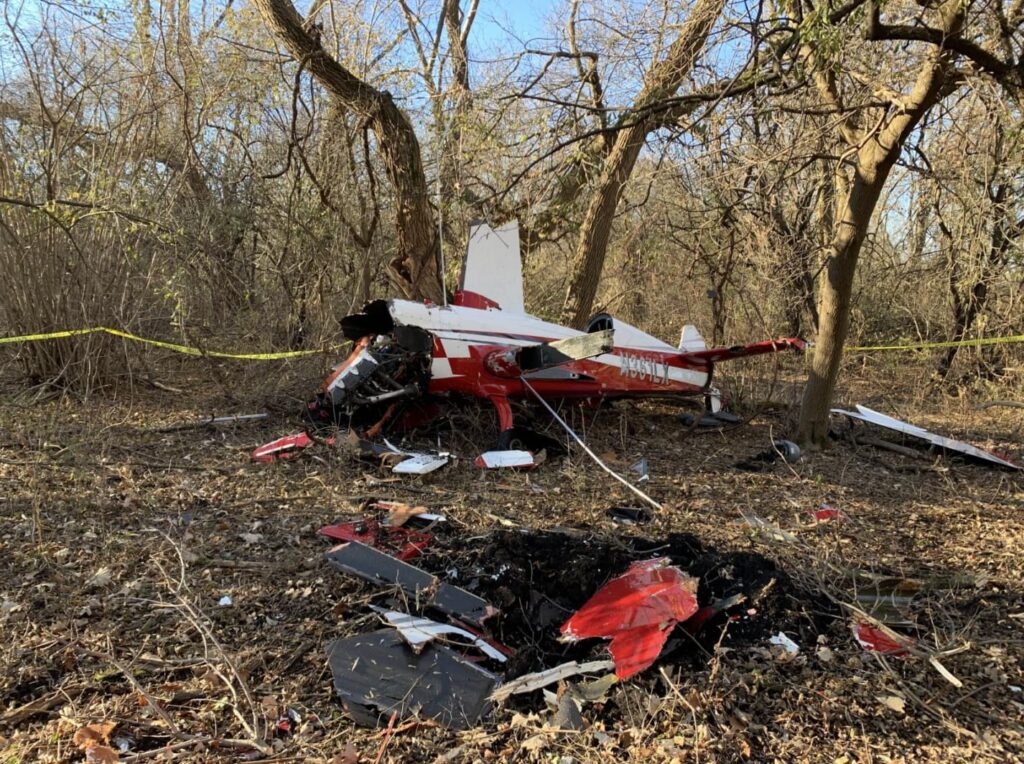
During that base-to-final sequence, the airplane momentarily slowed to about 70 KCAS and hit a max descent rate near 1,700 fpm. By 4:15:23, the last ADS-B hit was about 0.31 NM from the threshold at approximately 922 feet MSL (roughly pattern altitude at Galt), indicating 84 KCAS, a shallow 2.7-degree left-wing-down roll, and a -6.4-degree flight path angle. Moments later, the airplane’s wings clipped 30- to 40-foot trees almost exactly on the runway 27 extended centerline, about 0.28 NM from the threshold. The wreckage came to rest about 225 feet beyond that initial tree strike, still aligned westbound toward the runway. A witness east of the site heard the engine throughout the descent and then a “wood-chipper” sound—the trees.
Engine and Airframe
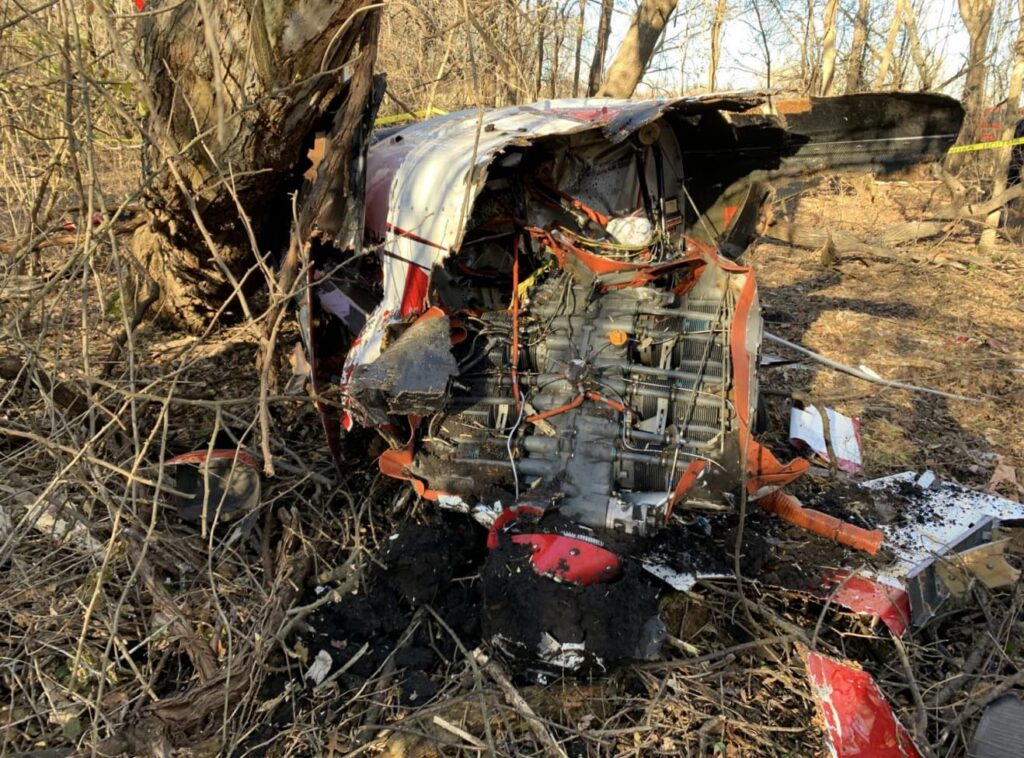
The data backs the witness. The engine monitor showed cylinder head temps, EGTs, and fuel flow consistent with power during the last few minutes. EGT for cylinder No. 2 wasn’t recorded on that flight or the previous one, but that’s a data-logging gap, not evidence of a failing jug. Investigators found no preimpact failures in the engine, propeller, or airframe. Flight control continuity for elevator and rudder was confirmed; aileron continuity couldn’t be fully established due to impact damage, but all separations were consistent with overload in the crash sequence. There was fuel at the site and the selector was on the aerobatic (center) tank. In short, nothing mechanical jumped out to explain a loss of control or power.
Weather, Light, and Geometry
Conditions were VMC: clear skies, 10 miles visibility, light southwesterly wind around five knots. The relevant detail wasn’t the METAR; it was the sun. At the time of the crash, the sun sat about 1.1 degrees above the horizon—essentially on the deck—and 27.5 degrees left of the runway 27 centerline. That lines up with the geometry of the base-to-final turn and short final to 27, where a low, left-forward sun can wash out depth perception and runway cues. Another key data point: the Piper ahead reported being “slightly disoriented” by glare while turning final. That’s an independent pilot, same pattern, same sun angle, same phase of flight.
The Human Factors Thread
If you’ve ever flown a late-day circuit into a west-facing runway, you’ve likely felt this. Sun glare doesn’t just make it hard to see; it messes with your picture. The NTSB cites FAA aeromedical research showing that glare-related accidents cluster in takeoff and landing, with a big portion involving collisions with terrain or objects due to under- or overshooting, or drifting off alignment. In this case, the track, the witness reports, and the wreckage path all tell a consistent story: the Extra remained roughly aligned with the runway and descending, but the pilot did not maintain a safe descent path clear of the tree line on short final. With a bright, low sun on the left, the runway’s threshold environment would have been a low-contrast smear until very late. That’s exactly the kind of scenario where even an experienced pilot can unconsciously continue a slightly low path, expecting to level at the threshold, only to meet trees first.
Why Experience Still Wasn’t Enough
It’s tempting to assume that more hours inoculate us against visual traps, especially in a high-performance machine like an Extra. But experience can also cut the other way: high familiarity can invite confidence in marginal visual cues. The pilot had thousands of hours and was instrument-rated, and nothing in the report suggests poor airmanship earlier in the flight. The energy numbers at the end—84 KCAS, modest bank, negative six-degree flight path—don’t read like an aerobatic mishandling or a stall break; they read like a normal-looking approach that simply stayed low. Add a narrow runway (36 feet wide) and an approach over trees, and you have fewer peripheral references to anchor the glide path when the sun erases contrast.
Safety Takeaways
A few practical lessons stood out for me:
- Treat late-day west patterns as a risk factor. If the sun is near the horizon and even a few dozen degrees off the nose, move your aim point farther down the runway, add a few knots to stabilize the sight picture, and plan a slightly higher approach until you’re certain you can see the threshold environment. A go-around is cheap—use it at the first twinge of doubt.
- Use all the tools. If the field has VASI/PAPI, commit to flying it—even if you don’t “need” it. No lights? Consider a wider base, a shallower final turn, and a firm decision gate: if you don’t have the runway environment clearly, go around.
- Manage spacing assertively. The Extra flew a 360 on downwind for spacing. That was prudent. The next step—ensuring the final segment stays well clear of obstacles—might mean another 360, an early 45-to-downwind break, or simply taking one more lap to let your eyes adjust. Don’t let a mental “I’m set up now” bias push you into an approach that’s hard to see.
- Know your local obstacles. Many small fields have tree lines short of the threshold. Brief them, especially when the sun angle is ugly. If you operate there often, pre-plan higher visual aim points for late-afternoon landings.
- Shadow management. Sunglasses help but aren’t magic. A brimmed cap can be a big deal when the sun is skimming the horizon. Use cockpit shading if available and be willing to crane your head to keep the runway out of the worst glare during the turn to final.
Closing Thought
This was a capable pilot in a capable airplane on a clear day. The engine was running, the airplane was controllable, and radio calls in the pattern sounded routine. The chain ended not with a system failure but with a visual trap at the worst possible point in the approach. When the sun is low, treat the picture with suspicion. If the runway isn’t crisp, climb, clean up, and try again.

7 Comments
Hoover, excellent helpful suggestions when the sun is low. Something a lot of pilots may not consider. You post help us all. Thank you
I have driven past Galt many times and when I look at the field the first thing that comes to mind is that the approach to the west runway, didn’t know it was 27 until this debrief article, would be challenging for someone unfamiliar with the airport. The area is wooded and the airport sits almost in a bowl surrounded by trees. The runway environment as you pass west of the field on a two lane road is approximately 50 feet below the road and about 500 feet from the road. The thought that crosses my mind every time I drive by is the approach has to be a steep, probably short field. An environment where you need to aware and have all your visual ques. I have not flown in a long time, but that is a field to be on your peas and ques, no matter your level of experience. Thanks for the breakdown.
Even before I had my instrument rating I got into the habit of tuning in the ILS and using it as a guide on landings in marginal VFR conditions – like sun glare. Now we have RNAV and visual approach aids which create a virtual approach path. If the instruments disagree with what I am seeing and this is unexpected, I go around and rethink things. Bottom line, there are a lot of modern tools to mitigate sun glare or other unexpected visual impairments and there is always the old go-around.
I recently had this same issue. Clear day, sun setting, and a light wind out of the southwest. My solution was simple- land downwind on runway 9. I figured a longer rollout was much better than trying to deal with the low sun. If someone else was in the pattern for 27 I was going to wait until they were clear before I landed on 9.
You said exactly what I was about to reply 🙂, ie land in the opposite direction. I’m still surprised this was fatal, slowly flying into some trees close to the ground doesn’t sound too bad. What a tragedy to happen to a normally competent and safe pilot.
There is another—and possibly dangerous—issue: the stroboscopic effect when looking through the prop (rotating at low RPM) against a low or just setting sun. May cause disorientation and dizziness.
Love you channel. Very interesting and informative.
Well done.
Mike
Australia