
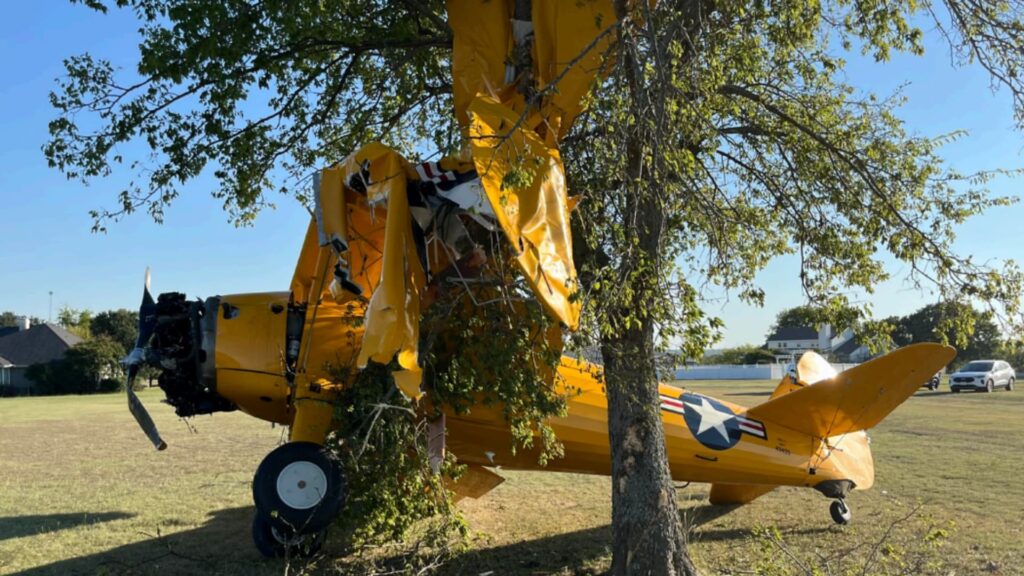



On October 4, 2024, a 1943 Boeing E75, registration N1612M, departed a private grass strip near Sanger, Texas, on a personal Part 91 flight. The plan was simple: a VFR hop from Sanger to Ranger, Texas (F23). Weather wasn’t the headline—visual conditions, clear skies, and light winds were reported in the area. The headline became what happened right after liftoff: the airplane stopped climbing, began to sink, and the pilot ran out of altitude, runway, and options in a matter of seconds. The accident resulted in substantial damage to the wings and serious injuries to both occupants. The NTSB ultimately determined the probable cause was the pilot’s failure to maintain airplane control.
The Pilot and the Airplane
The pilot was not new to aviation. He held an airline transport pilot certificate, along with commercial and flight instructor certificates. He also held an instrument rating for airplane, and instructor ratings that included airplane single-engine and instrument airplane. He was 57 years old and held a first-class medical certificate with waivers/limitations, with the most recent FAA medical exam dated August 2, 2024.
Experience-wise, this pilot had a deep logbook: about 25,000 hours total time, and about 25,000 hours as pilot in command. In the 90 days before the accident, he had flown 155 hours, and 45 hours in the last 30 days. But here’s the key detail that matters in this story: he had only 10 hours in this make and model—the Boeing E75.
The airplane itself was a tailwheel, two-seat Boeing E75 manufactured in 1943. It was powered by a Continental W670-6N engine rated at 220 horsepower. The airplane held a normal airworthiness certificate, and its most recent annual inspection was completed June 17, 2024. There were no indications in the report of a mechanical issue identified after the accident that would have prevented normal operation.
Setting the Scene
The takeoff happened from a grass/turf runway—Runway 18—measuring 2,900 feet long and 100 feet wide, reported dry. Grass runways can be perfectly safe, but they are different. Acceleration can be slower, rolling resistance can be higher, and performance margins can get thin faster than many pilots expect—especially in older, heavier, tailwheel airplanes.
And performance margins mattered here. The temperature reported nearby was hot: 33°C. At field elevations in the 700–800 feet MSL range, that heat still bites. Even if density altitude wasn’t discussed in the short final report, the ingredients were there for reduced climb performance: high temperature, a grass runway, and an aircraft type where technique and energy management are unforgiving.
The Takeoff and the First Signs of Trouble
According to the pilot’s statement, after takeoff the airplane climbed to about 150 feet above ground level at about 80 mph. Then the climb stopped. The airplane “quit climbing” and transitioned into a slow descent. That is one of those moments every pilot recognizes immediately: you’re off the runway, you’re low, you’re committed, and you’re trying to figure out whether this is performance, configuration, wind, technique, or an incipient loss of control.
The pilot responded by slowing the airplane to about 75 mph. And that’s where this accident took its shape. Instead of improving the situation, the descent rate increased.
From a purely aerodynamic standpoint, this makes sense. If you’re already on the backside of the power curve, or if your available power and climb capability are marginal, slowing down can deepen the sink rate. In some airplanes, especially with certain flap settings, high drag configurations, or at high weight and density altitude, a small speed reduction can turn a “can’t climb” into a “can’t stop descending.”
But speed is also the buffer that keeps you away from the edge. Low altitude plus decaying airspeed is the classic setup for loss of control. And the report’s defining event was exactly that: loss of control in flight during the initial climb.
The Attempted Forced Landing and the Impact Sequence
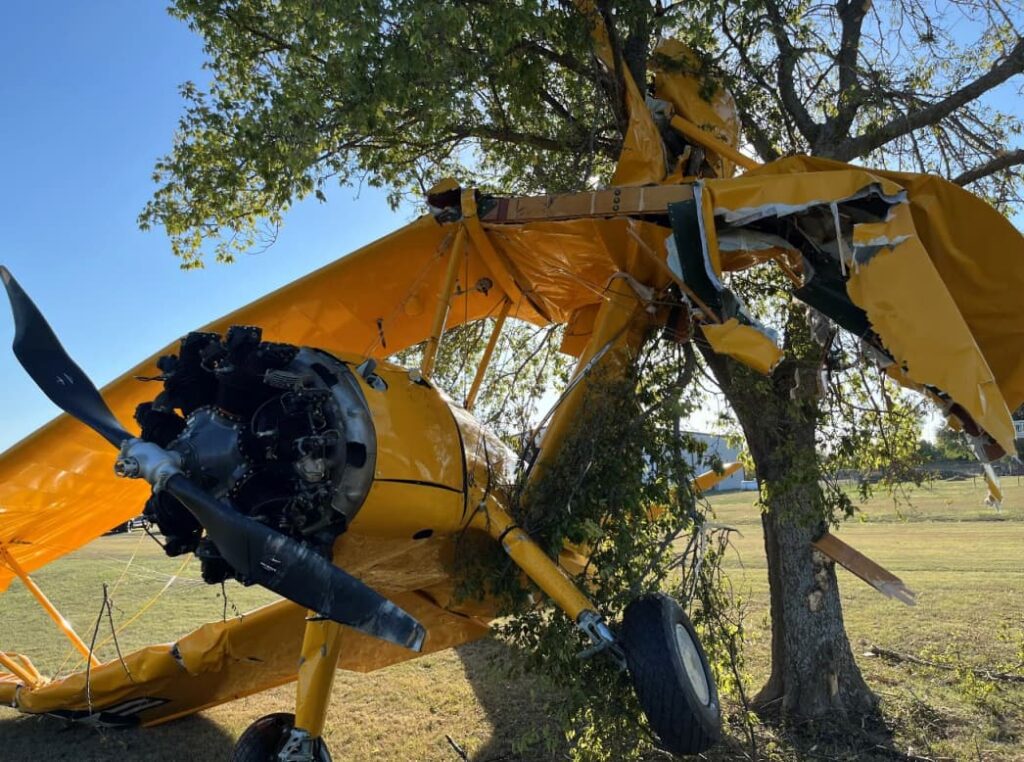
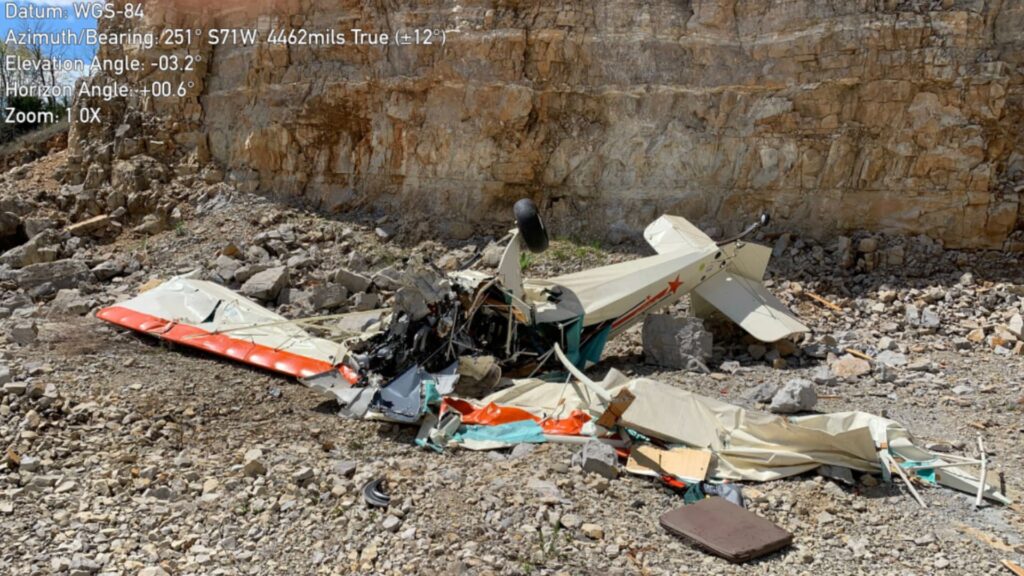
As the airplane neared the ground, the pilot pulled back on the control stick with the goal of having the main landing gear absorb the touchdown. The airplane bounced, stayed airborne for about 200 feet, and then impacted trees. The trees did what trees always do: they won. The wings sustained substantial damage.
Both the pilot and the passenger were seriously injured. There was no post-impact fire and no explosion reported. The ELT was installed but did not activate.
The pilot reported there were no preaccident mechanical malfunctions or failures that would have prevented normal operation. In other words, this wasn’t an engine that “quit” in the traditional sense described by a verified mechanical failure. What the pilot experienced—no climb, then sink—was real, but the report did not identify a mechanical cause behind it.
What the NTSB Concluded
The NTSB’s probable cause was straightforward: the pilot’s failure to maintain airplane control. The listed finding pointed to aircraft control as a personnel issue—pilot—along with the aircraft not being “attained/maintained.”
That can sound clinical, but it’s not a throwaway. Loss of control accidents often have a simple final label and a complex human pathway. In this case, the pathway likely ran through a high-workload, low-altitude scenario immediately after takeoff, with airspeed management and performance expectations colliding in a very short window.
The Human Factors That Tend to Hide in Plain Sight
One of the most important details in this report is the mismatch between total experience and experience in type. Twenty-five thousand hours is immense, but 10 hours in a specific airplane—especially an older tailwheel model with its own quirks—can still mean you’re learning how that aircraft talks to you.
It’s also worth noting the seating detail: the pilot seat was listed as “rear.” That’s not unusual for certain airplanes, but it matters because sight picture, control feel, and takeoff technique are all different when you’re not sitting where you sit in most GA airplanes. Add the possibility of high temperature and grass runway performance, and you have a setup where the margin for error can get uncomfortably small.
There’s also the classic trap of “doing something” when the airplane doesn’t climb. The instinct is to pull, to coax it into the air. But climb performance comes from energy: airspeed and power. If the airplane is not climbing, the best immediate move often isn’t to slow down. It’s to maintain or even increase to a best-rate or best-angle target (as appropriate), verify full power, reduce drag, and commit to a landing ahead if the climb can’t be restored. The exact numbers vary by airplane. But the principle doesn’t.
Safety Lessons: What to Take Away
First, performance planning isn’t optional—especially off grass in the heat. Even a modest field elevation becomes meaningful when the temperature climbs. Takeoff and climb performance should be treated as a go/no-go gate, not a hope-and-see exercise. If the airplane can’t produce the expected acceleration and early climb, the safest decision might be to abort while runway remains.
Second, guard your airspeed in the initial climb. “Can’t climb” is bad, but “can’t climb and getting slow” is how you get loss of control. If you have to choose between altitude and airspeed at 150 feet, airspeed is the tool that keeps you flying long enough to make a controlled landing. A controlled touchdown in the remaining runway environment, or straight ahead into more favorable terrain, beats an uncontrolled impact every time.
Third, recognize that experience is not perfectly transferable. The pilot had extraordinary flight time, but low time in this make and model. Transitions into unique aircraft—especially older tailwheel airplanes—benefit from disciplined training, conservative loading, cooler parts of the day, and lots of margin. The airplane doesn’t care how many hours you have; it cares whether you’re flying it inside its performance envelope today, in these conditions.
Finally, have an “after liftoff” plan you can execute without debate. If the aircraft doesn’t climb by a specific point, or if the airspeed doesn’t look right by a specific point, decide in advance what you’ll do. When the moment arrives, you won’t have time to invent a plan. You’ll only have time to follow one.
3 Comments
heat was bad . . . but not horrible
I took off downwind (once and never again!) . . . (less than 0 to 2kts) and it felt like what was described in this incident. Luckily I kept the plane level and let her build up some speed. There were no obstructions to my departure – which saved my arse. If a farmer was watching he probably thought he’d have some aluminum to recycle.
…if it can go sideways at the worst possible time it usually will, airspeed is everything regardless of all else…fly the aircraft first…
Excellent report, a lot to learn from this. Sometimes complacency gets the best of us. Very pleased they both lived to fly another day.