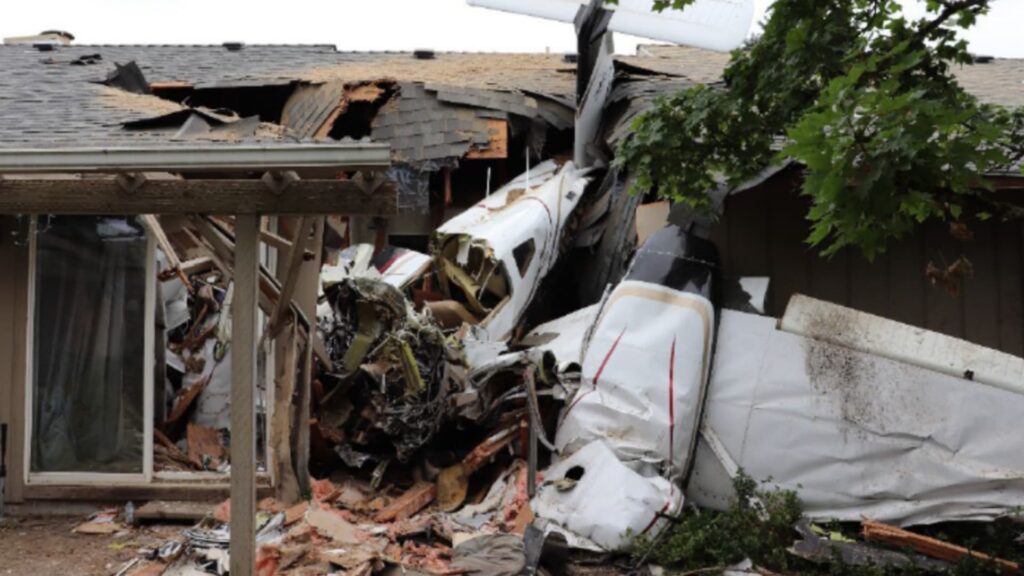
On a clear October evening, a routine training flight out of Portland-Hillsboro Airport (HIO) ended in tragedy. A Piper PA-44-180 Seminole, operating under Part 91 instructional rules, spiraled out of control and crashed into a residential home near Newberg, Oregon. The crash claimed the lives of both the flight instructor and the student pilot receiving training, while a pilot-rated passenger, observing from the back seat, survived with serious injuries. This is the story of what happened, and the lessons we can all take away.
A Typical Training Flight with a Deadly Turn
The flight was meant to be a first flight in a multi-engine training program for a 20-year-old private pilot, newly minted with his commercial single-engine land certificate. His instructor, a 22-year-old commercial pilot and certified flight instructor (CFI), was seated in the right seat. In the back sat a 20-year-old private pilot who had just completed ground school for her own multi-engine rating. She had been invited along to observe.
The flight itself was supposed to cover the basics: slow flight, stalls, steep turns, and Vmc demonstrations. If you’ve ever trained for a multi-engine rating, you know these drills are standard fare—but they also come with serious risks if mishandled.
What is a Vmc Demo, and Why It Matters
For those unfamiliar, Vmc is the minimum controllable airspeed with one engine out. During a Vmc demo, the instructor simulates a critical engine failure—usually the left engine—and the student practices maintaining directional control and recovering before the airplane becomes uncontrollable or stalls.
This maneuver teaches critical decision-making, aircraft handling, and the very real dangers of asymmetric thrust in a twin. But it’s also one of the most dangerous maneuvers if mishandled, particularly at low airspeeds and high angles of attack.
The Moment Everything Went Wrong
According to the pilot-rated passenger, the student pilot was at the controls performing the Vmc maneuver. The left engine was throttled back to idle, simulating a failure. Just seconds into the exercise, the stall warning horn sounded.
Before anyone could recover, the airplane suddenly rolled inverted to the left and entered a spin. The student pilot called out recovery steps, but realizing he was losing control, handed the controls to the instructor. They were still spinning.
From her seat, the passenger heard the student pilot ask if he should run a checklist—perhaps desperately trying to follow the safety script they had learned. The instructor replied “yes.” But it was too late. The spin continued, and the aircraft plunged toward the ground.
A House in the Flight Path
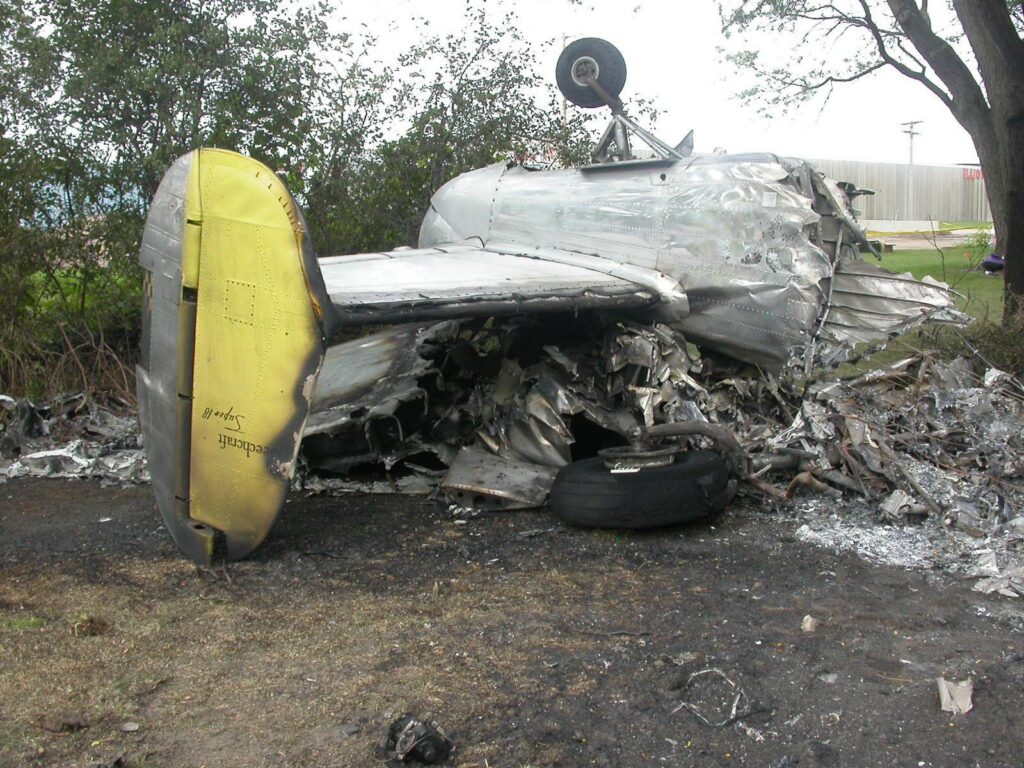
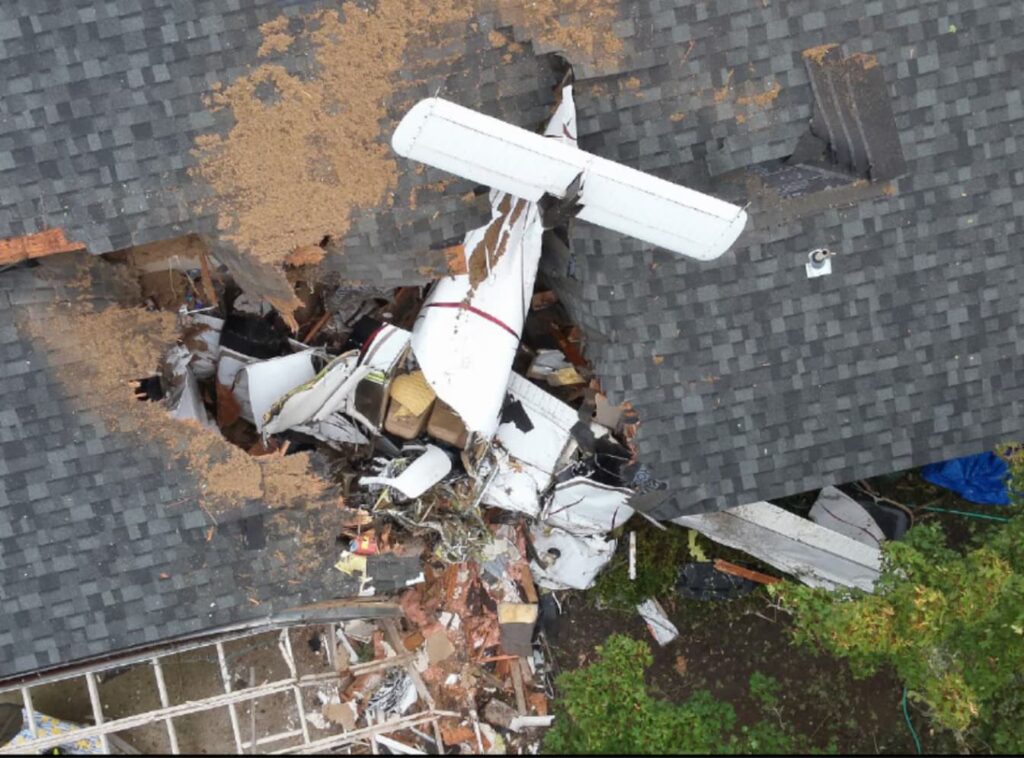
Witnesses on the ground watched helplessly as the Seminole spiraled toward the earth, eventually crashing into a single-story house. Miraculously, no one on the ground was hurt. But inside the crumpled fuselage, the flight instructor and student pilot had been killed on impact. The rear-seat passenger, though seriously injured, survived.
The Investigation: No Mechanical Issues Found
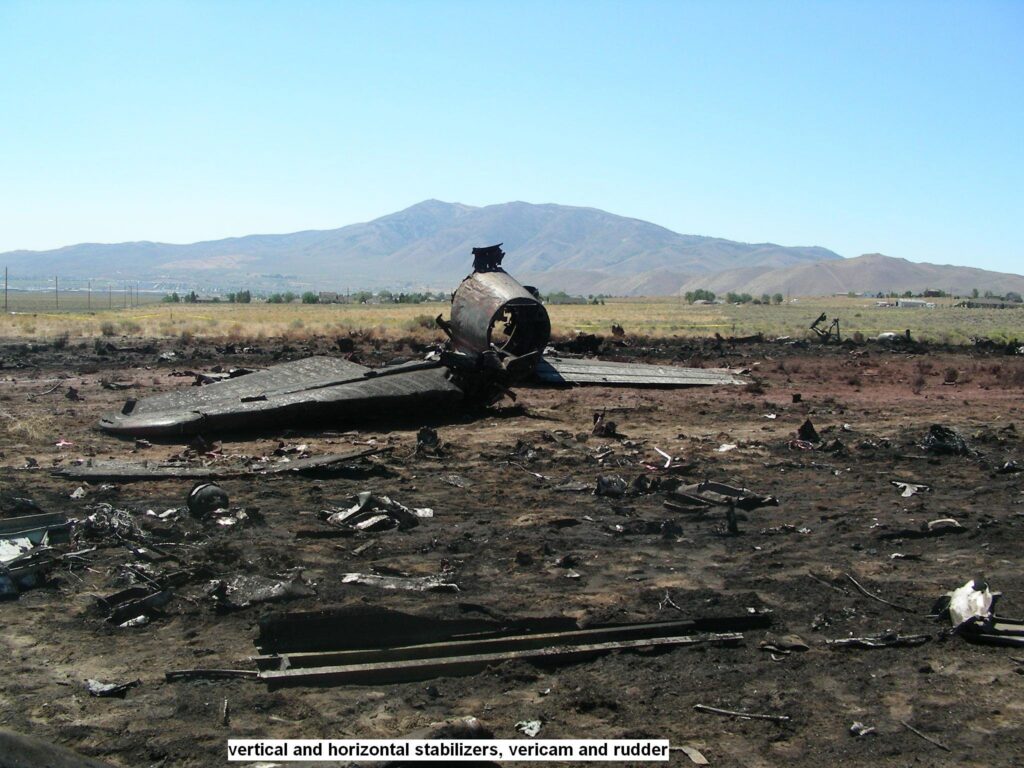
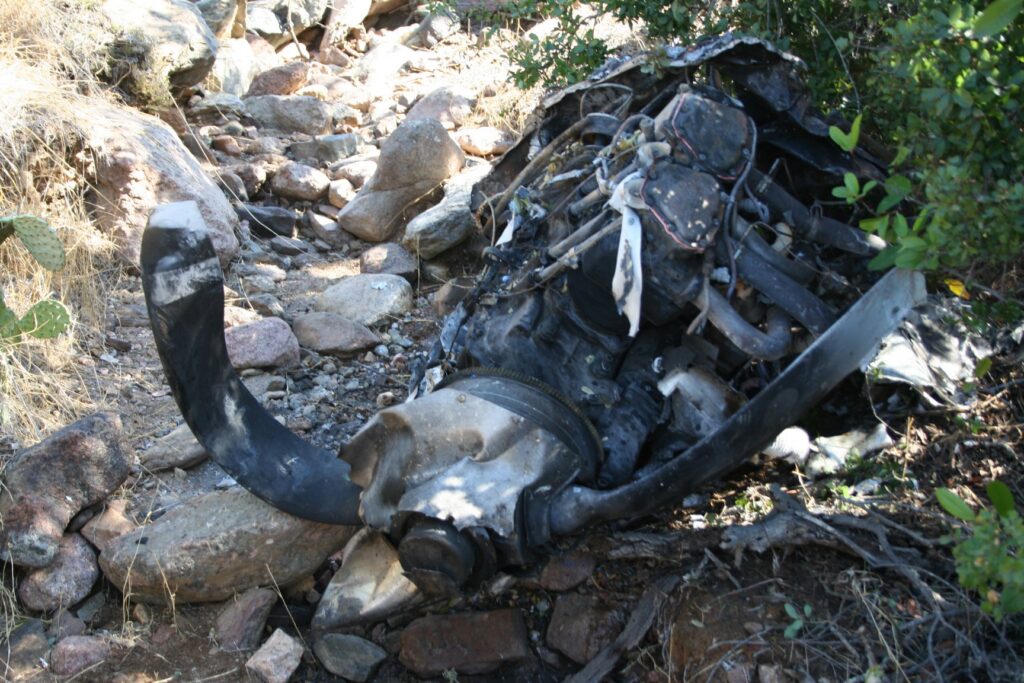
After combing through the wreckage, NTSB investigators found no evidence of mechanical failure that could explain the loss of control. Flight control continuity was confirmed, though some components separated due to impact forces. The engines themselves were functioning normally prior to the crash.
The Pilots Involved
Let’s look at the flight crew’s backgrounds:
- Instructor Pilot (CFI):
- Age: 22
- Certificates: Commercial, Flight Instructor (CFI)
- Ratings: Single-engine land and sea, instrument airplane
- Total Flight Time: 198 hours
- Student Pilot (Pilot Receiving Instruction):
- Age: 20
- Certificates: Private Pilot, Instrument Airplane
- Total Flight Time: 197 hours, including 12 hours in the PA-44
- Pilot in Command Time: 133 hours
- Passenger (Pilot-Rated Observer):
- Age: 20
- Certificates: Private Pilot
- Total Flight Time: Unreported in the document
NOTE – This is what was reported by the NTSB. The CFI needed to have a multi-engine rating to instruct as a CFI on a multi-engine aircraft and the total flight time of 198 hours was estimated. Most likely the NTSB made an error in their report and the CFI had more hours and a multi-engine rating.
Probable Cause: Loss of Control and Inadequate Supervision
The NTSB’s probable cause:
- The student’s failure to maintain control during the Vmc demonstration.
- The instructor’s inadequate supervision, which led to a stall and spin from which they could not recover.
Lessons for Every Pilot
This accident offers sobering lessons for flight instructors, students, and even experienced pilots:
- Vmc demos are dangerous—treat them with respect. If your student is struggling, take over immediately.
- Every second counts in a spin entry. There’s no room for “talking through the checklist” once the plane is spiraling.
- Experience matters. Both the instructor and student had fewer than 200 hours total time, and neither had much multi-engine experience.
- Communicate clearly and decisively. A confused handoff in the cockpit can cost precious time when recovering from an upset.
- Survivability matters. Training flights often occur at low altitudes. Build in altitude safety margins for error during complex maneuvers.
Final Thoughts
As heartbreaking as this crash is, it’s also a reminder that aviation training can be unforgiving—especially in multi-engine aircraft where asymmetric thrust and low-speed handling become life-or-death skills. Whether you’re a student, instructor, or experienced pilot, every flight is a chance to reinforce safety habits that could save your life.