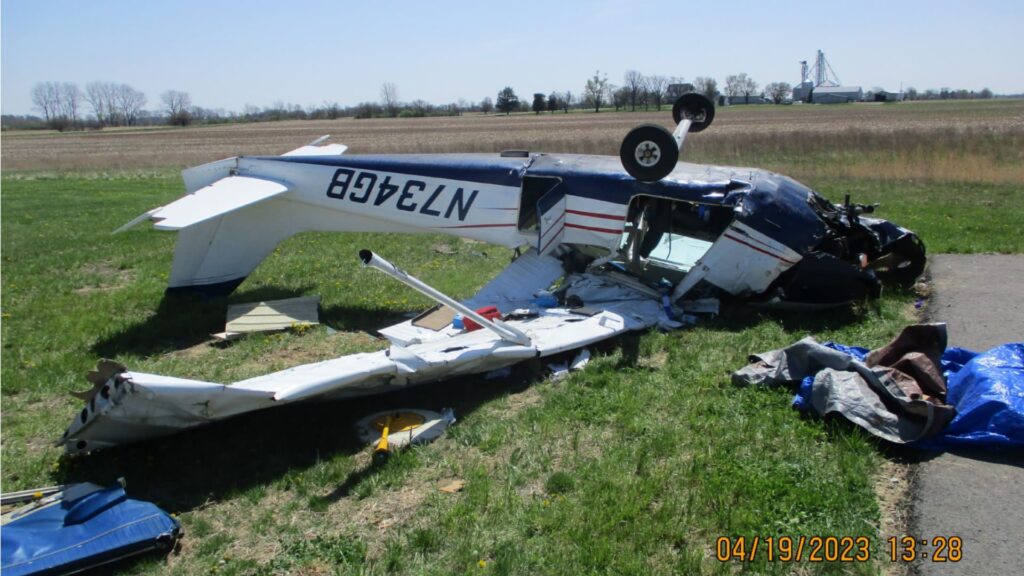
On April 18, 2023, a routine flight lesson at Madison County Airport (UYF) in London, Ohio, took a tragic turn. A Cessna 172, registered as N734GB, crashed while on final approach, killing both the flight instructor and student pilot. The accident occurred at 6:20 PM local time, in what was likely the student’s very first instructional flight.
The Flight: A Promising Start
The 44-year-old student pilot had zero prior flight experience. His instructor, a seasoned aviator, held an Airline Transport Pilot certificate and multiple flight instructor ratings. With nearly 9,900 flight hours under his belt, he was in the process of establishing a flight school at Madison County Airport. This flight was likely meant to be the student’s introduction to the fundamentals of aviation.
The Cessna 172N, a widely used trainer aircraft, had recently passed its annual inspection just five days before the accident. The weather was clear, with 10 miles of visibility and a steady wind from 280° at 16 knots, gusting to 19 knots.
The Final Approach: A Critical Mistake
According to ADS-B data, the aircraft was decelerating on final approach to runway 27. When it was about 500 feet from the runway, its groundspeed was 54 knots (approximately 70 knots airspeed when adjusted for the headwind). By the time it was 150 feet from the runway threshold, the groundspeed had dropped to 46 knots, or about 62 knots airspeed.
The Cessna 172N’s stall speed with full flaps extended is 44 knots. At first glance, the airplane was still above stall speed, but its airspeed was decreasing at a dangerous rate. The aircraft’s flaps were fully extended at 40°, and just seconds later, it entered an aerodynamic stall.
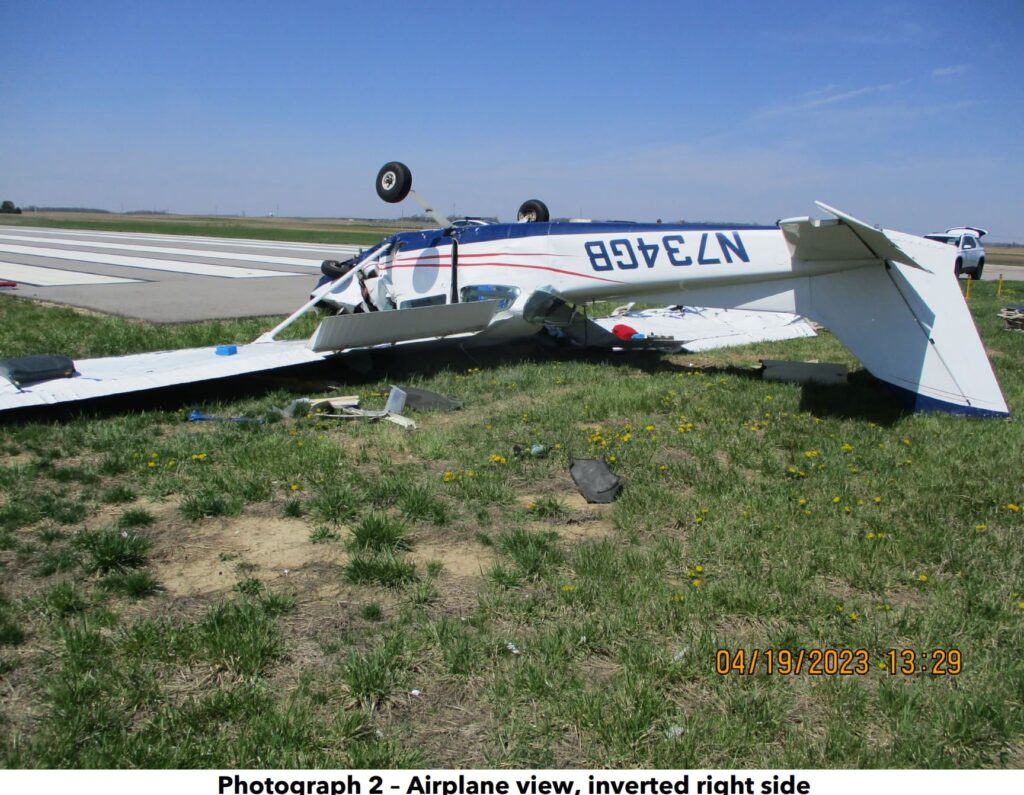
With insufficient altitude for recovery, the plane descended in a left-wing-low, nose-down attitude, impacting the ground just one foot from the runway edge. The wreckage came to rest inverted.
The Aftermath: A Deadly Stall
Post-crash analysis revealed no pre-impact mechanical failures. The aircraft had been in working order, and all control surfaces remained attached. The flight instructor, sitting in the right seat, had ultimate control of the aircraft, yet the evidence suggests he did not take corrective action in time to prevent the stall.
Investigators found that the lap seat belts were intact, but the shoulder harness webbing had come unstitched in the impact. The aircraft’s damage profile, including the crushed nose section and the engine being compressed into the fuselage, confirmed a low-energy impact—consistent with a stall at low altitude rather than a high-speed crash.
Was Medication a Factor?
A toxicology report found that the student pilot had venlafaxine, an antidepressant, in his system. This medication can cause drowsiness and impaired cognitive function, which is why the FAA does not allow pilots to fly while using it.
However, given that this was the student’s first flight—where he had limited safety responsibilities—and that an experienced flight instructor was present, investigators concluded that the medication was unlikely a contributing factor in the accident. The real cause was a failure to maintain adequate airspeed on final approach.
Probable Cause: Instructor Error
The National Transportation Safety Board (NTSB) determined that the probable cause of the accident was the flight instructor’s failure to maintain sufficient airspeed. By allowing the aircraft’s speed to decay, he exceeded the critical angle of attack, triggering an aerodynamic stall at an altitude too low for recovery.
Final Thoughts
This accident is a somber reminder of the responsibilities flight instructors carry. The student pilot was taking his first steps into aviation, trusting his instructor to guide him safely. Unfortunately, a loss of airspeed at a critical moment cost both their lives.
For student pilots, this tragedy underscores the importance of understanding stall mechanics, maintaining situational awareness, and trusting—but also verifying—their instructor’s decisions. For instructors, it’s a stark lesson on how even a small lapse in attention can have fatal consequences.
By learning from accidents like this, we can help ensure that future flights end safely—with both pilots walking away.