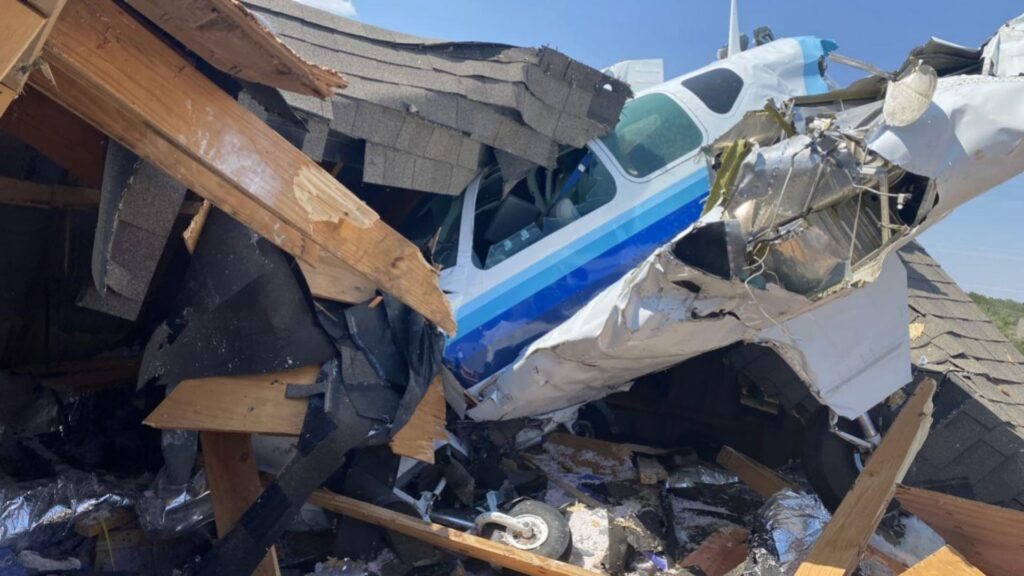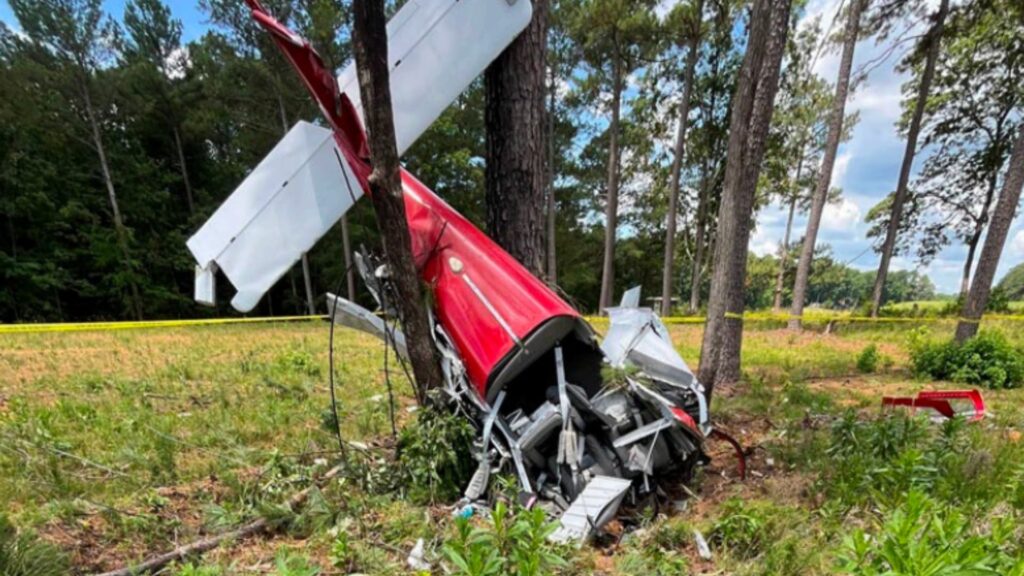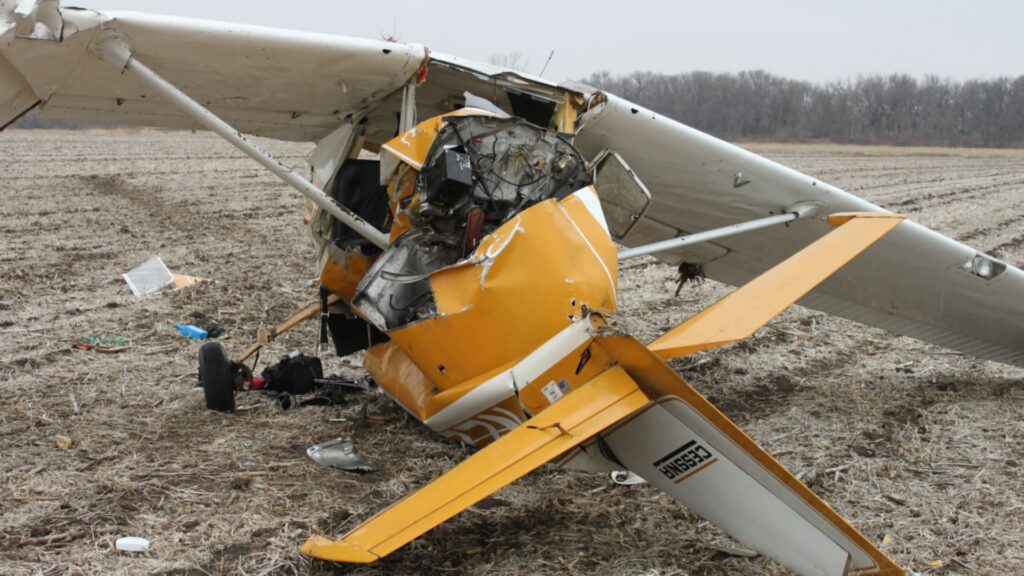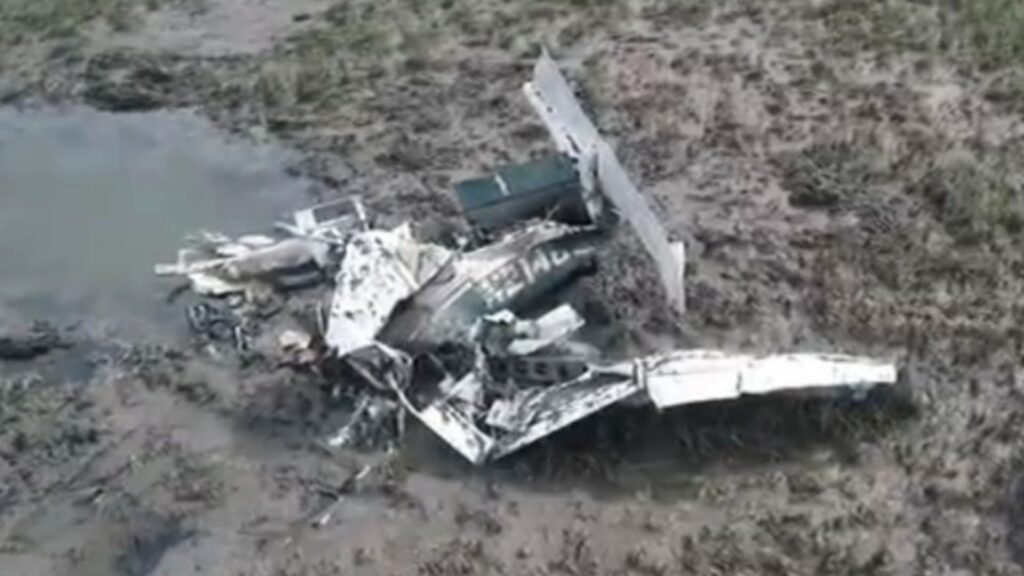
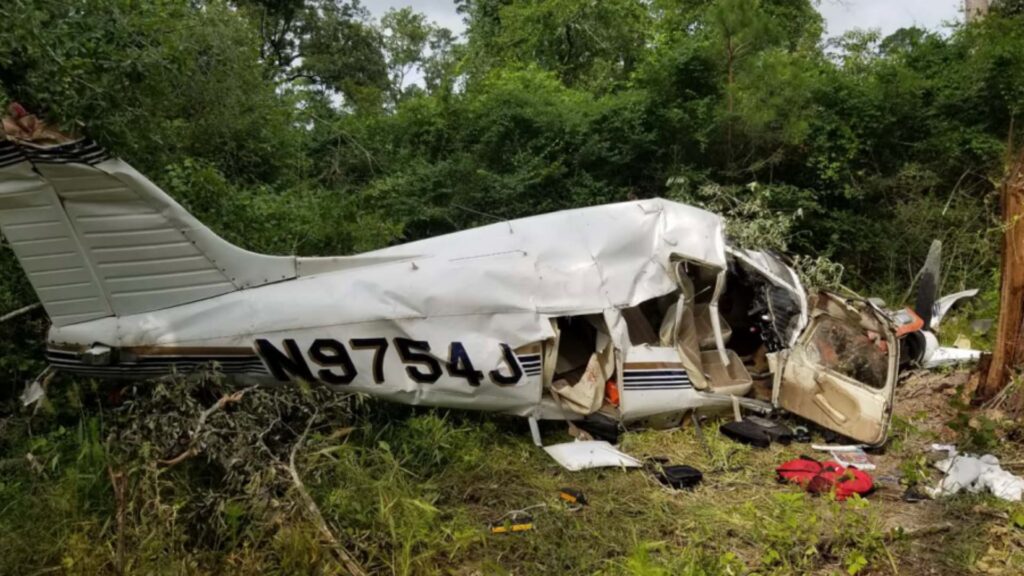



On a warm June evening in 2019, a Piper PA-28-180, N9754J, headed out from Conroe-North Houston Regional for what was supposed to be a straightforward local flight. The plan included a low approach at Livingston, then a landing at Huntsville, Texas. Day VFR, clear skies, light winds — the kind of conditions most of us would happily go fly in. But just a few minutes from Huntsville, the engine quit, the airplane descended into trees, and the passenger did not survive. What looked like a simple flight ended with a textbook case of how a small systems detail could combine with human factors to create a fatal outcome.
Who Was Flying N9754J
The pilot was 20 years old, a private pilot with airplane single-engine land and an instrument rating. He was not a professional pilot; this was Part 91, personal flying. He held a second-class medical and had just completed a flight review a few weeks earlier. At the time of the accident, he had 89.3 total hours, and 76.5 of those were in the Piper PA-28 series. So he was relatively low-time overall, but actually fairly experienced in this particular make and model, especially for that stage in his flying. That detail mattered later, because his experience in the PA-28 mostly came in airplanes that had a different style of fuel selector than the one installed in N9754J.
The Plan and the Flight
The flight departed Conroe (CXO) around 1754 local. The idea was simple: depart CXO, fly up to Livingston Municipal (00R) for a low approach, then continue to Huntsville Municipal (UTS). Visual conditions prevailed, with clear skies and more than 10 miles visibility. The pilot flew the leg from Livingston to Huntsville at about 2,500 feet MSL. At some point after leaving 00R, he switched fuel tanks — a normal step in that phase of flight. Everything seemed routine.
About 15 minutes after that tank switch, though, the engine started to “give out,” as the pilot later described it. He was now relatively low, descending toward Huntsville, and he stated that he did not think he had the altitude to run the full engine failure checklist. He set up for an off-airport landing toward an open field but never made it that far.
The Crash in the Trees
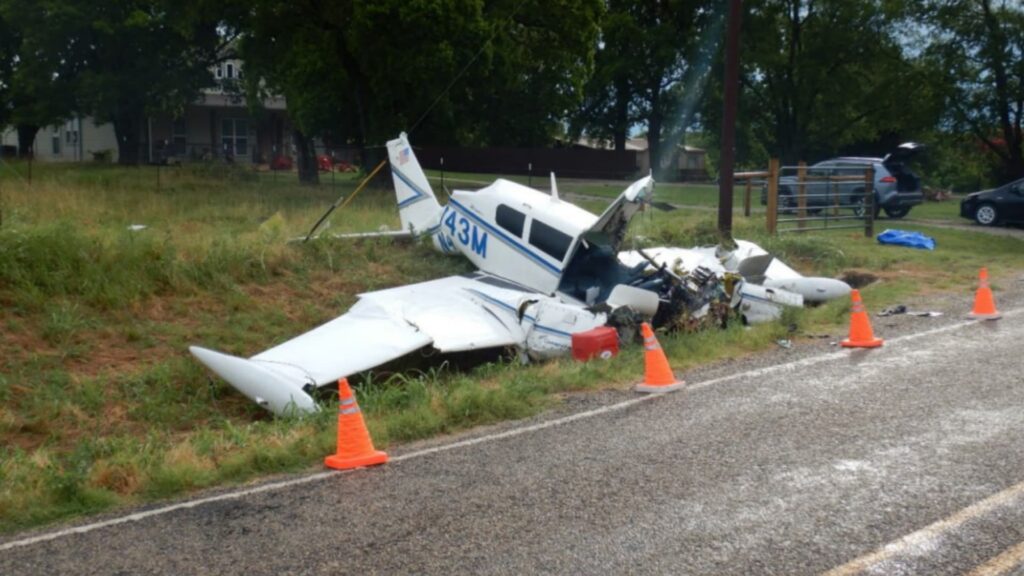
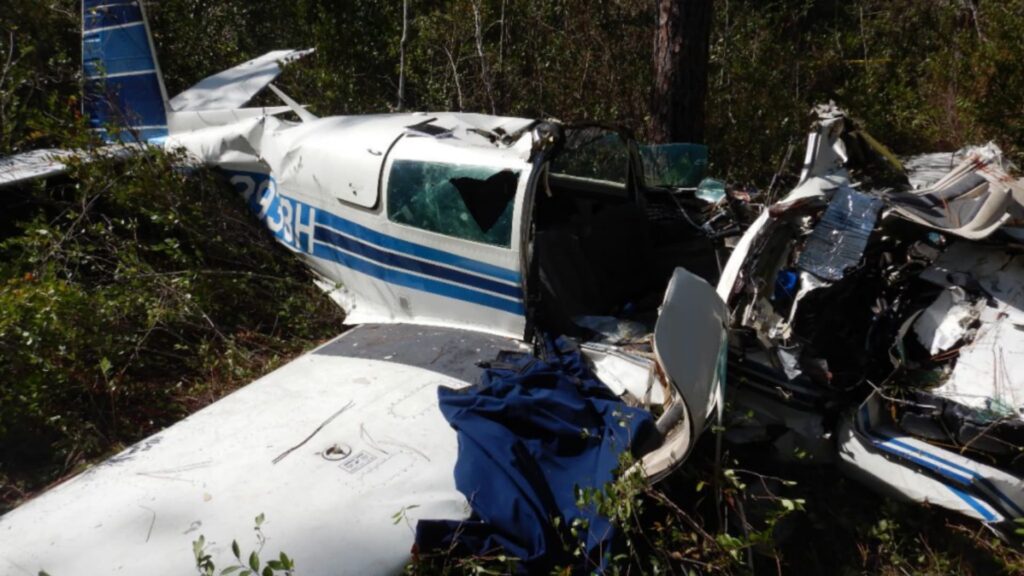
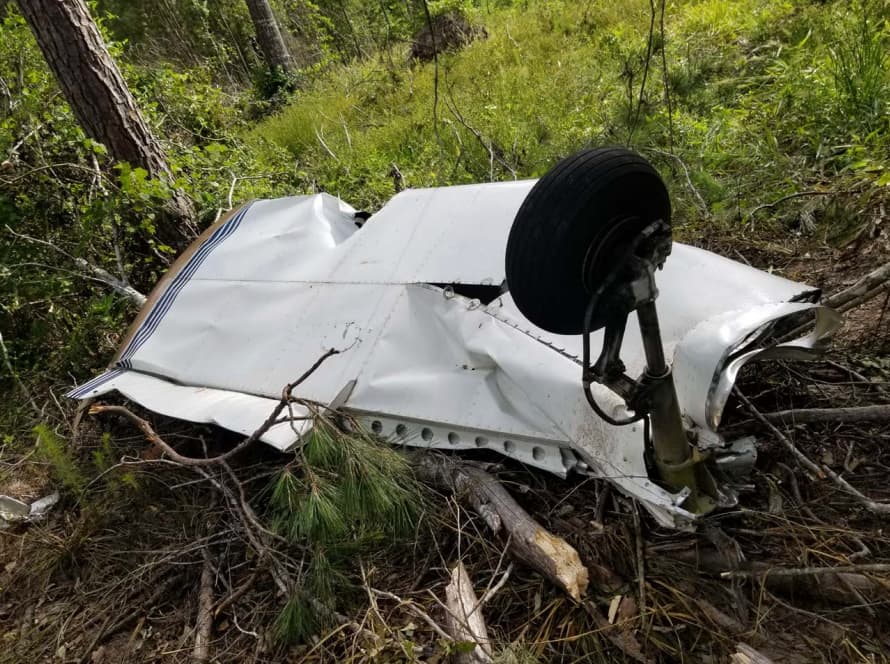
Roughly 6 nautical miles east-northeast of Huntsville, the airplane hit treetops about 50 feet above the ground. The terrain below was heavily wooded. From the first tree strike, the wreckage path extended about 100 feet. The fuselage came to rest separated from parts of the wings and stabilator, with the engine torn off the mounts but still partially attached by hoses and control cables.
The pilot survived with serious injuries; the passenger did not. There was no postimpact fire. From a control standpoint, investigators later found no preimpact anomalies in the flight controls. Breaks in the aileron cables showed overload signatures, consistent with forces during the crash, not something that caused it.
Engine Health vs. Fuel System Reality
Whenever an engine quits in flight, the investigation almost always starts with two questions: “Did the engine fail?” and “Did the fuel stop getting to it?” In this case, the airplane’s engine was pulled from the wreckage and mounted on a surrogate airframe for a test run. It started, warmed up normally at about 1,500 rpm, and ran smoothly up through 2,200 rpm with a clean mag check. No obvious mechanical issues showed up.
Inside the cockpit, though, investigators found the key clue: the fuel selector was positioned forward and down — the “off” position. That matched the pilot’s report of a sudden power loss and the engine’s clean bill of health on the test stand. The airplane had fuel, the engine worked, but the selector was cutting that fuel off.
The Fuel Selector Design Trap
Here’s where the story really turned from “pilot ran a tank dry” to “system design and training mismatch.” N9754J still had the original, first-generation fuel selector and bezel design from Piper. On this setup, the detent pattern formed an “X,” with the upper positions selecting the left and right tanks and both lower positions being “off.” There was nothing to stop the pilot from freely rotating the selector through all four positions, including the two off detents, and the selector was mounted low on the left sidewall by the pilot’s leg.
Piper later redesigned this system twice. The second-generation selector simplified things into a three-position design: left, right, and off. The third-generation version went a step further by adding a spring-loaded stop that physically prevented the pilot from accidentally rotating the selector into “off” unless that stop was deliberately depressed. That third-generation design was built specifically to reduce the chance of inadvertently shutting off fuel in flight.
The accident airplane was still on the original first-generation selector. Piper had issued service letters and a service bulletin recommending upgrades to the newer designs, and the FAA had even issued an airworthiness directive requiring some airplanes to upgrade from the second- to third-generation selector. But that AD did not apply to airplanes like this one that still had the first-generation setup. For N9754J, the upgrade was recommended but not mandatory.
Experience That Didn’t Transfer
When investigators pulled the pilot’s rental and training history, they found something important. Of his 89.3 hours in PA-28 airplanes, at least 87.4 hours were in aircraft equipped with the third-generation fuel selector — the one with the spring-loaded guard on the off position. Only a single 1.9-hour flight, 10 months before the accident, might have been in an airplane with the older style.
So even though he “knew” the PA-28, he essentially knew a different fuel selector system. In most of the airplanes he flew, you could twist that selector around confidently, knowing it would not slip into “off” unless you deliberately defeated the guard. In N9754J, that guard was not there. The selector could pass through one of two off positions on the way between tanks, and those detents were down low and not as intuitively obvious.
The NTSB concluded that it was likely the pilot inadvertently moved the fuel selector into the off position during or after the tank switch, and that this mis-selection led to fuel starvation and the total loss of engine power. With the airplane descending toward Huntsville and the pilot focused on the field ahead, there was little time to diagnose that the fuel selector itself was the culprit.
What This Accident Really Highlighted
This accident did not point to poor maintenance, bad weather, or a sick engine. The airplane had just had an annual inspection the day before, with only about four hours flown since. The weather was solid VFR. The engine ran just fine on the test stand. The chain here was mostly human factors and design:
- A low-time but current and trained pilot.
- A fuel selector design that allowed easy inadvertent movement into “off.”
- Training and muscle memory built on a different, more forgiving selector.
- A relatively low cruising altitude close to the destination, which reduced the time available to troubleshoot.
Each link by itself did not cause the crash. Together, they did.
Practical Takeaways for the Rest of Us
If there was one big lesson from N9754J, it was that “know your airplane” had to go deeper than just type and model. The pilot had more than 75 hours in PA-28s, but most of that time was in airframes with a different fuel system interface. Before flying a given tail number, it would have helped to treat it like a different airplane where systems were concerned, especially something as critical as the fuel selector.
A few practical points to carry forward:
- Never assume the fuel selector works the same way across airplanes, even within the same model line. Sit in the cockpit on the ground and trace every position deliberately.
- When switching tanks, slow down and positively verify the selected detent, especially if the selector is on the sidewall or in a less visible location.
- Avoid making configuration changes like tank switches at low altitude near the destination; having extra altitude in the bank buys time if something does not behave as expected.
- For owners and operators, strongly consider optional safety upgrades like the guarded fuel selector, even when they are not required by regulation.
This accident showed how a simple, almost invisible design difference could trap a pilot who otherwise appeared to be doing a lot of things right.
Closing Thoughts
N9754J’s flight near Huntsville did not end the way anyone planned. A routine evening hop, a PA-28 the pilot had flown many times, good weather, and a straightforward route all set the stage for what should have been an uneventful landing. Instead, an unguarded selector and a moment of inadvertent misplacement of that selector likely shut off the fuel, and the engine quit with too little altitude left to recover.
Stories like this were not about blame; they were about understanding how normal decisions in normal cockpits could line up in the wrong way. The hope was that by digging into the details — especially the small ones like fuel selector design — the rest of us could catch those traps before they caught us.