



Setting the Scene
On April 26, 2023, a seemingly routine personal flight from Leesburg, Florida to Winder, Georgia ended in tragedy. A Cessna 177B, tail number N123DS, was destroyed in a crash near Watkinsville, Georgia. Both the pilot and his passenger—his spouse, who was also a pilot—lost their lives. This story is a sobering reminder of the dangers of spatial disorientation, particularly when flying in instrument meteorological conditions (IMC). It also underscores the critical importance of understanding our own limitations as pilots.
The Pilot and Aircraft
The 76-year-old pilot held a private pilot certificate with airplane single-engine land and sea ratings, and an instrument rating. He had logged approximately 870 total flight hours, with about 52.4 hours in the Cessna 177B since 2021. His Class 3 medical certificate included waivers and limitations, and his last flight review was completed in January 2022.
His passenger and spouse, age 75, was also a private pilot with 86 total flight hours, but no instrument rating.
The aircraft, a 1975 Cessna 177B, had passed its last annual inspection on December 30, 2022, just 21 hours prior to the accident flight. There were no known mechanical issues, and post-crash analysis confirmed no pre-existing malfunctions.
A Day of Challenging Weather
The weather that day was marginal. IMC prevailed at the destination airport, Barrow County Airport (WDR), with an overcast ceiling of just 600 feet. Winds were light, and visibility was good below the cloud deck, but the cloud ceiling was a significant factor. The accident occurred during the approach phase under these IMC conditions—arguably one of the most demanding phases of flight for any pilot.
The Flight Unfolds
Departing from Leesburg around 11:31 AM, the pilot was on an IFR flight plan and had coordinated with Atlanta Approach as he neared WDR. After requesting the RNAV Runway 31 approach, the pilot was vectored toward the CADEB waypoint to begin the approach.
However, due to preceding traffic, the controller issued several heading changes:
- First, a northeasterly heading (040°) to intercept the approach course.
- Then, a right turn to 230° to allow sequencing behind other traffic.
- Finally, a heading of 270° after a low altitude alert was triggered as the airplane began to descend below the assigned altitude.
Tragically, this last radio transmission—an acknowledgment of the controller’s altitude instruction—was the pilot’s final communication.
ADS-B data showed the airplane entering the right turn as instructed but continuing the descending turn uncontrollably. Moments later, radar contact was lost.
The Crash Site
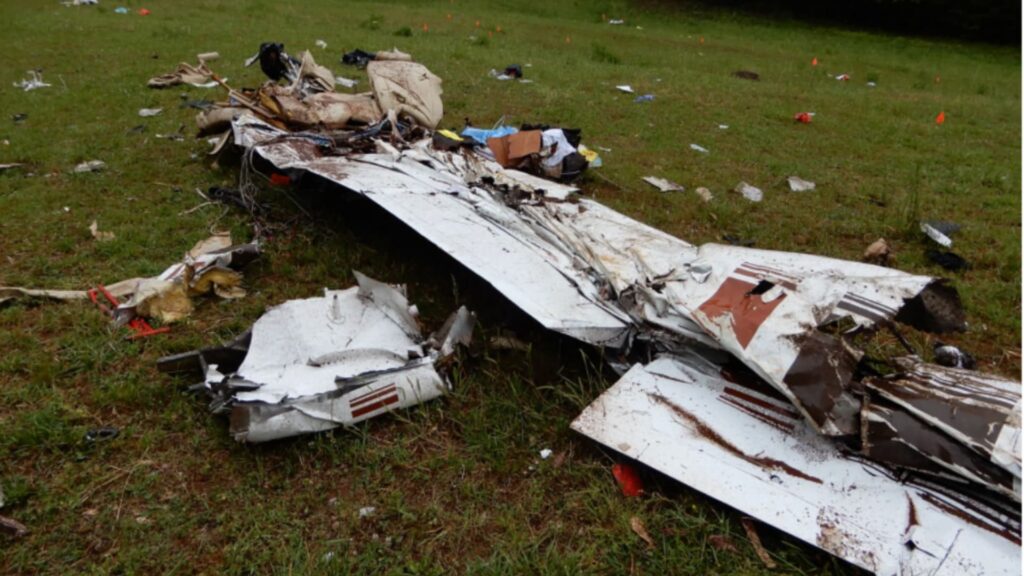
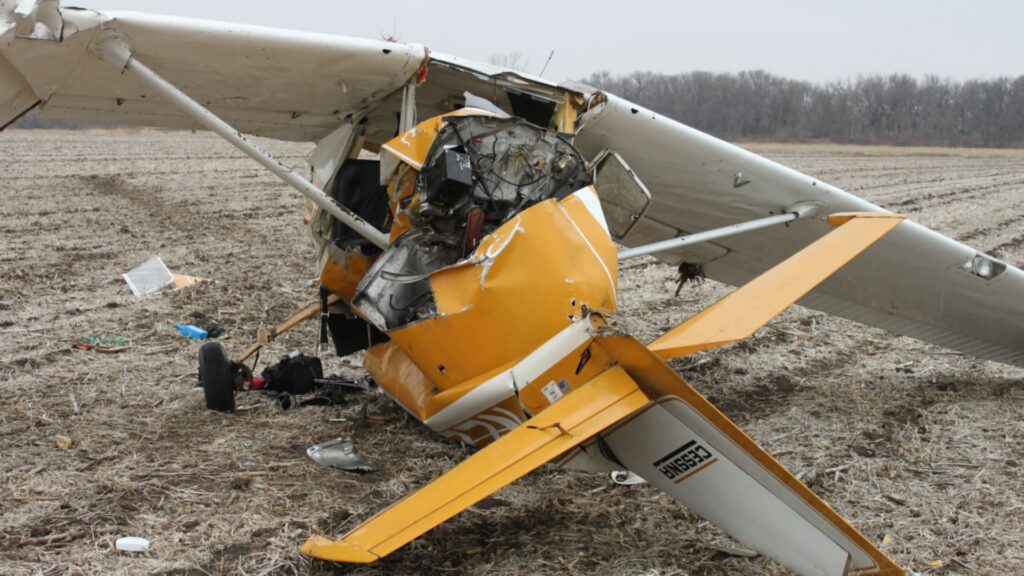
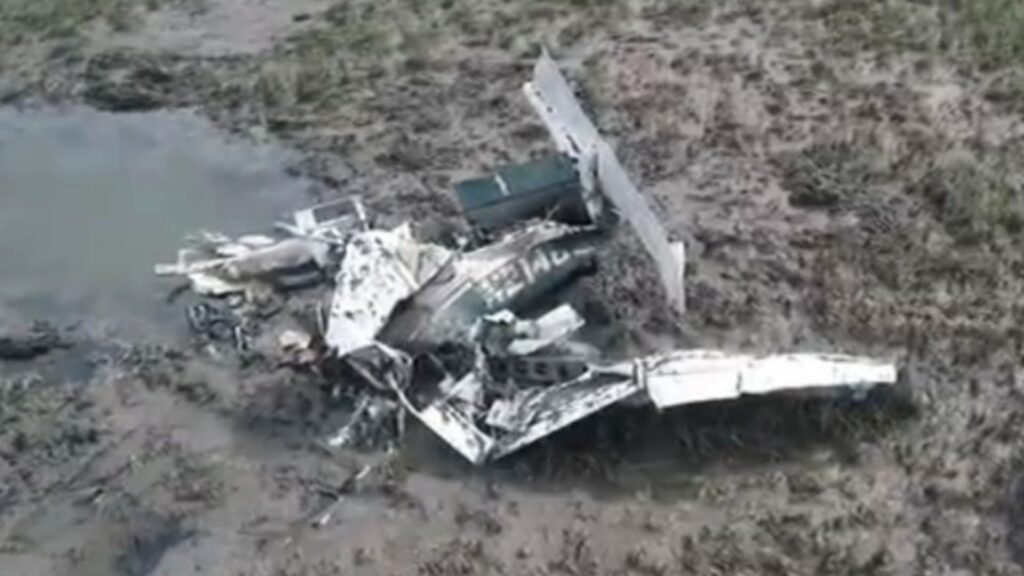
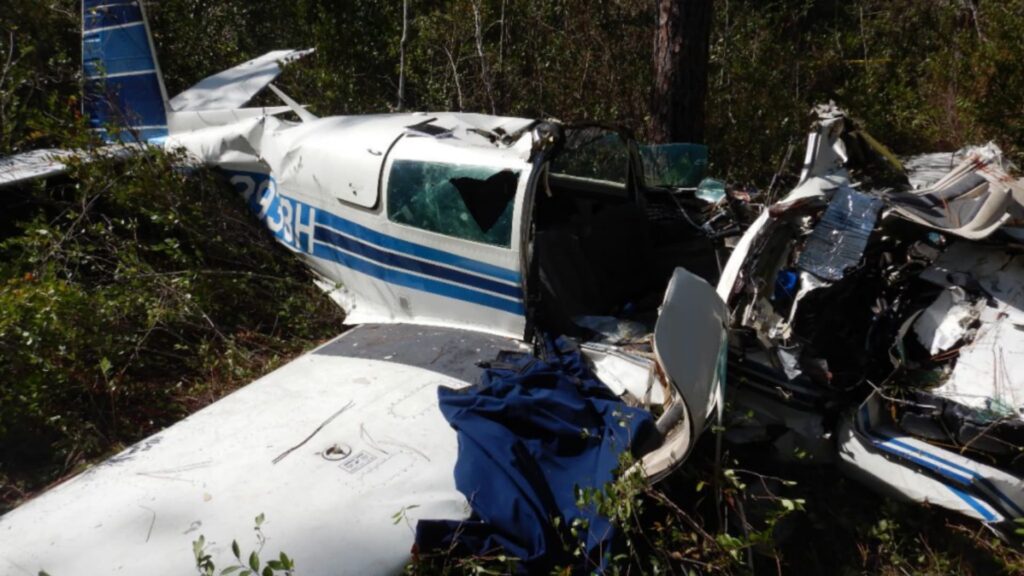
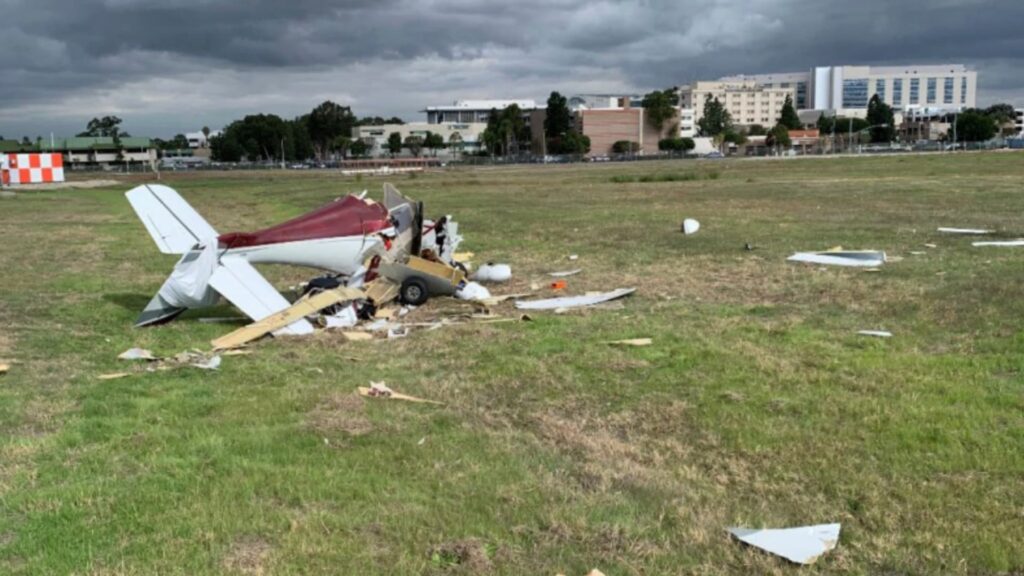
The aircraft impacted a farm field northwest of Watkinsville. The right wing and right flap separated in flight—a textbook sign of overstress from an uncontrolled descent. The main wreckage was severely fragmented, with debris scattered across the field.
Investigators confirmed that no mechanical failure or malfunction contributed to the crash. The separated wing exhibited signs of tension overload, meaning it had broken apart due to aerodynamic forces exceeding design limits during the descent.
What Went Wrong?
The NTSB’s probable cause? Spatial disorientation.
The series of heading changes, combined with IMC and limited visual cues, created a perfect storm for disorientation. The pilot likely lost awareness of the airplane’s attitude and motion. In the absence of reliable visual references, the human vestibular system often provides false sensations of motion—a well-documented phenomenon in aviation physiology.
Once spatial disorientation set in, the pilot entered a right descending turn that progressively tightened. As airspeed and descent rate increased, the right wing ultimately failed under excessive G-loads.
This is not speculation—it matches the physical evidence found at the site and is consistent with the aerodynamic and structural characteristics of the Cessna 177B.

The Human Element
There’s an emotional layer to this story, too. The pilot’s spouse was also aboard, herself a pilot, though without an instrument rating. The pair were likely flying together as they had done many times before.
Toxicology results revealed trace levels of gabapentin—a medication with potential impairing side effects—in the pilot’s liver tissue, though the NTSB concluded this was likely due to cross-contamination from the passenger’s samples, as she had an active prescription. Other detected substances were not considered impairing.
The pilot was not under the influence of medications or alcohol in a way that contributed to the accident. The root cause remained spatial disorientation—a hazard that can affect even the most experienced pilots.
Key Safety Lessons
This accident illustrates several critical takeaways:
- IMC and spatial disorientation are unforgiving.
Even with an instrument rating and IFR experience, older pilots or those with limited recent IMC practice may be vulnerable. - Rapid heading changes and workload can increase risk.
The pilot received multiple vector changes in quick succession. Combined with IMC, this can degrade situational awareness. - Instrument proficiency must be maintained.
The pilot’s logbook was not recovered, but limited recent flight time in the accident aircraft and possible limited recent IMC exposure could have reduced proficiency. - Trust the instruments.
The vestibular system is unreliable in IMC. Pilots must rely on instrument cross-check and scan discipline, especially during approach phases when workload peaks. - Know your limits—and respect them.
Age alone isn’t a limiting factor, but pilots must honestly assess their currency and proficiency. This accident involved a capable and licensed pilot, but subtle factors—including human physiology—played a decisive role.
Final Thoughts
This tragic flight reminds us that aviation is a demanding and humbling pursuit. Spatial disorientation remains one of the most lethal threats in general aviation—one that respects neither age, experience, nor good intentions.
For all of us in the aviation community, the best tribute we can pay to the pilot and his spouse is to recommit ourselves to rigorous training, constant self-assessment, and unwavering respect for weather conditions.
Fly safe, stay sharp—and remember: when in doubt, stay on the ground.
4 Comments
Thank you, Hoover.
You provide so much common sense to us pilots… and we need to always be mindful of our own limitations.
And yes…when in doubt…stay put and have a cup of coffee!
Best Wishes…Joe Bedwell
Hi,
“On April 26, 2023, […] ” and “[…]its last annual inspection on December 30, 2022, just 21 hours prior to the accident flight […]. I’m a bit confused. Otherwise, good report. Thanks for your efforts and for your work with the websites. (Written with a translator)
So tragic. The details made me wonder about the often too soft voice of reason we aviators hear in our heads during challenging situations “what the hell am I doing HERE?!?!” And how we all to often ignore the logical answer “turn around or slow down or land now or make it another day”.
My condolences to the families of our kindred aviators.
It’s a shame we loose so much pilots to spacial disorientation. One of the hardest lessons to learn is to distrust the only thing we have trusted our while life’s to help us. That doesn’t mean anything though if you don’t put it to action allot. Catching yourself in that state is one thing but the few seconds after realizing can be the difference of death knocking on your door or you closing that airplane door dreaming the next time you will take to the skies.